
 ~6m19:16
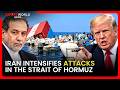
Iran Intensifies Attacks in the Strait of Hormuz
Oct 16, 2026
Read: ~7m · You save: 12 min
Iran Intensifies Attacks in the Strait of Hormuz
Iran's intensified attacks in the Strait of Hormuz threaten global energy supplies and maritime security. Discover the escalating conflict and its far-reaching conseque
The Strait of Hormuz is experiencing a heightened period of confrontation as Iran intensifies operations against commercial shipping. This escalation raises significant concerns regarding maritime security, global energy supplies, and the potential for further military escalation between Tehran and Washington. What began as an effort to restrict shipping through this critical waterway has evolved into a broader struggle involving commercial vessels, naval forces, regional governments, and the international oil market. Recent incidents indicate that the threat is no longer confined to isolated encounters, with repeated strikes and warnings making passage through the strait increasingly unpredictable.
This latest escalation occurs amidst the ongoing conflict between Iran and the United States, which commenced with American and Israeli strikes on Iranian territory on February 28th, 2026. Since then, Tehran has leveraged its geographical position along the Strait of Hormuz to exert pressure on Washington and its regional partners. Iran asserts that its maritime restrictions are linked to national security and its response to foreign military operations. Conversely, the United States maintains that commercial shipping must be protected and that Iran cannot unilaterally dictate passage through an internationally vital maritime route.
The consequences of these actions have become increasingly evident. Several commercial vessels have sustained damage, while others have been compelled to suspend voyages or reroute. Maritime security assessments reveal a considerable acceleration in the pace of incidents during October. Oil tankers, container ships, and bulk carriers have all faced threats. This expanding range of affected vessels is particularly concerning, as the Strait of Hormuz is crucial not only for the global energy industry but also for the transport of manufactured goods, industrial materials, and essential commodities.
A significant incident occurred on October 13th when the Singapore-flagged container ship GFS Pride suffered damage while transiting the strait. The vessel, with a carrying capacity exceeding 2,800 standard shipping containers, subsequently sank. Singapore's maritime authorities confirmed the safe evacuation of all 21 crew members, with no reported injuries. While the successful evacuation averted a greater human tragedy, the loss of the ship underscored the severe risks commercial vessels face, even during routine international trade.
Another vessel, the Antigua and Barbuda-flagged bulk carrier Cape Dao, also sank near the strategic waterway after sustaining damage from a projectile strike on September 23rd. One crew member lost their life in that incident, while other personnel were evacuated. The two sinkings reported in mid-October highlight how damage sustained during an initial encounter can have lasting consequences. They also reinforce concerns that a growing number of ships may be unable to complete their journeys safely.
The Maritime and Port Authority of Singapore responded to the sinking of GFS Pride with a strong condemnation, labeling such attacks as unprovoked, unjustifiable, and a breach of international law. This statement reflects broader concerns about the vulnerability of civilian shipping in an active military environment. Merchant vessels operate under international registration, carry multinational crews, and transport cargo for companies across various countries. Consequently, an incident involving one ship can impact businesses, workers, and governments far beyond the immediate conflict zone.
The scale of the disruption is becoming clearer through international maritime records. As of October 14th, the International Maritime Organization (IMO) had documented 113 confirmed incidents across the Strait of Hormuz and the wider Middle East since the conflict began, along with 24 confirmed seafarer fatalities. While these figures encompass a broader geographical area and various maritime incidents, not solely those directly attributed to Iran, they demonstrate a severe deterioration in shipping safety across the region. The increase has been particularly noticeable in October, with multiple vessels sustaining damage within days of one another, including ships operating near the Omani coastline and in the Gulf of Oman.
The tanker On Peace was damaged in an incident on October 5th, resulting in injuries to 12 seafarers. Other vessels were struck or damaged in the following week. Reports involving the Petro Dolphin near Sohar, Oman, also raised serious concerns after two seafarers were listed as missing. These incidents collectively illustrate the growing risks faced by crews engaged in commercial operations.
Iran's military has announced an expansion of its monitoring activities. According to statements from the Iranian army's navy, additional operational units have been positioned east of the Strait of Hormuz, extending into the Gulf of Oman and the Arabian Sea. Iranian military authorities state these deployments are intended to enhance surveillance of maritime traffic and identify vessels operating in areas Tehran deems restricted. The Iranian navy has warned ships against disabling their electronic identification and tracking equipment and urged operators to coordinate movements with Iranian armed forces. Tehran presents these measures as necessary for maintaining security and identifying vessels that might violate its restrictions. However, these warnings intensify uncertainty among commercial operators, as Iranian permission requirements are internationally disputed, and compliance with one side's instructions does not necessarily eliminate the danger posed by the conflict.
On October 16th, further details emerged regarding an oil tanker that Iranian naval personnel claimed to have detected east of the strait. According to the Iranian account, the vessel had deactivated its tracking equipment, attempted to pass through a restricted area, and was already burning when monitoring teams identified it. The statement did not independently establish the cause of the damage, a crucial distinction as the presence of a damaged vessel does not automatically confirm responsibility.
Senior Iranian military officials have continued to assert control over various parts of the surrounding waters. Habibollah Sayyari, the Iranian army's deputy chief for coordination, stated on October 15th that the strait was "completely closed." He described a division of responsibilities where the Islamic Revolutionary Guard Corps (IRGC) Navy monitors western waters, while the regular Iranian Navy oversees eastern areas extending toward the Gulf of Oman. However, the claim of a complete closure is contradicted by evidence of ongoing commercial traffic, including shipments assisted by American forces. The distinction between complete physical control and the ability to disrupt shipping is central to understanding the confrontation. Iran does not need to halt every vessel to exert significant economic pressure; intermittent strikes, repeated warnings, and uncertainty about safe routes can discourage ship owners from using the area.
American officials have reported a notable change in Iran's operating methods. According to a U.S. military assessment, damage to Iranian radar capabilities has led the Revolutionary Guard to rely more heavily on smaller vessels carrying observers to identify potential targets. These boats can relay information about commercial and military vessels operating nearby, allowing Iranian forces to maintain surveillance while reducing reliance on larger, potentially more vulnerable naval platforms. One incident described by a U.S. military official involved a traditional wooden sailing vessel, a dhow, which U.S. forces assessed was being used to identify targets for Iranian units. American personnel reportedly instructed the occupants to abandon the vessel before destroying it, with no casualties reported. This account illustrates how surveillance activities themselves have become a point of military confrontation and highlights the increasing difficulty in distinguishing ordinary fishing and commercial activity from suspected military support operations.
The geographical scope of the confrontation is also expanding. Recent maritime security assessments indicate that vessels have faced threats not only in the narrowest part of the Strait of Hormuz but also in waters near Qatar, the United Arab Emirates, and Oman. This development is significant because shipping companies previously considered some surrounding waters relatively safer options. If incidents continue to spread beyond the Strait, operators may find fewer practical alternatives for moving cargo into and out of the Persian Gulf.
Iranian officials have indicated that this broader pressure is deliberate. Senior figures familiar with Tehran's strategy have described an effort to challenge shipping arrangements that allow Gulf producers to export oil despite Iranian restrictions. According to these accounts, the Iranian leadership intends to maintain economic pressure while Washington continues its naval blockade at Iranian ports and imposes additional sanctions. These claims about Tehran's intentions are supplied by Iranian officials and do not serve as independent explanations for every maritime incident.
The confrontation has also become linked to American domestic politics. U.S. President Donald Trump faces congressional midterm elections in November, with energy costs remaining a significant concern for consumers and businesses. Two senior Iranian officials have indicated that keeping oil prices elevated is among Tehran's objectives. Higher fuel prices can impact transportation, food distribution, manufacturing, and household spending, giving the energy market political importance well beyond the Gulf region. However, the extent to which maritime pressure might influence American voters remains uncertain, as election outcomes depend on numerous domestic and international factors, and fluctuations in energy markets cannot be attributed to a single cause. The sustained disruption in the Strait of Hormuz adds another challenge for Washington as it seeks to contain the economic consequences of the conflict.
The United States has rejected Iran's assertion of control over the waterway. Following warnings from Iranian naval commanders, U.S. Central Command stated, "IRGC's Navy Commander has no navy. American forces and regional part forces and regional part forces knows clearly control the Strait of Hormuz." The American military also reported that its forces had assisted regional partners in moving over 90 million barrels of crude oil through the Strait on October 12th. These competing statements reveal the central dispute: Washington points to continuing commercial shipments and its regional military capabilities as evidence that Iran has failed to establish exclusive control, while Tehran highlights its ability to threaten vessels and interrupt commercial operations as proof of its capacity to impose costs on attempts to bypass its restrictions.
The economic importance of this confrontation cannot be overstated. Before the conflict, approximately one-fifth of global petroleum liquids consumption was accounted for by oil shipments through the Strait of Hormuz. The waterway also handled approximately one-fifth of global liquefied natural gas trade. Major Gulf energy producers rely heavily on this route to reach international customers, particularly in Asia.
The disruption is now evident in shipping data. According to figures from maritime analytics company Claire, oil shipments cleared through Hormuz averaged approximately 11.62 million barrels per day during the seven days ending October 13th. This figure represents about 68% of the company's baseline level of 17.15 million barrels per day. This decline followed a period in September when Gulf exporters had managed to recover a substantial share of pre-war shipments. The sharp change in traffic demonstrates how quickly confidence in a shipping corridor can erode. Tanker operators make decisions based on military threats, insurance conditions, crew safety, contractual obligations, and available escort arrangements. If ship owners perceive a passage as unsafe, even temporary uncertainty can delay substantial energy supplies.
The financial consequences extend beyond the price of crude oil. Shipping companies have faced elevated insurance costs, and demand for vessels operating on alternative routes has increased. Longer voyages require additional fuel, crew time, and operational expenditures, with these higher transportation costs eventually passed through supply chains, affecting businesses and consumers in importing countries. On October 16th, international oil prices remained above $100 a barrel for Brent crude, even after a modest decline during trading. The continuing uncertainty surrounding Gulf exports has contributed to a substantial risk premium in energy markets. Oil prices are also influenced by other factors, including global demand, inventories, refinery capacity, and production disruptions outside the Middle East.
For large Asian economies, the implications are particularly serious. China, India, Japan, and South Korea rely on substantial energy imports from international markets, including Gulf producers. Many Southeast Asian economies are also sensitive to changes in fuel and shipping costs. Rising crude prices can manifest in transportation fares, industrial production costs, electricity expenses, and the prices of imported goods.
The disruption is also affecting sectors that receive less public attention than oil and gas. Fertilizer shipments are among the cargo flows threatened by uncertainty around Hormuz. Producers and farmers depend on reliable supplies of fertilizers, fuel, and transport services, especially during planting and harvesting periods. Alvaro Lario, president of the International Fund for Agricultural Development, has warned that the effects of maritime disruption are beginning to appear in agricultural production. Higher fertilizer prices and transportation costs can lead farmers to reduce fertilizer use or alter their crop choices. In regions already facing climate pressures or unstable food supplies, these decisions can reduce harvests and increase food prices months later. International efforts are underway to establish safer arrangements for fertilizer shipments, but progress depends on political agreement. The longer the confrontation persists, the more difficult it becomes to separate maritime security from broader issues of inflation, food security, and economic stability. A shipping problem concentrated in a narrow waterway can thus develop into a wider international concern.
Diplomacy has not been entirely absent. Iranian Foreign Minister Abbas Araghchi acknowledged that communication between Tehran and Washington continues through intermediaries. Discussing negotiations on October 8th, Araghchi stated, "The negotiation process is still ongoing and messages are being exchanged through mediators." His remarks indicated that both sides continue to explore potential arrangements despite the increasingly tense military situation. Iran submitted a proposal concerning the reopening of the strait in September, and American officials subsequently delivered a response through diplomatic channels. However, disagreement over the conditions for restoring navigation has prevented a breakthrough. Iran's leadership insists that any agreement must address its broader security and political demands, while Washington seeks to link negotiations to concerns about Iran's nuclear program and other security matters. Tehran argues that discussions should initially focus on restoring maritime access and addressing conditions it deems necessary for a sustainable settlement. Esmaeil Baghaei, spokesperson for Iran's Foreign Ministry, confirmed on October 12th that Tehran was still examining the American response and would reply through intermediaries after completing its review. Qatar and Pakistan have been among the countries involved in mediation efforts, highlighting the importance of regional diplomatic channels when direct political trust between Washington and Tehran remains extremely limited.
Iran's security chief, Mohsen Rezaie, has adopted a more confrontational public stance regarding American-supported shipping arrangements. Referring to the movement of oil through the waterway, Rezaie stated, "You are smuggling, but the strait is under Iran's control and we manage it." His statement reflects Tehran's objections to efforts aimed at maintaining exports without accepting Iranian restrictions. The language used by both sides demonstrates the significant divergence in their positions. American military authorities assert they are supporting maritime navigation and protecting regional energy flows, while Iranian officials argue Washington is attempting to undermine restrictions imposed in response to military action against Iran. Each side frames its actions as a reaction to the other, creating a confrontation where further incidents can reinforce existing grievances.
Iranian Foreign Minister Abbas Araghchi has also emphasized the need for a negotiated settlement. In comments delivered earlier in October, he stated, "There is no military solution and no solution based on more sanctions." His position highlights the regional contradiction: diplomatic messages continue, but military activity and economic pressure are intensifying simultaneously. The situation is further complicated by broader instability across the Middle East. Gulf governments are already managing security concerns related to energy facilities, aviation infrastructure, and maritime transportation. The ongoing confrontation around Hormuz adds pressure to regional economies that depend on international investment, reliable trade, and predictable access to global markets.
Escalation in the Strait of Hormuz
The Strait of Hormuz is experiencing a dangerous escalation as Iran intensifies attacks on commercial shipping, impacting global energy supplies and raising fears of military conflict. This situation stems from earlier strikes and involves geopolitical pressure, with the US advocating for protected shipping lanes.
- The Strait of Hormuz is facing a dangerous period of confrontation due to Iran intensifying operations against commercial shipping.
- This escalation raises concerns about maritime security, global energy supplies, and potential military escalation between Tehran and Washington.
- The conflict began with American and Israeli strikes on Iranian territory on February 28th, 2026.
- Iran is using its geographical position to exert pressure on Washington and its regional partners.
- The US argues that commercial shipping must be protected and Iran cannot unilaterally decide passage.
- Recent incidents include damage to several commercial vessels and forced suspensions of voyages.
- Maritime security assessments indicate an acceleration of incidents in October.
Impact on Commercial Vessels and Seafarers
Commercial vessels like the GFS Pride and Cape Dao have sunk due to attacks, highlighting severe risks to shipping and seafarers. International bodies have recorded numerous incidents and fatalities, underscoring the deteriorating safety in the region.
- The Singapore-flagged container ship GFS Pride sank on October 13th after suffering damage, though its 21 crew members were safely evacuated.
- The Antigua and Barbuda-flagged bulk carrier Cape Dao also sank near the strait after sustaining damage from a projectile strike on September 23rd, resulting in one crew fatality.
- These sinkings highlight the prolonged consequences of initial encounters and the risks to ships completing their journeys.
- Singapore's Maritime and Port Authority condemned the hits as unprovoked, unjustifiable, and a breach of international law.
- The International Maritime Organization (IMO) has documented 113 confirmed incidents and 24 seafarer fatalities in the wider Middle East since the conflict began.
- Multiple vessels, including the tanker on Peace and ships near Sohar, Oman, sustained damage and injuries, with some seafarers reported missing.
Iran's Military Posture and Warnings
Iran is expanding its military monitoring activities in and around the Strait of Hormuz, warning ships to maintain tracking equipment and coordinate movements. Tehran claims increased control over the waterway, citing security needs and identifying restricted areas.
- Iran's military announced an expansion of its monitoring activities, positioning additional units east of the Strait of Hormuz and into the Gulf of Oman and Arabian Sea.
- These deployments aim to improve surveillance and identify vessels operating in areas Tehran considers restricted.
- The Iranian navy has warned ships against disabling electronic identification equipment and urged coordination with Iranian armed forces.
- Tehran presents these measures as necessary for security and identifying potential violations of its restrictions.
- On October 16th, Iran reported detecting an oil tanker east of the strait that had switched off its tracking equipment and attempted to pass through a restricted area.
- Senior Iranian military officials, including Habibollah Sayyari, claim control over different parts of the surrounding waters, with the IRGC Navy monitoring western areas and the regular Navy overseeing eastern areas.
US Assessment and Shifting Tactics
US military assessments reveal Iran's shift to using smaller vessels for target identification due to radar damage. This tactic, along with the expanding geographical scope of threats, complicates maritime operations and surveillance efforts.
- US military assessments indicate that damage to Iranian radar capabilities has led the Revolutionary Guard to rely more on smaller vessels with observers to identify targets.
- These smaller boats relay information about commercial and military vessels, allowing Iran to maintain surveillance while reducing reliance on larger, more vulnerable platforms.
- One incident involved a traditional wooden sailing vessel (dhow) used for target identification, which US forces instructed occupants to abandon before destroying.
- This illustrates how surveillance activities themselves have become a point of military confrontation.
- Distinguishing ordinary maritime activity from suspected military support operations has become increasingly difficult.
- The geographical scope of the confrontation is expanding beyond the narrowest part of the Strait to waters near Qatar, the UAE, and Oman.
Economic and Political Ramifications
Iran aims to keep oil prices high, potentially impacting US elections. The Strait of Hormuz, crucial for global energy trade, has seen a significant drop in oil shipments due to disruptions, leading to increased prices and economic pressure worldwide.
- Iranian officials indicate that keeping oil prices elevated is among Tehran's objectives, potentially influencing US domestic politics and upcoming midterm elections.
- Higher fuel prices can affect transportation, food distribution, manufacturing, and household spending.
- The US rejects Iran's assertion of control over the waterway, with US Central Command stating that American and regional forces clearly control the Strait.
- The US military reported assisting Gulf partners in moving over 90 million barrels of crude oil through the Strait on October 12th.
- Before the conflict, roughly one-fifth of global petroleum liquids consumption and one-fifth of global LNG trade passed through the Strait of Hormuz.
- Maritime analytics show oil shipments through Hormuz averaged approximately 11.62 million barrels per day for the week ending October 13th, a significant drop from the baseline.
- Disruption leads to elevated insurance costs, increased demand for alternative routes, and higher transportation expenses passed to consumers.
- International oil prices, like Brent crude, remained above $100 a barrel, influenced by the uncertainty in Gulf exports.
Impact on Global Trade and Food Security
Beyond oil, disruptions in the Strait of Hormuz impact fertilizer shipments and agricultural production, threatening food security globally. Asian economies are especially vulnerable to rising energy and shipping costs.
- The disruption affects not only oil and gas but also other cargo flows, such as fertilizer shipments.
- Producers and farmers depend on reliable supplies of fertilizers, fuel, and transport services.
- Alvaro Lario, president of the International Fund for Agricultural Development, warned of impacts on agricultural production due to higher fertilizer and transportation costs.
- Farmers may reduce fertilizer use or change crops, potentially reducing harvests and raising food prices.
- Asian economies like China, India, Japan, and South Korea are particularly vulnerable due to their reliance on Gulf energy imports.
- Consequences include higher transportation fares, industrial production costs, electricity expenses, and prices of imported goods.
Diplomatic Efforts and Standoff
Diplomatic channels remain open, with intermediaries facilitating communication between Iran and the US. However, significant disagreements over negotiation conditions, including Iran's security demands and the US focus on the nuclear program, hinder progress towards restoring navigation.
- Iranian Foreign Minister Abbas Araqchi acknowledged ongoing communication between Tehran and Washington through intermediaries.
- Iran submitted a proposal concerning the reopening of the strait in September, and the US delivered a response.
- Disagreement over conditions for restoring navigation persists, with Iran insisting on addressing its broader security and political demands.
- The US seeks to link negotiations to Iran's nuclear program and other security matters.
- Esmaeil Baghaei, spokesperson for Iran's Foreign Ministry, confirmed Tehran was examining the US response.
- Qatar and Pakistan are involved in mediation efforts, highlighting the importance of regional diplomatic channels.
- Iran's security chief, Mohsen Rezaie, stated the strait is under Iran's control and they manage it, referring to US-supported shipping as smuggling.
- Abbas Araghchi emphasized that there is no military solution or solution based on more sanctions, advocating for a negotiated settlement.