
 ~4m6:07
Quitting At 67 is Great...If You Don't Weaken
Sep 23, 2026
Read: ~4m · You save: 2 min
Quitting At 67 is Great...If You Don't Weaken
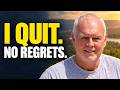
Quit your job at 67? Without a million dollars? Hear Jack's story of finding freedom and happiness after leaving the 9-to-5, proving it's never too late to live on your
The decision to leave full-time employment at age 67 was not driven by financial preparedness or the accumulation of a million dollars, but by a profound realization about the value of time. This perspective shift was catalyzed by an encounter with an elderly veteran, who, from his wheelchair, advised, "Son, don't work here so long that instead of pushing, you're riding." This sentiment resonated deeply, prompting a departure from working for others to pursue an independent path.
The common advice to amass a million dollars before retirement is questioned. The argument presented is that accumulating wealth solely to live off interest overlooks the irretrievable nature of time. The time invested in earning such a sum cannot be recouped, regardless of financial returns. Furthermore, the notion of saving for adult children, who are in their 40s, is also challenged. The speaker posits that prioritizing one's own well-being and happiness in later life is not greedy, especially when adult children are financially independent and supportive of their parent's pursuit of personal fulfillment. In this case, the speaker's children expressed happiness that he "pulled the plug," enabling him to spend more time on activities he enjoys, such as picking up his grandchildren from kindergarten.
This newfound freedom allows for control over one's schedule and engagement in fulfilling activities, such as dog walking and other freelance "gigs." While this path does not generate substantial income, it offers a significant improvement over a previous situation where time was dictated by numerous demands from employers, leading to exhaustion and a lack of personal energy upon returning home.
A significant concern for many individuals who remain in their jobs is the fear of being perceived as a failure if they choose to leave. The speaker advocates for prioritizing self-perception over external judgment. The opinions that truly matter are those of one's immediate inner circle, such as a spouse, though the ultimate decision rests with the individual. While discussions with a spouse may involve initial resistance, the understanding of personal desires is expected to emerge.
The irretrievable nature of time is a recurring theme, underscored by a lesson learned from a great-uncle. As he was nearing the end of his life, he shared that no one ever expresses regret about not working longer. This observation, made when the speaker was 15 or 16 years old, has held significant weight over the years.
The speaker has found personal satisfaction in dog walking, which also provides physical exercise. This activity has led to some weight loss and an improved sense of well-being, despite the persistence of a "gut." The daily routine involves walking significant distances, up to 8 or 9 miles, and generally getting along well with the dogs. Challenges include a dog that repeatedly attempts to urinate on the speaker's shoes, a behavior that is being addressed through communication rather than punitive measures. Another anecdote involves a small dog that refuses to walk and is carried by the speaker, with the owners paying for this service.
The core of the decision to transition away from traditional employment is rooted in the pursuit of happiness and the desire to spend time with preferred individuals. The speaker outlines a typical day involving dog care, followed by fishing by the river, an activity that connects with a past identity as an "old river rat."
The concluding message is not a universal directive to quit one's job. Instead, it emphasizes that if current employment is not fulfilling, and considering that retirement is often shorter than anticipated, it is important to re-evaluate. The time available for personal pursuits after a lifetime of work is limited, especially when compared to the perceived abundance of time available during younger working years. The speaker, identifying as "Jack, your over 60 underdog," concludes that life can be "great if you don't weaken."
The Decision to Quit at 67
The speaker recounts a pivotal moment at age 67 when a veteran's words inspired him to leave his job and start his own venture, despite not having the 'million dollars' often cited as a retirement necessity. He questions the value of accumulating wealth if it means sacrificing present time and happiness.
- The speaker quit his job at 67.
- He was inspired by a veteran's advice: 'don't work here so long that instead of pushing, you're riding.'
- He did not have a million dollars, challenging common retirement advice.
- He questions the purpose of working for money to live off interest, as time is non-refundable.
Prioritizing Self and Family Support
The speaker discusses the societal pressure and personal motivations behind saving for retirement, including leaving an inheritance for children. He argues for prioritizing self-care and personal happiness, noting his own children supported his decision to pursue his own interests.
- Some people save to leave an inheritance for their children.
- The speaker believes taking care of oneself in retirement is not greedy.
- His children supported his decision to quit and pursue his own activities.
- He now has freedom to spend time on hobbies like walking dogs and doing gigs.
Unconventional Preparation and Moving Past Judgment
The speaker admits he wasn't fully prepared when he quit and faced criticism for not saving enough. He explains his life circumstances made traditional saving difficult and urges listeners to move past such judgments.
- The speaker was not prepared financially when he quit.
- He received comments about not saving enough.
- His life circumstances prevented him from saving traditionally.
- He encourages moving past these judgments and focusing on the present.
Addressing Fears and External Opinions
The speaker clarifies he's not advising everyone to quit their jobs impulsively but shares his own experience. He addresses the fear of being perceived as a failure and encourages focusing on one's own thoughts and happiness rather than external opinions.
- The speaker is sharing his personal experience, not giving universal advice to quit.
- He acknowledges the fear of being seen as a failure.
- He advises focusing on personal thoughts and happiness over others' opinions.
- The opinions of a close circle (spouse, kids) are important, but the final decision is personal.
A Deathbed Regret (or Lack Thereof)
The speaker shares a profound lesson from his great uncle, who, on his deathbed, never wished he had worked longer. This reinforces the idea that time is precious and should not be spent solely on work if one is unhappy.
- The speaker learned a lesson from his great uncle.
- His great uncle, on his deathbed, said he never wished he had stayed working longer.
- This emphasizes the value of time and not regretting time spent working if unhappy.
Finding Joy in New Pursuits
The speaker describes his current fulfilling activities, such as dog walking, which provide exercise and a sense of purpose. He shares humorous anecdotes about specific dogs, highlighting the joys and minor challenges of his new lifestyle.
- The speaker enjoys dog walking as a post-retirement activity.
- This activity provides exercise and has helped him lose some weight.
- He shares anecdotes about a dog that tries to urinate on his shoes and a dog that needs to be carried.
- These activities are more fulfilling than his previous demanding job.
The Pursuit of Happiness and Personal Plans
The speaker poses a question about personal happiness and encourages listeners to consider if they are content with their current situation. He shares his plans for the day, which include dog care, fishing, and enjoying the river, emphasizing a life lived on his own terms.
- The speaker asks if listeners feel happy with their current situation.
- He emphasizes the importance of happiness and spending time with desired people.
- His plans for the day include dog care, fishing by the river.
- He identifies as an 'old river rat'.
Final Thoughts: Enjoy Your Work or Seek Happiness
The speaker concludes by reiterating that staying in a job is fine if one enjoys it. However, if unhappy, one should consider alternatives, as retirement is shorter than often perceived. He signs off as 'Jack, your over 60 underdog.'
- The core message is to stay in a job only if you enjoy it.
- Retirement is perceived as shorter than many people think.
- The speaker is 'Jack, your over 60 underdog.'
- The final advice is 'it's a great life if you don't weaken.'