
 ~4m17:42
ReTribalize 02: Don't Build a House. Build a Container.
Aug 5, 2026
Read: ~4m · You save: 14 min
ReTribalize 02: Don't Build a House. Build a Container.
Can play, drama, and ritual build real community? Christian and Sam explore group flow, leadership under pressure, and launching a holistic self-mastery residency in It
Published 2026-08-05
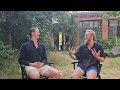
In this interview, Christian speaks with Sam about playfulness, leadership, and the design of residencies for creative and entrepreneurial communities. Sam describes a two-month residency project in Italy and the challenges of launching such programs.
Play as a Group Connector
Sam identified acting and drama as the most valuable activities in a recent co-living residency. An acting workshop, which combined drama with ritual performance, encouraged participants to see one another from different perspectives. Sam said the workshop produced more generative and cathartic experiences for participants than emotional-sharing practices typical of spiritual communities.
Christian linked this experience to embodiment. He described how physical engagement allows people to enter a group flow state. He cited the book Group Genius, which describes this state as one of playfulness and spontaneity that enables deeper connection and synergistic results.
Creating Containers for Play
Sam stated that play is a fragile state. Hunger, thirst, or insecurity make play difficult. The key factor is an environment in which participants feel comfortable being themselves, including with their insecurities. Groups become playful when people can be foolish, messy, and imperfect without fear of judgment.
Sam described the need to tolerate awkwardness. He recommended that people new to content creation start a private account and allow themselves to be unpolished, so they can later refine their best expression. He applied the same principle to dance. He recalled learning contact improvisation, a free-form partner dance, and asking a partner to practice being awkward together. This practice reduced anxiety and built confidence, and he repeated it at each dance session until he felt comfortable with the form.
Sam named dance, theater, and martial arts as effective ways to learn play. He noted that teaching sparring also creates this opportunity.
Common Thread Across Practices
Sam said he and his collaborator Aidan identified a shared principle across their teaching. Dialogue, acting, martial arts, and intuitive singing each remove rigidity. They give people permission to be physically foolish, vocally uninhibited, and awkward. Sam described this process as "ironing out the wrinkles," which he linked to holistic self-mastery.
Leadership and Psychological Safety
Christian asked how to create spaces where beginners feel safe. Sam said that practices help, but that the primary factor is the leader's inner development. Leaders who have done sustained inner work can hold space from their essence rather than their ego. This allows others to be themselves.
Sam contrasted two forms of competition. One form enables people to strive together. The other breeds conflict.
Sam described a personal example from about five years earlier. He played ultimate frisbee with a highly competitive player, named Will in the account, who intimidated him. Sam said he felt fear of dropping passes all summer and never felt free while this player was present. A second player, also named Will, was gregarious, joked on the sideline, and was highly skilled. Sam said that when this player threw to him, he laughed instead of fearing a dropped pass.
Sam linked this to the astrological association of the leader with Leo. He described the quality of Leo as playfulness rather than arrogance.
Playfulness Under Load
Sam stated that the most important quality of a leader is the capacity to remain playful under pressure. As responsibility increases, stress and decision weight rise. He described his own situation: he now makes decisions for about a dozen people, and business pressures have grown. A leader who stays free under load allows others to take on more responsibility while remaining free.
Sam contrasted this with corporate structures, where seniority often increases seriousness. He said that in some hedge funds, the higher one rises, the harder one must become. He described the resulting hardness as a "crust" around the soul. He identified this crust as a reason many people resist corporate culture and executives. He called maintaining a soul within positions of authority one of the most difficult challenges.
Sam mentioned a former chief financial officer and angel investor who is developing an adult summer camp. The camp targets executives and aims to create healing spaces for the inner child.
Sam also said that his work focuses on people in their twenties. He argued that people in this age group are less conditioned by corporate culture. He stated that teams with aligned values, working toward defined real-world goals while remaining playful, reduce the need for later recovery.
The Italy Residency
Sam described a two-month residency project in Italy. The venue includes a pool, a recording studio for daily podcast production, and practice facilities. Sam and several collaborators connected to ReTribalize are designing a program of practices for what Sam calls holistic self-mastery.
The target participants are creatives and entrepreneurs who want to work together. The program also includes people seeking deeper practice. Planned activities include:
- Martial arts and embodiment practice
- Breathwork and meditation
- Acting workshops
- Intuitive singing
- Ritual and ceremonial spaces
Sam described the residency as experimental. The program does not impose a rigid structure. Organizers aim to observe what emerges within the group over the two months. Christian described the aim as a combination of playfulness, curiosity, and openness to mystery.
Christian noted that Sam is becoming a partner in ReTribalize. He described Sam's interest in the practice ecosystem as valuable for people who build co-living houses through the ReTribalize network. Christian said that defined practices and systems are important for developing playfulness, depth, and bonding as communities grow.
Sam stated that he is most excited about the depth of connections and the outcomes that cannot be predicted in advance.
Aiming Toward Excellence
Sam described the practices as oriented toward excellence. He said the long-term goal is a "wisdom school" or "neo-monastery," where the purpose of each practice is to develop virtues. He stated that virtue creates synergies that exceed the sum of individual contributions. Christian said he also regards excellence as a core value.
Three Challenges in Launching a Residency
Christian asked Sam to identify the hardest parts of launching a residency. Sam named three.
- Finding the place. A residency requires access to the right people and venues. Sam said the ReTribalize network and his existing network provided this access. He stated that the ReTribalize Academy currently includes about 20 people with venues ready for co-living communities. He said he speaks with a landowner of this kind every week.
- Finding people who want to attend. Sam said that his existing network provided people ready to fill the venues. He also said that individuals who can bring a network, or who are learning to build one, can partner with these venues. He stated that he has offered such partnerships, including free stays in exchange for help building a community.
- Avoiding distraction and misalignment. Sam identified this as the main danger within a co-living house. He stated that participants must know what they want and remain aligned with a set of virtues: excellence, creativity, playfulness, and wisdom. When these align, Sam said, the group can generate new culture and new forms of consciousness. He described this direction as connection with the divine or sacred.
Christian added that staying focused on work, close relationships, and spiritual practice, while also engaging in community, is a balancing point for many people who are not used to living communally.
Mastery, Focus, and Prioritization
Sam cited Mastery by George Leonard, a well-known text in this field. He summarized its central idea as making each action an expression of the same practice. Each task is a step toward a larger vision that may take decades or a lifetime to realize. Sam said that his approach to the residency program follows this framework.
Sam disagreed with the common saying that how one does anything is how one does everything. He said that, at the basic level, he does not agree. He cited his own untidy room alongside strong performance in writing and in building projects he values. He argued that the main difficulty for many people is prioritization.
He described creators who focus heavily on pre-creative rituals, including meditation, journaling, making coffee, and breathing in sunlight, before starting their work. By the time they begin, they are already tired. In Sam's view, prioritization should come first. Excellence in reserves and execution can then develop from that base.
Christian responded that the path of mastery requires several virtues. He argued that people who focus on detail can misunderstand the role of intention and of manifestation toward that intention. He stated that a person must know what they want and pursue it consistently over time.
Sam said that his intention in France had been to keep his room clean, and that he had done so that morning.
Ideal Collaborators
Asked whom he would most like to build with, Sam named people who express generosity and kindness. He said he seeks collaborators who share his view of the world's current situation and who hold complementary knowledge that he lacks. He also cited strong conversation as a requirement.
Play, Drama, and Group Flow
The speakers reflect on a drama/acting workshop at the residency and argue that play, drama, and acting build bonding and group flow.
- Favorite event was an acting workshop held the night before, blending drama and ritual performance.
- Speakers say playful acting produced group flow and was generative and cathartic, and the speaker felt high while completely sober.
- A book called Group Genius is cited on playfulness and spontaneity as a route to deeper connection and synergetic force multipliers.
- Playfulness is hard to achieve in emotional or dramatic settings, unlike sports.
Creating Safe Containers for Play
Play is fragile; safety, self-acceptance, and permission to be foolish and messy create the conditions for playfulness.
- Play is described as one of the most fragile states; hunger, thirst, or insecurity make play difficult.
- Skilled facilitation and a comfortable environment let people be themselves, foolish, and messy without needing perfection.
- Advice: make a secret account and let yourself be cringey and raw to find your highest expression, then refine it.
- Contact improv, dance, theater, martial arts, and sparring are cited as opportunities to learn play.
- Practices such as dialogue, acting, martial arts, and intuitive singing are described as ways of ironing out rough spots and developing holistically toward holistic self-mastery.
Leadership, Safety, and Playfulness Under Load
Beginners feel safe when facilitators have done inner work and lead from essence rather than ego; leaders should stay free while under load.
- Leadership capacity is described as dropping into essence, out of ego, which gives others permission to be themselves.
- A personal story: a competitive ultimate frisbee player caused fear of dropping the disc, while a playful teammate, Will, made the speaker feel free.
- The Leo archetype is linked to the playfulness of a lion rather than arrogance.
- Key leadership quality: increasing the capacity to play while under load, which lets others take on responsibility more freely.
- Corporate and hedge fund hierarchies are described as creating a hard crust around the soul; the speakers mention an adult summer camp for executives and inner children started by an ex-CFO angel investor.
The Italy Residency Program
Sam describes a 2-month residency in Italy for creatives and entrepreneurs, combining embodiment, martial arts, breathwork, meditation, acting, and intuitive singing.
- The residency is a 2-month project in Italy with a pool and a recording studio for daily podcasts, plus practice facilities.
- The program is for creatives and entrepreneurs and for people wanting to drop in deeply through martial arts, embodiment, breathwork, meditation, acting, and intuitive singing.
- The residency is experimental and open-ended, without a strong container, to see what emerges among the group.
- The speakers mention a wisdom school or neo-monastery aimed at developing virtues through practice.
- Sam is becoming a partner in the ReTribalize network; Sam is said to be running residencies this fall and probably in Portugal afterward.
Challenges, Distraction, and Mastery
Launching residencies is hardest in finding the right people and venues; the danger is distraction, which can be countered by alignment with virtues and a larger vision.
- Finding the venue requires knowing the right people; the ReTribalize network has land owners and venues ready to go.
- The ReTribalize Academy reportedly has about 20 people with venues who want to build co-living spaces; a land owner is contacted weekly.
- Sam can partner with venues in exchange for helping build a community; one example is free stay in exchange for community-building.
- The third hard part is avoiding distraction or misalignment; virtues named include excellence, creativity, playfulness, and wisdom.
- Mastery by George Leonard is cited: how you do one thing is how you do everything, which the speaker partly disagrees with, arguing prioritization matters more than detail.
Final Question and Closing
The conversation closes with Sam's wish to build with generous, kind, aligned people who bring complementary knowledge, plus details about joining the project.
- Sam wants to build with people who express generosity and kindness, share the same vision and situational awareness, and bring complementary skills.
- The interview closes with a call for viewers to find the project through a link in the description to Retreat Atlas.