
 ~5m24:22
A 2x World Trading Champion's Embarrassingly Simple Strategy - Patrick Nill
Sep 10, 2026
Read: ~5m · You save: 19 min
A 2x World Trading Champion's Embarrassingly Simple Strategy - Patrick Nill
A two-time World Cup Trading Champion reveals his simple swing strategy, worst trade, and why one hour a day can be enough to win.
Patrick Nill, a trader from Reutlingen, Germany, is a two-time winner of the World Cup Trading Championship, which he describes as the oldest and most widely followed trading competition in the world. He has finished in the leaderboard's top ranks for six consecutive years and has reached the podium 12 times.
In an interview with World Class Edge host Andrea, Nill described his background, his trading method, his risk management, and the worst trade of his career.
Background
Nill worked as a bookbinder and ran his family company, often working 16-hour days. In 2018, he sold the business to trade full-time. His family doubted the decision, and a friend called trading gambling. One year later, he appeared on the World Cup leaderboards.
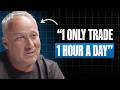
When he began, Nill wanted to trade all day and take 20 to 50 trades per session, in the style of a scalper. He found the approach too demanding. He spent the entire day under pressure, and his results were weaker. He reduced his activity to one or two trades per day, entering only when a setup met his criteria. He now spends about one hour in the morning analyzing the market and placing trades, after which the trading day is complete.
Nill states that he is not suited to scalping. He takes one to three minutes to make decisions, and he finds decisions within seconds too difficult.
Trading Method
Nill's analysis combines market profile, volume-based directional analysis, and horizontal price zones. His process follows four steps:
- Assess the market profile and volume. He identifies value areas and the overall direction.
- Draw support and resistance zones.
- Identify PBD patterns. He marks the PBD structures within the zones.
- Enter when the signals align. A trade requires the market profile, the zones, and the PBD to confirm each other.
Nill uses two timeframes. He analyzes the 4-hour chart for the broader picture and trades on the 15-minute chart.
The PBD Pattern
Nill describes the PBD as a simple method. A strong directional push is followed by a trading range. The trader waits for price to break out of the range. The trader then enters in the direction of the break to follow the trend, or against it to trade a reversal.
Nill prefers counter-trend trades. He waits for the price to move in the opposite direction before entering. He defines a clear take-profit level and a clear stop-loss level before each trade.
Positions are typically held from 4 hours to 5 days.
Risk-Reward and Win Rate
Nill's preference depends on the account type:
- Championship accounts: He prefers a high win rate. Because championship returns are driven by risk, he aims to avoid consecutive losses. He closes championship trades in the evening to avoid overnight risk, which results in smaller positions.
- Private accounts: He prefers a high risk-reward ratio, because larger reward targets can generate more profit per trade.
Risk Per Trade and Drawdown
Nill risks about 0.2% of capital per trade in his private accounts. In the championship, he risks 2% to 3% per trade. He reports that he has tolerated drawdowns of 20% to 30%. In 2026, his drawdown reached approximately 50%, due to the oil trade described below.
Market Focus
Nill was primarily an oil trader before 2026. After the outbreak of the war, he stopped trading oil and shifted to the DAX index. He states that the trading ranges differ significantly:
- Oil: The average daily range was 3. Nill could assess whether prices were cheap or expensive relative to that range.
- DAX: The index can move by thousands of points in a day and is more volatile.
Nill reports that the trading conditions during the war were easier to manage. Reactions to public statements, including those from Donald Trump, often reversed, and Nill traded those reversals in the opposite direction. He now plans to return to oil trading, noting that oil signals are clearer and less prone to false breakouts. He also cites gold and gas as alternative markets he could trade if his setups do not appear in the DAX.
Worst Trade
Nill's worst trade occurred in 2026. He held a short oil position over the weekend when the war began. The market opened on Monday with a gap of 700 to 900 points, and it moved another 100 points against him before he exited. He describes the position as small, but the loss was large relative to his account and required a long recovery.
Nill did not identify a single best trade. He noted that his individual trades are generally small.
Time Commitment
Nill's trading time depends on his location. He trades three to four hours per day at home and about one hour when traveling. He trades approximately 150 days per year. He describes his activity as part-time and states that he trades only when his setups appear. He does not trade every day.
He notes that a trader does not need to be in front of the screen constantly to be successful.
Psychology and Responsibility
Nill's financial independence changed his approach to trading. He sold his company before he began trading, so he did not depend on trading income for living expenses. He has other business projects, which he says reduces the pressure of trading results.
Nill reports that becoming a father changed his trading behavior. He became more anxious after losses and took less risk. He describes this change as a new sense of responsibility. He says a friend in Dubai, Nico, reported a similar change after becoming a father, and that he could not identify a specific cause.
Changes in the Competition
Nill states that the competition has changed. Earlier years featured the same leading traders throughout the year. More recently, participants have appeared with large returns over a single day that were not sustained. He describes greater visibility and more participants, so a top finish now requires a higher percentage return.
Team and Location
Nill trades with partners Tom and Serge. He describes Serge as a source of input on entry timing. Nill sometimes asks Serge whether to wait a few minutes before entering a trade, but he does not use footprint charts, order books, or depth-of-market data. The team has relocated from Germany to Cyprus, where they trade from a trading floor in Larnaca. Nill lives outside the city and travels frequently. The partners now operate more independently and spend less time together because of their educational work.
Masterclass
Nill recorded a masterclass for World Class Edge. It covers the structure of PBD setups and explains when to trade and when not to trade. It also reviews selected trades from the championship, with commentary on the reasoning behind each trade.
Introduction
Introduction to Patrick Nill's background as a World Cup Trading Championship competitor and his rise from bookbinder to professional trader.
- Patrick Nill is a German trader described as a legend in the World Cup Trading Championships, the oldest and most famous trading competition.
- He reportedly won six years in a row on the leaderboards and finished on the podium 12 times.
- He ran his family bookbinding company working 16-hour days until 2018, when he sold it to trade full-time.
- His family laughed at him and a friend called trading gambling; one year later he was on the World Cup leaderboards.
- He says one hour in the morning is enough: he waits for the right setup, makes one or two trades, and the day is over.
Background and Recognition
Patrick reflects on his transition from a Reutlingen trader to an internationally recognized figure, and on his motivations for trading.
- He initially started trading to show his friends and parents that he could trade.
- He describes his life as a traveling trader, trading from his phone and office.
- He has competed in the annual Forex trading cup and remained on the 2025 and 2026 leaderboards.
- He says 2026 is going well due to being at the screen when markets suit him; 2025 was less favorable.
- He is now partly a trading influencer and says his wife and kids are less enthusiastic about it.
Swing Trading vs. Scalping
Patrick explains why he moved away from scalping to swing trading and his decision-making process.
- He initially wanted to scalp with 20 to 50 trades a day but found it too much work and too pressured.
- He is too slow for one-second decisions; he is comfortable with 1 to 3 minutes to decide.
- He decided to make fewer trades, waiting for the right setup, and his results improved.
- His analysis uses market profile and volume-based analysis on normal screens, drawing zones (support and resistance) and then PBD setups.
- He trades 15-minute charts and looks at 4-hour charts for the big picture.
PBD Strategy and Trade Management
Explanation of the PBD setup and Patrick's preference for counter-trend trades and risk-reward choices.
- PBD is described as a simple method: wait for a big push, then a range forms, then enter when price breaks out of the range to follow or counter the trend.
- He prefers counter-trend trades, waiting for price to move down before entering.
- He values clear take-profit and stop-loss levels.
- In the World Cup he prefers a high win rate due to the competition structure; in his private account he prefers high risk-to-reward.
- In the World Cup he often closes trades in the evening to avoid overnight risk.
Oil, War Loss, and Risk Management
Patrick discusses his shift from oil to DAX and US indices, the war-related loss, and the psychological impact of responsibility.
- He was mostly an oil trader, then switched to DAX (ducks, as transcribed) when the war began because oil moves became unpredictable.
- He held oil positions from 4 hours to 5 days.
- He went short on oil on a Friday before the war started and lost roughly 700 to 900 points over the weekend, with another 100 points lost on Monday.
- He says oil signals are clearer and it fakes out less, and he may return to oil as markets calm.
- Patrick says his risk per trade is about 0.2% in his private account and 2 to 3% (up to 5%) in the championship.
- He is comfortable with a 20 to 30% drawdown in the championship; this year's drawdown may have reached around 50%.
- He says becoming a father changed his trading, making him more anxious and conservative, a shift he attributes to responsibility.
Time Commitment and Lifestyle
Patrick talks about his time commitment, trading frequency, and the benefit of not relying on trading income.
- He spends about three to four hours a day trading at home and about one hour when traveling.
- He trades roughly 150 days per year, so he describes himself as part-time rather than full-time.
- He says he only takes trades when signals appear, typically one or two days a week.
- He had a business that he sold before trading, so he did not depend on trading for income.
- The hosts emphasize that successful trading does not require constant screen time.
Championship Landscape, Team, and Masterclass
Closing discussion covering the championship landscape, team setup in Cyprus, and an upcoming masterclass.
- He notes that competitors now include more lucky, short-term performers who fade after a few days.
- The championship has more visibility and more participants aiming for top placements.
- He moved his team from Germany to Cyprus and trades from a trading floor in Larnaca when present.
- Patrick and his team (Tom and Serge) now operate more independently, though they still share education and some collaboration.
- He recorded a free masterclass for World Class Edge covering the structure of PBD setups, including trades from the championship.