
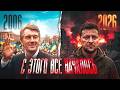
 ~11m48:14
Причина СВО, о которой почти не говорят. При чём тут газ?
Jul 10, 2026
Read: ~11m · You save: 37 min
The Reason for the Special Military Operation That's Almost Never Discussed. What Does Gas Have to Do With It?
Uncover the hidden history of the Russia-Ukraine conflict, revealing how gas disputes, political betrayals, and geopolitical chess led to war. A deep dive into energy p
The genesis of the current conflict can be traced back to a single statement attributed to Vladimir Putin in 2008: "Ukraine is not even a state." This remark, reportedly made during a closed-door meeting between Russia and NATO at the Bucharest Summit, surfaced in geopolitical discourse, causing apprehension in the West but not escalating into a major scandal. While the Kremlin has never officially confirmed or denied this statement, its resonance has been felt in the evolving relationship between Russia and Ukraine over the subsequent decade. This period was marked by escalating tensions, including two "gas wars" that impacted Europe, and a growing reliance on gas as a political tool.
The intricate relationship between Russia and Ukraine, particularly concerning gas, began with the dissolution of the Soviet Union. A foundational agreement stipulated that Russia would supply Ukraine with gas at a significantly reduced price compared to European markets, in exchange for Ukraine facilitating the transit of Russian gas to Europe. This arrangement, intended to foster economic interdependence and solidify bilateral ties, endured for thirteen years. However, its sustainability was ultimately undermined by fundamental issues, primarily related to pricing and transit.
The Foundation of the Gas Relationship: Price and Transit
In 2005, Ukraine paid approximately $50 per thousand cubic meters of gas, a stark contrast to the three to four times higher prices paid by European nations. This substantial discount was not merely a gesture of goodwill but an investment by Russia, aimed at securing Ukraine's economic alignment and preventing its westward drift. Despite the financial cost to Russia, this pricing strategy was deemed crucial for future stability.
The physical infrastructure for this gas trade was equally critical. Three main pipelines—Urengoy-Pomary-Uzhhorod, Soyuz, and Progress—originated in Western Siberia, the primary gas extraction region, and all traversed Ukrainian territory to reach Europe. The Yamal-Europe pipeline, completed in 1999, offered an alternative route through Belarus but accounted for only a quarter, or sometimes less, of the volume transported via Ukraine. Later additions like the Blue Stream and Nord Stream pipelines did not fully circumvent the reliance on Ukrainian transit. Consequently, Russia's gas revenues were heavily dependent on Kyiv's cooperation, a precarious situation given their status as independent states.
Ukraine's industrial sector, largely inherited from the Soviet era, comprised heavy industries such as metallurgy, chemicals, and machine building, all heavily reliant on affordable gas. With limited domestic resources and facing hyperinflation in 1993, which saw prices increase 101-fold, the nation's industrial capacity would have collapsed without cheap Russian gas.
The theoretical framework of the gas arrangement appeared robust: Russia possessed a reliable transit route, Europe received its gas supply and paid for it, and Kyiv benefited from subsidized fuel for its industries. This mutually beneficial scenario, however, began to unravel as Kyiv perceived the gas leverage as a means to extract more favorable terms from Moscow. Disputes over gas pricing or transit often led Ukraine to pivot towards the West, implicitly or explicitly threatening to deepen cooperation with Western nations, including military ties. Russia, in turn, would often concede to Ukraine's demands to maintain its influence.
Gas as a Political Pawn: Early Disputes and Asset Swaps
The politicization of gas predated the term "gas war." A significant early instance occurred on September 3, 1993, in Massandra, Crimea, where Ukrainian President Leonid Kravchuk and Russian President Boris Yeltsin met. Ukraine had accumulated substantial gas debts amidst a struggling economy. The Black Sea Fleet, a significant Soviet legacy, remained stationed in Sevastopol. The proposed solution was a barter agreement: Ukraine would transfer the entire Black Sea Fleet to Russia in exchange for the write-off of its gas debts.
This proposal, however, ignited a scandal in Kyiv. The Ukrainian parliament reacted with fury, and the press accused Kravchuk of treason for trading a symbol of independence for debt relief. Although the agreement collapsed, the division of the Black Sea Fleet was eventually settled 18 months later under President Leonid Kuchma. Under revised terms, Russia received 80% of the fleet, with Ukraine receiving 20% in lieu of its gas debt. This episode marked the first high-level articulation of the principle: "If you cannot pay for gas, pay with assets."
Ukraine's economic collapse made it difficult to meet its financial obligations. The debt at that time was substantial, approximately $600 million. Four years later, Ukraine again settled gas debts with Soviet-era assets. In 1997, Russia acquired strategic bombers (Tu-160 and Tu-95MS) and Kh-55 cruise missiles in exchange for gas payments. These nuclear-capable aircraft, physically located in Ukraine, were difficult for Kyiv to operate without Russian support, including fuel and spare parts. Russia effectively reclaimed assets it considered its own, as Ukraine lacked the funds to pay for the gas. This pattern of debt accumulation by Ukraine, followed by asset settlement, became a recurring theme.
In 1997, a package of agreements concerning the Black Sea Fleet and a Treaty of Friendship and Cooperation were signed. This treaty formally established the boundaries and sovereignty between Moscow and Kyiv. However, the gas debt remained an issue, leading to Russia securing a 20-year lease on several bays in Sevastopol and Feodosia for its naval vessels, effectively settling outstanding gas debts.
The Transit Fee and the First Gas War
Simultaneously, the transit of Russian gas to Europe continued. Russia paid Ukraine for this transit, not in cash, but in gas itself. A portion of the gas flowing through the pipelines was allocated to Ukraine as payment for facilitating transit to Europe. This arrangement, seemingly straightforward on paper, became a point of contention.
The volume of gas Ukraine was entitled to as transit payment was clearly defined in contracts. However, Ukraine began to take slightly more than its allocated share, a practice it justified with technical explanations while Gazprom protested. This "theft," as Gazprom termed it, amounted to approximately 660 million cubic meters of gas in December 1997 alone, valued at around $48 million. Despite these discrepancies, the Kremlin largely overlooked these overages for an extended period.
Ukraine was in a favorable position. It received gas as transit payment, supplemented by the gas it "borrowed," and purchased additional gas from Russia at a subsidized rate. While European prices rose from 100 and then to 50. On August 8, 2004, Gazprom and Naftogaz signed a new agreement extending these favorable terms for another five years. This move was strategically timed ahead of Ukraine's presidential elections, aiming to ensure a pro-Russian candidate, Viktor Yanukovych, would win. Yanukovych, a proponent of Russian integration and the Russian language, was seen as a predictable partner for Moscow, unlike his pro-Western opponent, Viktor Yushchenko.
The election campaign was marred by the poisoning of Yushchenko with dioxin, a substance found in his body at a concentration a thousand times the norm. While the perpetrator remained officially unidentified, suspicions were directed towards Moscow, though the narrative overlooked Russia's substantial gas concessions to influence the election outcome.
In the first round of the 2004 presidential election, Yushchenko secured 39.9% of the vote, and Yanukovych received 39.3%. The second round saw Yanukovych initially declared the winner by a narrow margin. However, Yushchenko's team and international observers alleged widespread fraud, citing ballot stuffing and inflated turnout in eastern Ukrainian regions. Protests erupted in Kyiv, leading to the "Orange Revolution," named after Yushchenko's campaign color. On December 3, 2004, the Supreme Court of Ukraine declared the results of the second round impossible to determine due to mass violations favoring Yanukovych and ordered a rerun. The rerun, held on December 26, resulted in Yushchenko's victory.
For Moscow, this outcome was a significant blow. The subsidized gas deal was predicated on a friendly neighbor and a predictable political landscape. Yushchenko's presidency signaled a shift in Ukraine's geopolitical orientation.
The Shift to Market Prices and the Second Gas War
Three months after Yushchenko's inauguration, Naftogaz CEO Oleksiy Ivchenko proposed to Gazprom CEO Alexei Miller that the existing gas transit payment scheme be revised. Ukraine sought to receive payment for transit in cash, at market rates, rather than in gas. This would allow direct revenue to flow into the state budget, providing greater financial flexibility.
Yushchenko's plan also included a proposal for Russia to pay market rates for gas transit while Ukraine would continue to purchase gas from Russia at the subsidized rate of $50 per thousand cubic meters. This audacious proposal, essentially asking for premium payment for transit while receiving discounted gas, was met with a reciprocal response from Moscow: if Ukraine desired market-based business relations, it would have to pay market prices for its gas.
Yushchenko also declared Ukraine's intention to join NATO and deepen ties with Europe, signaling a clear political pivot away from Moscow. Russia responded by demanding market prices for its gas. The negotiations throughout 2005 saw Gazprom progressively increase its proposed price for Ukraine, from 180, and finally to $230 per thousand cubic meters by November. Putin publicly stated that Russia had been selling gas below market rates, at a loss, to support Ukraine's economy, and that this practice would cease. Russia had been effectively subsidizing Ukraine's treasury by billions of dollars annually, with the expectation of Ukraine remaining within its sphere of influence.
The negotiations concluded without an agreement by December 31, 2005. Ukraine insisted on the $50 price, a relic of pre-election agreements, while Russia deemed these terms obsolete given the changed political landscape and Ukraine's westward orientation.
At 1:00 AM on January 1, 2006, Gazprom halted gas supplies to Ukraine. Transit to Europe continued, as contracts with European nations remained in effect. Ukraine, however, began to draw gas from the transit pipelines, claiming it as payment for transit. Gazprom estimated that Ukraine took approximately 95 million cubic meters on the first day, comparable to Austria's daily consumption, and nearly 120 million cubic meters on the second. Kyiv referred to this as "technical withdrawal" or "transit gas rights," while Gazprom labeled it theft.
Europe reacted swiftly. Economic ministers from Austria, Germany, Italy, and France sent a joint letter to Kyiv expressing concern that reduced energy supplies would severely damage relations with Ukraine. The crisis lasted three days, concluding on the night of January 3-4 with a new agreement. Both Russia and Ukraine declared victory, with Presidents Yushchenko and Putin stating that a mutually acceptable resolution had been found.
The compromise involved Ukraine receiving cash payments for gas transit rather than gas itself. Ukraine would purchase gas from Russia at 50 but considerably lower than the $230 Europe paid.
A key element of the new agreement was the introduction of a Swiss intermediary company, RosUkrEnergo, jointly owned by Gazprombank structures and Ukrainian businessman Dmytro Firtash. RosUkrEnergo purchased Russian gas from Gazprom at the European market price of 65 per thousand cubic meters). This mixture was then sold to Ukraine at $95 per thousand cubic meters. The profit margin was captured by RosUkrEnergo, controlled by structures linked to Gazprombank and Firtash, an oligarch who had risen to prominence through gas schemes during Kuchma's presidency and became an informal advisor and gas intermediary under Yushchenko. This arrangement effectively tied gas supplies to politically convenient players.
Escalating Tensions and the Path to Conflict
Despite the resolution of the first gas war, the price for Ukraine continued to rise. The initial 130, and later $180, inching closer to market rates.
Meanwhile, Yushchenko continued to pursue Ukraine's integration into NATO. On April 21, 2005, Ukraine entered an "intensified dialogue" with NATO, a preparatory stage for membership discussions. This cooperation deepened, with Ukrainian military reforms aligning with NATO standards and participation in joint exercises.
In response to NATO's eastward expansion, Putin delivered a seminal speech at the Munich Security Conference on February 10, 2007, warning against NATO forces moving closer to Russia's borders and questioning the purpose of such expansion. This speech was widely interpreted as a public declaration that Russia would resist further NATO encroachment.
In early 2008, Yushchenko, Tymoshenko, and Verkhovna Rada Speaker Arseniy Yatsenyuk sent a joint letter to the NATO Secretary General requesting a Membership Action Plan (MAP), the final step before formal accession. This move was reportedly made secretly, without parliamentary approval, and caused a significant scandal. The Party of Regions and Communists blocked parliamentary proceedings for two months.
The Bucharest Summit in April 2008 addressed Ukraine's and Georgia's NATO aspirations. While the US and Eastern European nations supported their membership, Germany and France expressed reservations, fearing provocation of Russia. The summit's final declaration stated that Ukraine and Georgia would become NATO members but without a MAP, leaving the timeline and implementation vague.
During the summit, Putin reportedly told US President George W. Bush that "Ukraine is not even a state," emphasizing its historical ties to Russia and the perceived threat of NATO expansion into what Russia considered its sphere of influence. This statement, though unconfirmed officially, underscored Russia's deep concerns.
The August 2008 Russo-Georgian War, triggered by Georgia's attempt to regain control of South Ossetia and Abkhazia, demonstrated Russia's willingness to use force in its perceived sphere of influence. NATO's non-intervention in this conflict served as a stark message to aspirant members. Yushchenko's vocal support for Georgia and his navy's actions against Russian Black Sea Fleet vessels operating near Georgia further alienated Moscow.
By 2008, RosUkrEnergo had become problematic, with Firtash aligning closely with Yushchenko, diminishing his utility as a controllable intermediary. Renewed gas debts and corruption scandals further complicated the situation. Simultaneously, Yulia Tymoshenko, then Prime Minister, pursued her own political agenda, ostensibly supporting NATO integration but allegedly hindering Ukraine's path to membership.
Recognizing Yushchenko as an intractable figure, Moscow shifted its focus to Tymoshenko, viewing her as a more pragmatic negotiator. On October 2, 2008, Putin and Tymoshenko signed a memorandum of understanding to remove RosUkrEnergo from gas dealings and establish direct, long-term contracts between Gazprom and Naftogaz. This agreement was a political boon for Tymoshenko, who had long campaigned against RosUkrEnergo's alleged corruption.
However, on December 29, 2008, Yushchenko, on holiday, ordered Naftogaz CEO Oleh Dubina not to sign the finalized contract, effectively scuttling the agreement. This move, exceeding presidential authority according to Ukrainian law, plunged Ukraine into a gas crisis.
The Second Gas War and its Aftermath
On January 1, 2009, Medvedev announced that Ukraine's gas price would increase to 2 billion in accumulated debt. Failure to comply would result in gas cutoff. Ukraine refused, deeming the price unsustainable.
Gazprom reduced gas supplies to Ukraine on January 1, 2009, while continuing transit to Europe. Ukraine again began drawing from transit pipelines, leading to significant supply reductions across Europe. By January 6, several European countries faced severe shortages, with some experiencing complete transit halts and humanitarian crises.
On January 7, Gazprom completely halted transit through Ukraine. Amidst the crisis, European nations proposed deploying observers to monitor the transit. Russia agreed, shifting the focus of blame to Kyiv. Yushchenko denied responsibility, claiming the situation was blackmail. The Verkhovna Rada's vote on resolutions supporting the president or calling for cooperation with Russia revealed a divided parliament.
Tymoshenko returned to Moscow on January 17, 2009, to negotiate. After an all-night session, Gazprom and Naftogaz signed two ten-year contracts on January 19: one for gas supply to Ukraine and another for transit through Ukraine to Europe. These contracts were decoupled, with separate pricing mechanisms. RosUkrEnergo and Firtash were excluded.
The new contracts established market-based pricing for Ukraine, linked to oil prices, and introduced a "take-or-pay" clause. Ukraine secured a compromise: while gas prices became market-based, transit fees would initially remain at the old tariff for one year, with a 20% discount on gas purchases as a reciprocal concession. The average price for Ukraine, factoring in the discount, was approximately $232 per thousand cubic meters, aligning with the terms previously agreed upon by Putin and Tymoshenko.
The resolution of the second gas war saw Europe remember the disruption, prompting Russia to accelerate the construction of bypass pipelines. Tymoshenko, despite her role in resolving the crisis, lost the 2010 presidential election to Yanukovych by a narrow margin. Russia had openly supported Yanukovych, who promised a more Russia-friendly course.
Yanukovych's presidency saw the signing of the Kharkiv Accords in April 2010, extending the Black Sea Fleet's lease in Sevastopol until 2042 in exchange for a 30% gas discount, reducing the price from 230 per thousand cubic meters. This represented a significant financial benefit for Ukraine, reinforcing the traditional exchange of discounted gas for military presence and political loyalty.
Meanwhile, Russia proceeded with constructing alternative gas routes, including the Nord Stream pipelines (launched in 2011 and 2012) bypassing Ukraine, and the South Stream pipeline, intended to run under the Black Sea to the Balkans. However, under pressure from the EU and US, Bulgaria halted South Stream construction in June 2014, citing competition law concerns. Russia then redirected its efforts towards the TurkStream pipeline, with gas exiting in Turkey.
The EU and US actively sought to limit Russian gas's influence in Europe, driven by American shale gas production and a desire to reduce European energy dependence on Moscow. Europe's own interest in diversifying energy sources also played a role.
The Turning Point: Ukraine's Geopolitical Choice
The launch of Nord Stream diminished Ukraine's strategic importance as the sole transit route. Its leverage waned, shifting the US focus from pressuring Moscow through transit disruptions to leveraging Ukraine itself as a potential platform for threats against Russia, particularly concerning its political orientation and NATO aspirations.
Yanukovych attempted to balance relations with both Russia and Europe, but the signing of the Association Agreement with the EU in November 2013, a significant step towards integration, signaled a definitive choice. Russia responded by offering Ukraine a gas price reduction and a $15 billion loan, attempting to retain its influence. However, a substantial segment of Ukraine's elite, driven by a "European dream," had already committed to closer ties with the EU, underestimating the economic and military consequences of a conflict with Russia.
Yanukovych's eventual overthrow and flight to Russia led to the annulment of agreements, the annexation of Crimea, and increased Ukraine-NATO alignment, culminating in the current Special Military Operation.
Over three decades, Russia invested billions in Ukraine through debt forgiveness, subsidized gas, and financial bailouts, aiming to secure loyalty. However, these efforts proved transient, as each new leadership often shifted the country's geopolitical course. The strategy of buying loyalty from specific individuals failed to secure the nation's long-term allegiance. Russia's attempts to purchase Ukraine's affection were met with Ukraine's embrace of Europe. The repeated disappointment over perceived "corrupt elites" highlighted a fundamental misunderstanding of market dynamics in international relations.
Introduction: The Unspoken Cause and the Role of Gas
The video begins by referencing Vladimir Putin's 2008 statement about Ukraine not being a state, linking it to the Bucharest Summit and a private conversation with Bush. It posits that this sentiment, coupled with a history of gas disputes starting with the 2006 gas war, forms the underlying cause of the Special Military Operation, a narrative often overlooked.
- Vladimir Putin's 2008 statement: 'Ukraine is not even a state.'
- Occurred during the NATO summit in Bucharest.
- Discussed privately between Putin and Bush.
- The Kremlin never confirmed or denied the statement.
- This statement is cited in geopolitical discussions.
- The first gas war between Russia and Ukraine was in 2006.
- The video aims to explore the origins of the Special Military Operation, tracing it back to gas issues.
The Foundation: Post-Soviet Gas Deals and Transit Dependence
The post-Soviet deal between Russia and Ukraine involved Russia selling gas at a discount in exchange for Ukraine transiting it to Europe. This arrangement, intended to foster strong ties, lasted 13 years. The chapter details the initial gas price ($50/1000 cubic meters for Ukraine vs. 3-4 times more for Europe) and the strategic importance of Ukrainian transit routes (Urengoy-Pomary-Uzhhorod, Soyuz-Progress) before alternative pipelines like Yamal-Europe, Blue Stream, and Nord Stream were established.
- Post-Soviet deal: Russia sold gas cheaply to Ukraine, which transited it to Europe.
- This scheme was meant to be an economic foundation for relations.
- It lasted for 13 years.
- In 2005, Ukraine paid $50 per 1000 cubic meters of gas.
- Europe paid 3-4 times more than Ukraine.
- The discount was seen as an investment in Ukraine's alignment with Russia.
- Key Russian gas pipelines to Europe (Urengoy, Pomary, Uzhhorod; Soyuz-Progress) all passed through Ukraine.
- The Yamal-Europe pipeline via Belarus appeared in 1999, covering only a quarter of Ukraine's transit volume.
- Nord Stream and Blue Stream appeared later.
- Nearly all Russian gas export revenues depended on Ukraine's transit.
- Ukraine's heavy industry (metallurgy, chemistry, machine building) relied on cheap gas.
- Ukraine faced hyperinflation in 1993 (prices rose 101 times).
Leverage and Assets: Gas Debts as Political Currency
Ukraine began using its gas transit position as leverage, threatening closer ties with the West (including military cooperation) if Russia didn't offer better terms. This dynamic is illustrated by the 1993 Massandra meeting where Ukraine, unable to pay gas debts, offered the Black Sea Fleet in exchange for debt write-offs. While initially rejected, a partial division of the fleet occurred later, establishing a precedent: 'If you can't pay for gas, pay with assets.' This pattern continued, with Ukraine later trading strategic bombers (Tu-160, Tu-95MS) for gas debts.
- Ukraine used gas transit as political leverage, threatening Western alignment.
- In 1993, Ukraine owed gas debts and offered the Black Sea Fleet to Russia for debt forgiveness.
- This deal (Massandra Agreement) was initially controversial in Ukraine.
- Later, the Black Sea Fleet was divided: 80% to Russia, 20% to Ukraine in lieu of gas debt.
- A precedent was set: 'If you can't pay for gas, pay with assets.'
- Four years later, Ukraine paid gas debts with strategic bombers (Tu-160, Tu-95MS) and cruise missiles (Kh-55).
- In 1997, a friendship treaty was signed, fixing borders and respecting sovereignty, but gas debts remained.
- Russia leased naval bases in Sevastopol and Feodosia for 20 years as part of gas debt settlement.
Transit Gas and Price Manipulation: The 2004 Election Context
The transit payment system, where Ukraine received gas instead of money for transit, became a point of contention. Ukraine began taking slightly more gas than agreed upon, justifying it with technical reasons. Gazprom protested, but the Kremlin initially ignored these 'thefts,' which amounted to significant sums (e.g., $48 million in December 1997). Ukraine benefited from cheap gas prices ($50/1000 cubic meters) while Europe paid significantly more, a situation Russia maintained to keep Ukraine politically aligned, especially before the 2004 presidential election.
- Transit payment: Ukraine received gas, not money, for transit services.
- Ukraine began taking more gas than contractually agreed upon ('theft').
- In December 1997, this over-extraction amounted to ~660 million cubic meters, valued at ~$48 million.
- Gazprom protested, but Russia initially overlooked these 'thefts.'
- Ukraine's gas price remained low (170 by 2004).
- In August 2004, a 5-year agreement maintained the low price for Ukraine, 3-4 times cheaper than Europe's.
- Russia's goal was to ensure a pro-Russian president (Viktor Yanukovych) was elected in the upcoming Ukrainian presidential election.
The Orange Revolution and Shifting Gas Demands
The 2004 Ukrainian presidential election saw Viktor Yanukovych, favored by Russia, narrowly lose to Viktor Yushchenko after alleged vote rigging and the 'Orange Revolution.' Yushchenko's poisoning before the election and the subsequent annulment of the second round led to his victory. This shift in power disrupted Russia's strategy, as the cheap gas deal was tied to a pro-Russian leadership. Yushchenko's government then sought to change the transit payment system from gas to cash at market rates, while still wanting to buy gas at preferential prices, a move Russia countered by demanding market prices for both.
- Russia supported Viktor Yanukovych in the 2004 Ukrainian presidential election.
- Viktor Yushchenko was the pro-Western opponent.
- Yushchenko was poisoned before the election; his face was disfigured.
- Yanukovych initially won the second round, but results were contested.
- The 'Orange Revolution' protests led to the annulment of the second round.
- Yushchenko won the re-vote.
- This outcome disrupted Russia's plan for a pro-Russian leader.
- Yushchenko's government sought to change transit payments from gas to cash at market rates.
- They also wanted to continue buying gas at preferential prices.
- Russia responded by demanding market prices for gas.
The First Gas War (2006) and the RosUkrEnergo Deal
Negotiations in 2005 led to Russia increasing Ukraine's gas price, eventually reaching $230/1000 cubic meters by November, matching European prices. Russia stated it was no longer willing to subsidize Ukraine's economy. The contract expired on December 31, 2005, without a new agreement. On January 1, 2006, Gazprom cut off gas supplies to Ukraine, though transit to Europe continued. Ukraine began taking gas from the transit pipeline, leading to a European energy crisis. A 3-day crisis ended with a new agreement: Russia paid Ukraine in cash for transit, and Ukraine bought gas at $95/1000 cubic meters (initially), with a mediator company, RosUkrEnergo, involved.
- Russia raised Ukraine's gas price throughout 2005, reaching $230/1000 cubic meters by November.
- Putin stated Russia was ending its subsidized gas sales to Ukraine.
- The contract expired on December 31, 2005.
- On January 1, 2006, Gazprom stopped gas supply to Ukraine.
- Ukraine began taking gas from the transit pipeline intended for Europe.
- This caused a 3-day energy crisis in Europe.
- A new agreement was reached on January 4, 2006.
- Russia would pay Ukraine in cash for transit.
- Ukraine would buy gas at $95/1000 cubic meters (initially).
- The Swiss company RosUkrEnergo became a mediator.
NATO Aspirations, Munich Speech, and the Bucharest Summit
The RosUkrEnergo scheme involved mixing expensive Russian gas ($230) with cheaper Central Asian gas (~$65) to sell to Ukraine at $95. This arrangement benefited intermediary structures linked to Gazprombank and Ukrainian businessman Dmytro Firtash. Despite the resolution, Ukraine, under Yushchenko, continued pursuing NATO membership. Russia responded with Putin's 2007 Munich Security Conference speech, warning against NATO expansion. The 2008 Bucharest Summit declared Ukraine and Georgia would become NATO members, but without a Membership Action Plan, a compromise that angered Russia.
- RosUkrEnergo mixed Russian gas (65) to sell to Ukraine at $95.
- This scheme profited structures linked to Gazprombank and Dmytro Firtash.
- Ukraine, under Yushchenko, continued its push for NATO membership.
- Putin's 2007 Munich Security Conference speech warned against NATO expansion.
- The 2008 Bucharest Summit stated Ukraine and Georgia would become NATO members, but without a Membership Action Plan.
- This declaration was seen as a political promise without a concrete mechanism, provoking Russia.
Russo-Georgian War, Firtash's Downfall, and Tymoshenko's Rise
Following the 2008 Bucharest Summit, Russia demonstrated its willingness to use force, as seen in the August 2008 Russo-Georgian War. Ukraine's support for Georgia and its fleet's actions against Russian ships further strained relations. Meanwhile, RosUkrEnergo became uncontrollable, and corruption scandals emerged. Russia sought to remove Firtash and RosUkrEnergo from the equation. Yulia Tymoshenko, a political rival to Yushchenko, emerged as a potential partner for Russia. A memorandum was signed in October 2008 to remove RosUkrEnergo and establish direct gas contracts.
- August 2008: Russo-Georgian War demonstrated Russia's willingness to use force.
- Ukraine supported Georgia during the conflict.
- RosUkrEnergo became uncontrollable, and corruption issues arose.
- Russia aimed to remove Firtash and RosUkrEnergo.
- Yulia Tymoshenko, a rival to Yushchenko, became a potential Russian partner.
- October 2008: Putin and Tymoshenko signed a memorandum to remove RosUkrEnergo and establish direct contracts.
The Second Gas War (2009) and the New Contract
Yushchenko blocked the new gas contract on December 30, 2008, leading to the Second Gas War starting January 1, 2009. Russia set a price of $450/1000 cubic meters and demanded immediate debt repayment. Ukraine again took gas from the transit pipeline, causing a severe European energy crisis by January 6, 2009. After European pressure, Russia allowed observers on the Ukrainian pipeline. Yushchenko denied responsibility, but the Ukrainian parliament showed little support for him. Tymoshenko then negotiated a new deal with Putin, signed January 19, 2009. This agreement eliminated intermediaries, set a market-based price for Ukraine ($232/1000 cubic meters average, after a 1-year 20% transit discount), and separated gas supply from transit payments.
- December 30, 2008: Yushchenko blocked the new gas contract.
- January 1, 2009: Second Gas War began.
- Russia set gas price at $450/1000 cubic meters and demanded debt repayment.
- Ukraine again took gas from the transit pipeline, causing a European crisis.
- By January 6, 2009, several European countries faced severe gas shortages.
- Russia allowed observers on the Ukrainian pipeline.
- Yushchenko denied responsibility; parliament showed little support.
- January 17, 2009: Tymoshenko negotiated a new deal with Putin.
- January 19, 2009: Gazprom and Naftogaz signed two 10-year contracts.
- Intermediaries like RosUkrEnergo were eliminated.
- Ukraine's gas price became market-based (~$232 average after a 1-year 20% discount).
- Transit payments were separated from gas supply contracts.
Bypass Pipelines, Shifting Leverage, and US Influence
The 2009 contract established a market price for Ukraine and a 'take-or-pay' principle. Russia accelerated building bypass pipelines like Nord Stream (launched 2011-2012) and South Stream (later rerouted as TurkStream after Bulgarian halt due to EU/US pressure). The US shale gas boom and Europe's desire for energy diversification created a convergence of interests against Russian pipeline dominance. Ukraine's leverage diminished as transit routes diversified. The US shifted focus from transit leverage to Ukraine's political alignment (NATO).
- The 2009 contract introduced market-based pricing and 'take-or-pay' for Ukraine.
- Russia accelerated construction of bypass pipelines: Nord Stream (2011-2012) and South Stream (later TurkStream).
- South Stream was halted in Bulgaria due to EU/US pressure.
- US shale gas and European diversification reduced reliance on Ukrainian transit.
- Ukraine's leverage as a sole transit route decreased.
- US focus shifted from transit leverage to Ukraine's political alignment (NATO).
Euromaidan, Yanukovych's Choice, and the Inevitable Conflict
In November 2013, Yanukovych refused to sign the EU Association Agreement, opting instead for closer ties with Russia, which offered gas discounts and debt relief. This triggered the Euromaidan protests. Russia's attempts to retain Ukraine through financial aid failed to alter the strategic trend of Ukraine's elite seeking European integration. The subsequent ousting of Yanukovych, annexation of Crimea, and escalation of conflict are presented as consequences of this long-standing geopolitical struggle.
- November 2013: Yanukovych refused to sign the EU Association Agreement.
- He opted for closer ties with Russia, receiving gas discounts and debt relief.
- This decision triggered the Euromaidan protests.
- Russia's financial aid attempts failed to change Ukraine's strategic European course.
- Yanukovych was ousted.
- Crimea was annexed by Russia.
- The conflict escalated, leading to the Special Military Operation.
- The narrative suggests Russia spent 30 years trying to buy Ukraine's loyalty, but only bought loyalty of individuals, not the country.