
 ~8m36:14
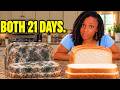
I Left 9 Bread Brands Out for 21 Days (Only 2 Actually Rotted)
Oct 6, 2026
Read: ~8m · You save: 28 min
I Left 9 Bread Brands Out for 21 Days (Only 2 Actually Rotted)
9 breads left out for 21 days! See which rotted, which stayed soft, and what the labels REALLY tell you. Uncover the truth about bread!
A 21-day experiment involving nine different brands of bread left on a kitchen counter revealed surprising results about spoilage, ingredients, and cost. Contrary to expectations, the loaves that remained soft and seemingly untouched were not necessarily the cheapest, and the ones that molded quickly were not exclusively the most expensive. This investigation aimed to uncover the factors influencing bread's longevity, texture, and nutritional value, moving beyond marketing claims to examine ingredient lists and production methods.
The 21-Day Test: Spoilage and Preservation
Nine bread brands were purchased and left unrefrigerated for three weeks: Great Value, Nature's Own Honeywheat, Arnold, Dave's Killer Bread, Sarah Lee, Ezekiel, Carbonaut, Kings Hawaiian, and an organic sourdough from Izio. A homemade loaf was also included for comparison.
At the end of the 21 days, only two loaves showed significant spoilage: Ezekiel bread and the Izzio sourdough. The Izzio sourdough had a 5-day shelf life printed on its packaging, and Ezekiel bread is typically sold frozen. Both were not intended for extended counter storage.
Conversely, several loaves that were not designed for long-term storage remained remarkably fresh. The keto loaf, with a Best Buy date of September 2nd, was still soft on day 21, 19 days past its date. Dave's Killer Bread, with a Best Buy date of September 4th, remained fresh for 17 days past its date. Sarah Lee, which had the longest printed date, still had at least a week of freshness remaining on day 21. This highlights that "Best Buy" dates are quality estimates, not definitive mold forecasts.
Beyond the Bag: Weight, Slices, and Sandwiches
The investigation also examined the physical characteristics of the bread. Eight of the nine packaged loaves weighed at or above their printed weight. Dave's Killer Bread was four grams under, considered negligible.
A significant variation was observed in slice weight, with a Great Value slice weighing approximately 26g, an Arnold slice weighing 44g, and a homemade slice weighing 55g. This difference impacts nutritional information and the perceived value of a "slice." For instance, Great Value provided 24 slices (12 sandwiches) from a 621g loaf, while Arnold yielded 16 slices (8 sandwiches) from a 700g loaf. Although Arnold offered fewer sandwiches, its slices contained more bread per slice.
Texture and Toasting: Staling, Freezing, and Browning
The "stale test" involved leaving a center slice from each loaf uncovered for 30 hours. All loaves stiffened, indicating that staling is a natural process that occurs when bread is exposed to air, regardless of brand or type.
The freezer test, where a slice was frozen for three weeks, showed that Ezekiel, Carbonaut, and Sarah Lee bread returned closest to their original texture after thawing.
Compression tests revealed differences in structural integrity. Dave's bread, Ezekiel, homemade, and the keto bread compressed the least, suggesting better structural resilience. Great Value, Sarah Lee, and Nature's Own bounced back the best after compression.
Toasting tests showed that Nature's Own Honeywheat browned the fastest, while Arnold stayed pale, indicating differences in the chemical composition driving browning reactions.
Decoding the Ingredient List: Beyond Marketing Claims
Examining ingredient lists revealed crucial information often obscured by front-of-package marketing.
- "Wheat" vs. "Whole Wheat": Nature's Own Honeywheat lists "wheat flour" as the first ingredient, which is refined flour. While whole wheat flour is present as the third ingredient, the primary component is refined. Federal standards define wheat flour, white flour, and plain flour as refined, meaning the bran and germ have been largely removed.
- "Organic" vs. "Whole Grain": The Izzio organic sourdough's first ingredient is "organic wheat flour," which is refined. This highlights that "organic" refers to the production method of the wheat, not necessarily the extent to which the grain is intact in the flour. "Whole wheat" indicates the proportion of the grain used.
- Refined Flour and Enrichment: Many conventional breads, including Great Value and the homemade loaf using King Arthur all-purpose flour, are based on refined flour. Enrichment adds back certain nutrients like iron and B vitamins, but does not restore the original bran and germ.
- Specialty Breads: Carbonaut is a low-carb bread engineered with wheat protein as a primary ingredient, with conventional flour appearing much later in the list. Its structure relies on fibers and gums.
Preservatives and Shelf Life: The Science of Staying Fresh
While only Great Value (calcium propionate) and Sarah Lee (calcium propionate and sorbic acid) listed conventional preservatives, other loaves demonstrated extended shelf life without them. Carbonaut lasted 19 days past its date, and Dave's Killer Bread lasted 17 days past its date, neither listing preservatives. Sarah Lee, with two preservatives, lasted seven days past its date. This suggests that formulation, packaging, and other ingredients play a significant role in mold resistance and shelf life.
The invention of commercially sliced bread in 1928, followed by the development of moisture-proof bread bags, created a need for mold inhibitors like calcium propionate, patented in 1938 by Ward Baking Company. This ingredient was intended to extend mold-free life by approximately two days.
The extended travel distances for bread, with a loaf averaging 96 miles from bakery to store by 1997, necessitated "extended shelf life technology" to reduce delivery routes. This shift has led to a perception that longer shelf life equates to better quality.
Sweeteners, Additives, and Nutritional Considerations
- Sweeteners: Five sweeteners were found across the nine brands: sugar, honey, organic cane sugar, organic molasses, and erythritol. Kings Hawaiian was approximately 18% sugar by weight, the highest. Dave's Killer Bread was the second highest in added sugar, with nearly 11g per 100g.
- Additives: Ingredients like added wheat gluten or wheat protein were present in seven of the nine loaves to strengthen dough and maintain uniformity. Enzymes appeared on five labels. Kings Hawaiian contained nine ingredients in the "softness" category, more than other loaves.
- Emulsifiers and Health Concerns: Studies have suggested associations between higher intake of certain emulsifiers, such as DATEM (dough conditioner) and guar gum, and increased rates of type 2 diabetes. While these studies show association, not causation, they raise questions about the long-term impact of ingredients used in highly formulated bread products.
- Glyphosate: The use of glyphosate, a weed killer, in conventional wheat farming is a concern for some consumers, as it has been classified as "probably carcinogenic to humans" by the International Agency for Research on Cancer.
Economic Realities: The Cost of Bread
The investigation explored the economics of bread production, particularly the low cost of Great Value loaves at $1.48. This affordability is achieved through squeezing costs, labor, time, and waste out of the production process. The farm value of commodities for one pound of white bread in 2023 was calculated at 9.4 cents, with flour, soybean oil, and corn syrup being the primary farm-derived ingredients. The majority of the cost is incurred post-farm, in milling, manufacturing, transportation, distribution, and retail. Walmart's scale and control over its Great Value brand allow for significant cost advantages.
Cost Per Serving and Nutritional Value
When normalizing for weight and comparing cost per sandwich:
- Great Value: 12 cents per two slices
- Nature's Own Honey Wheat: 31 cents per two slices
- Sarah Lee: 35 cents per two slices
- Arnold 100% Whole Wheat: 50 cents per two slices
- Dave's Killer Bread: 55 cents per two slices
- Homemade (with inexpensive flour): Approximately 21 cents per sandwich
- Carbonaut and Ezekiel: $1.00 per two slices
Fiber content varied significantly. Nature's Own Honeywheat and Great Value White bread offered about 1g of fiber per 52g serving. Arnold, Dave's Killer Bread, and Ezekiel provided 6g of fiber per sandwich. Carbonaut contained 18g of fiber per serving.
When comparing fiber cost per gram:
- Arnold: Approximately 8 cents
- Dave's Killer Bread: Approximately 9 cents
- Great Value: Approximately 12 cents
- Nature's Own Honey Wheat: 31 cents
- Izzio Sourdough: Approximately 38 cents
- Carbonaut: Approximately 5.5 cents
Annual Cost Projections
Estimates for annual bread consumption (normalized for quantity) showed a wide range:
- Homemade (with store brand flour): Approximately $112
- Great Value: Approximately $140
- Arnold 100% Whole Wheat: $335
- Ezekiel: $837
This demonstrates that while cheap bread offers volume and consistency, higher-priced options often provide enhanced nutritional benefits.
A New Bread Aisle Rule
Based on the investigation, a four-point rule for navigating the bread aisle was proposed:
- Brown is not an ingredient: The color of bread does not automatically indicate its healthfulness.
- Wheat is not the same as whole wheat: Refined wheat flour lacks the bran and germ found in whole wheat flour.
- Organic answers a different question: Organic refers to farming practices, not necessarily the completeness of the grain.
- Homemade tells you who made it, but not what they made it from: Homemade bread's quality depends on the ingredients used.
The primary check should be the flour ingredient. If it's whole wheat flour, the whole grain is the foundation. If it's wheat flour, enriched wheat flour, or organic wheat flour, further investigation into added ingredients is necessary.
Conclusion: Informed Choices
The investigation underscores that bread is not a monolithic category. Consumers face trade-offs between affordability, shelf life, nutritional content, and ingredient quality. Understanding ingredient lists, production methods, and the purpose behind various additives empowers consumers to make informed decisions that align with their dietary needs and preferences. The choice of bread involves considering not just its immediate cost, but its long-term nutritional contribution and the underlying production values.
The 21-Day Bread Challenge Begins
The experiment begins by leaving nine bread brands out for three weeks in a regular kitchen to observe their spoilage. The initial hypothesis that expensive bread is fresher and cheap bread has preservatives is challenged when some expensive loaves spoil quickly, while a cheaper one remains soft.
- Nine loaves of bread were left out for 21 days in a kitchen.
- The initial hypothesis was that expensive bread is fresher and cheap bread has preservatives.
- Some loaves became fuzzy, green, and smelled bad.
- Other loaves remained soft and smelled like fresh bread.
- The initial hypothesis was proven incorrect by the results.
Bread Selection and Homemade Comparison
The experimenter buys a variety of bread brands, including Great Value, Nature's Own, Arnold, Dave's Killer Bread, Sarah Lee, Ezekiel, Carbonaut, King's Hawaiian, and Izio organic sourdough. To provide an external comparison, a homemade loaf is also made.
- The specific brands purchased were: Great Value, Nature's Own Honeywheat, Arnold, Dave's Killer Bread, Sarah Lee, Ezekiel, Carbonaut, King's Hawaiian, and Izio organic sourdough.
- A homemade loaf was also created for comparison.
- The goal was to have an external reference point outside the bread industry.
Comprehensive Testing and Label Analysis
Various tests were conducted on the bread: checking best-buy dates, weighing loaves, counting slices, squeezing for texture, toasting, and blind taste tests. The focus shifts to understanding the 'job' each bread is designed for by examining ingredient labels.
- Tests included: checking best-buy dates, weighing, counting slices, squeezing, toasting, and blind tasting.
- The investigation evolved from a simple test to understanding the intended purpose of each bread.
- Ingredient labels were crucial for understanding the bread's composition and function.
- The front of the packaging can be misleading; the back provides the 'receipt'.
The Spoiled Loaves: Ezekiel and Izzio
Ezekiel bread and Izzio sourdough are identified as the two loaves that spoiled quickly. It's noted that these were not designed for long-term counter storage, unlike the others, prompting further investigation into the design intent of the remaining loaves.
- Ezekiel bread and Izzio sourdough were the two loaves that spoiled.
- These breads were not designed for 3-week counter storage.
- Their spoilage was expected based on their intended use.
- This observation led to questioning the design intent of other bread types.
Best-Buy Dates: Quality Estimates
Best-buy dates are discussed as quality estimates, not mold forecasts. Some loaves, like the keto loaf and Dave's, remained soft well past their best-buy dates, indicating significant variation in how companies estimate quality and shelf life.
- Best-buy dates are quality estimates, not definitive expiration dates.
- A keto loaf remained soft 19 days past its best-buy date (Sept 2nd).
- Dave's bread remained soft 17 days past its best-buy date (Sept 4th).
- Sarah Lee had the longest printed date and still had a week left.
- Companies estimate quality and shelf life very differently.
Weight and Slice Standardization Issues
Weight tests reveal that most loaves meet or exceed their stated weight, with Dave's being slightly under but negligibly so. The test highlights that 'one slice' is not a standardized unit, as slice weights vary significantly, impacting nutritional information and perceived value.
- Eight out of nine packaged loaves met or exceeded their printed weight.
- Dave's bread was 4 grams under, considered negligible.
- The weight of a 'slice' varies greatly between brands (e.g., Great Value ~26g, Arnold ~44g, homemade ~55g).
- Nutritional labels are based on these non-standardized slices.
- Slice size differences affect calorie, fiber, protein, and price per serving.
Sandwich Count vs. Bread Weight Value
Comparing loaves by the number of sandwiches they yield shows Great Value offering more sandwiches for less cost, but Arnold's sandwiches contain more bread by weight. This illustrates how different counting methods (slices vs. weight) yield different value perceptions.
- Great Value yielded 24 slices (12 sandwiches) from a 148g loaf, costing $2.50 less than Arnold.
- Arnold yielded 16 slices (8 sandwiches) but contained more bread by weight (700g vs. 621g).
- Counting by slices, sandwiches, or weight provides different value comparisons.
- Fewer sandwiches from Arnold contained more actual bread.
The Stale Test: Air Exposure's Impact
The stale test shows that after 30 hours, all breads had stiffened significantly, regardless of brand or type. Staling (starch retrogradation) is an inevitable process for uncovered bread, demonstrating that air exposure quickly affects texture.
- One slice from each loaf was left uncovered for 30 hours.
- All breads became stale within 30 hours, regardless of brand or type.
- Staling is a natural process of starch rearrangement (retrogradation).
- Nobody escaped the staling process when exposed to air.
Freezer and Compression Tests
In the freezer test, Ezekiel, Carbonaut, and Sarah Lee bread returned closest to their original state after being frozen for three weeks. Compression tests showed Dave's, Ezekiel, homemade, and keto bread compressed the least, while Great Value, Sarah Lee, and Nature's Valley bounced back best.
- Ezekiel, Carbonaut, and Sarah Lee performed best after a 3-week freeze.
- Dave's, Ezekiel, homemade, and keto bread compressed the least.
- Great Value, Sarah Lee, and Nature's Valley bounced back best after compression.
- These tests indicate differences in texture and structural integrity.
Toasting and Browning Differences
Toasting revealed differences in browning speed, with Nature's Own browning fastest and Arnold staying pale. This suggests variations in sugar and protein content, which drive the Maillard reaction during heating.
- Toasting revealed differences in how quickly slices browned.
- Nature's Own bread browned the fastest.
- Arnold bread stayed pale during toasting.
- Browning speed is influenced by sugars and proteins in the bread.
Decoding Ingredient Lists: Wheat vs. Whole Wheat, Organic
Examining ingredient lists reveals that 'wheat flour' is often refined, not whole wheat, despite brown coloring or 'wheat' in the name (e.g., Nature's Own). Organic status refers to production methods, not necessarily whole grain content (e.g., Izio).
- Nature's Own Honeywheat uses 'wheat flour,' which is refined, not 'whole wheat flour.'
- Brown color and 'wheat' in the name can be misleading.
- Organic refers to how wheat was grown, not its processing (e.g., Izio organic wheat flour is refined).
- Whole wheat flour retains the bran and germ; refined flour removes them.
- Enriched flour adds back some nutrients but doesn't replace the whole grain.
Specialty Breads and Flour Composition
Carbonaut is a low-carb bread engineered for protein and fiber, with a different ingredient architecture. Homemade bread using King Arthur flour is noted for its protein content, contributing to dough structure, but is still refined flour.
- Carbonaut is a low-carb bread focused on protein and fiber.
- Its ingredient list starts with water and wheat protein.
- King Arthur flour has a guaranteed protein content (11.7%), aiding dough structure.
- Homemade bread using refined flour is fundamentally similar to store-bought refined flour bread.
- Refining wheat removes bran and germ; enrichment adds back some nutrients.
The History of Sliced Bread and Preservatives
The history of commercially sliced bread in 1928 led to the invention of the slicer-wrapper machine to combat faster staling. A patent in 1938 for mold inhibition introduced calcium propionate as a solution to moisture-trapping plastic bags.
- Commercially sliced bread was first sold in 1928.
- The slicer-wrapper machine was invented because sliced bread staled too fast.
- Moisture-proof bread bags exacerbated mold problems.
- Calcium propionate was patented in 1938 to inhibit mold.
- This ingredient was developed to address issues created by slicing and bagging.
Distribution Needs and Shelf Life Standards
Extended shelf life technology, driven by distribution needs (trucks traveling further), became a standard quality expectation. This shift means bread is now often judged by its ability to remain soft for longer periods, rather than its original intended quality.
- Extended shelf life technology was developed to facilitate distribution.
- A 1997 report noted that extended shelf life enabled a large company to eliminate over a thousand delivery routes.
- Shelf life became a standard of quality, not just a distribution solution.
- Consumers now often expect bread to stay soft for extended periods.
- The focus shifted from original quality to prolonged softness.
Sweetener Analysis: Sugar Content Revealed
An analysis of sweeteners reveals King's Hawaiian has the highest sugar content by weight, while Dave's Killer Bread has a surprisingly high amount of added sugar, nearly triple that of Great Value, despite its 'healthy' image.
- Five sweeteners were identified across the nine brands.
- King's Hawaiian is approximately 18% sugar by weight.
- Dave's Killer Bread is the second highest in added sugar, at nearly 11g per 100g.
- Dave's Killer Bread has roughly three times the added sugar of Great Value.
- The 'healthy' image of Dave's Killer Bread can mask its added sugar content.
The Economics of Cheap Bread: Cost Squeezing
The low price of Great Value bread ($1.48) is explained by modern production's efficiency in squeezing costs, labor, time, and waste. The farm value of ingredients (wheat, soy, corn syrup) is minimal (under 10 cents per pound), indicating post-farm costs dominate bread pricing.
- Modern bread production prioritizes cost, labor, time, and waste reduction.
- The farm value of ingredients for one pound of white bread is very low (e.g., 9.4 cents in 2023).
- Flour, soybean oil, and corn syrup constitute the majority of farm-derived ingredient costs.
- The majority of bread cost occurs after the farm (milling, manufacturing, transport, retail).
- Walmart's scale and control over shelf space allow for extremely low pricing.
Nutritional Trade-offs in Low-Cost Bread
The nutritional aspect of Great Value bread is questioned due to its primary ingredient being enriched wheat flour, which lacks the bran and germ of whole grains. Fermentation, often skipped in industrial bread, impacts mineral bioavailability and digestibility.
- Great Value's primary ingredient is enriched wheat flour.
- Refining wheat removes bran and germ, reducing fiber and micronutrients.
- Enrichment adds back some nutrients but doesn't restore the whole grain.
- Skipping fermentation reduces mineral bioavailability and digestibility.
- Low-cost loaves are optimized for affordability, consistency, and shelf life, not nutrition.
Cost Per Sandwich and Fiber Value
The video calculates the cost per sandwich for various brands, showing homemade bread with inexpensive flour can compete with Great Value. It highlights that while some breads are cheap, they offer little fiber, whereas whole-grain options provide significantly more.
- Cost per sandwich varies widely: Great Value (~6 cents), homemade (potentially ~21 cents with store flour), Arnold (
50 cents), Ezekiel ($1.40). - Nature's Own Honeywheat has similar fiber (1g) to Great Value White bread per serving.
- Arnold, Dave's, and Ezekiel offer about 6g of fiber per sandwich.
- Carbonaut has exceptionally high fiber (18g), but is a specialty product.
- Brown bag packaging doesn't guarantee high fiber content.
Fiber Concentration and Cost Per Gram
A deeper analysis of fiber concentration reveals that while Arnold and Dave's may offer similar fiber per sandwich, Dave's has a higher concentration of fiber per gram of bread due to thinner slices. The cost per gram of fiber is calculated, showing Carbonaut as the cheapest source.
- Dave's Killer Bread has a higher fiber concentration per gram than Arnold.
- This difference is due to slice thickness affecting serving size weight.
- Cost per gram of fiber: Arnold (~8 cents), Dave's (~9 cents), Great Value (~12 cents), Nature's Own (~31 cents), Carbonaut (~5.5 cents).
- Carbonaut offers the cheapest fiber, but is a specialty bread.
- Focusing solely on fiber cost doesn't tell the whole story of a bread's value.
Annual Cost Comparison of Bread Choices
Annual costs are projected, showing a wide range from homemade (~$112/year) to Ezekiel (~$837/year). This highlights the significant economic differences in bread choices and the value proposition of controlling ingredients through homemade options.
- Annual bread cost projection (normalized for quantity):
- Homemade (store brand flour): ~$112
- Great Value: ~$140
- Arnold 100% Whole Wheat: ~$335
- Ezekiel: ~$837
- There's a significant economic disparity in the bread aisle.
- Homemade bread offers control over ingredients and potentially cost savings.
The New Bread Aisle Rules
Four rules for navigating the bread aisle are presented: 1. Brown is not an ingredient. 2. Wheat is not the same as whole wheat. 3. Organic answers a different question than whole grain. 4. Homemade indicates who made it, not necessarily what it's made from.
- Rule 1: Brown color does not equate to whole grain content.
- Rule 2: 'Wheat flour' is typically refined; 'whole wheat flour' indicates whole grain.
- Rule 3: 'Organic' refers to farming practices, not necessarily the grain's processing.
- Rule 4: Homemade bread's ingredients depend on the flour and other components used.
- Focusing on the flour type is key to understanding the bread's foundation.
Mold Resistance Beyond Listed Preservatives
The video revisits mold resistance, noting that only two loaves explicitly list preservatives (calcium propionate, sorbic acid). However, loaves without listed preservatives (Carbonaut, Dave's) lasted significantly longer, suggesting other formulation strategies manage mold and shelf life.
- Only Great Value and Sarah Lee explicitly list conventional preservatives.
- Carbonaut lasted 19 days past its date without listed preservatives.
- Dave's lasted 17 days past its date without listed preservatives.
- Sarah Lee, with preservatives, lasted 7 days past its date.
- Formulation, not just listed preservatives, impacts mold resistance and shelf life.
Maintaining Softness and Ingredient Complexity
Maintaining softness involves multiple ingredients and decisions related to moisture and packaging. King's Hawaiian uses nine ingredients for softness, while others like Dave's Killer Bread have complex ingredient lists that extend beyond what's initially apparent.
- Softness is achieved through ingredient choices, moisture, and packaging.
- King's Hawaiian uses nine ingredients related to maintaining softness.
- Dave's Killer Bread has a complex ingredient list, with many components listed within parentheses.
- Added wheat gluten or protein is used in seven loaves to strengthen dough structure.
- Enzymes are present in five labels, including a high-end organic sourdough.
Specialty Products and Health Concerns
Specialty breads like Carbonaut are highly formulated for specific dietary needs (low-carb), using ingredients like wheat protein, fibers, and gums for structure. The video distinguishes between 'bread' and 'highly formulated bread products,' questioning the long-term health impact of certain additives.
- Carbonaut is a specialty low-carb bread with a unique ingredient structure.
- Its structure relies on fibers, gums, and resistant starch, not primarily flour.
- The video differentiates between 'bread' and 'highly formulated bread products.'
- Studies suggest associations between emulsifiers (like DATEM, Gellan Gum) and health issues (e.g., type 2 diabetes).
- Long-term human trials for many bread ingredients are lacking.
Farming Practices and Ingredient Safety
Conventional wheat farming practices, including the use of herbicides like glyphosate (classified as probably carcinogenic), raise concerns about consumer exposure. The video encourages consumers to question ingredients and sourcing, advocating for recognizable ingredients and better sourcing.
- Conventional wheat farming may involve herbicides like glyphosate.
- Glyphosate is classified as 'probably carcinogenic to humans' by IARC.
- Consumers are increasingly questioning exposure to such chemicals in food.
- The video advocates for choosing bread with recognizable ingredients and better sourcing.
- Paying attention to ingredients and sourcing is presented as an informed choice, not fear-based.