
 ~6m15:41
Iran Launches Massive Projectile Barrage as 2,000 US Marines Approach; IRGC Delivers Stern Warning
Oct 15, 2026
Read: ~6m · You save: 10 min
Iran Launches Massive Projectile Barrage as 2,000 US Marines Approach; IRGC Delivers Stern Warning
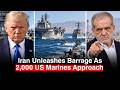
Iran launches massive projectile barrage as US Marines approach! IRGC issues stern warning. Tensions soar in the Strait of Hormuz. What's next?
The geopolitical landscape surrounding the Strait of Hormuz has intensified, marked by significant Iranian military operations, renewed American force deployments, and explicit warnings from Iran's Islamic Revolutionary Guard Corps (IRGC). These developments raise concerns about a potential escalation of regional conflict, impacting global energy markets and international shipping.
Recent Iranian actions have included increased pressure on commercial shipping, coinciding with a U.S. naval blockade of Iranian ports and ongoing consideration of further military options by Washington. The situation has placed this critical energy corridor at the center of an increasingly volatile confrontation.
Reports indicate the approach of approximately 2,000 additional American personnel to the region. It is important to distinguish between different U.S. military deployments. Previous reports detailed the deployment of roughly 2,000 soldiers from the U.S. Army's 82nd Airborne Division. Separately, Marine expeditionary units typically comprise approximately 2,500 personnel each. These movements commenced in March 2026. As of October 14th, there is no independently verified confirmation of a new, specific deployment of 2,000 Marines approaching Iran. However, the broader American military buildup remains substantial, providing President Donald Trump with additional options while underscoring the importance of diplomatic efforts to avert further escalation.
Iran has demonstrated its capacity to disrupt maritime traffic, even amidst months of U.S. and Israeli military operations. The confrontation has expanded beyond direct military exchanges, increasingly exposing commercial shipping, energy infrastructure, regional economies, and neighboring countries to its consequences.
On October 14th, senior Iranian officials signaled a shift in operational tactics, which has coincided with a documented increase in incidents involving vessels in and around the Strait of Hormuz. Iran's strategy appears designed to maintain leverage against Washington, while U.S. officials assert that Iran's military capabilities have been significantly degraded.
A significant new detail confirms the inclusion of Marine reinforcements in the latest American deployment. On October 8th, the Associated Press reported that a group of U.S. warships carrying over 7,000 sailors and approximately 2,000 Marines was en route to the Middle East. This force includes the USS Theodore Roosevelt Carrier Strike Group and the USS Makin Island Amphibious Readiness Group, accompanied by the USS John P. Murtha and USS Anchorage. U.S. officials stated that this deployment could facilitate the presence of three U.S. aircraft carriers in the region by late October, with more than 20,000 sailors and Marines operating as part of a broader naval presence.
The arrival of these forces would represent a substantial reinforcement of Washington's military posture. Aircraft carriers enable sustained air operations, while amphibious vessels transport Marines, helicopters, aircraft, and equipment designed for missions that can extend from sea to land. However, the presence of Marines does not inherently indicate preparations for an invasion. Such deployments can support evacuation missions, maritime security, defensive operations, rapid reinforcement, or limited combat operations. The specific purpose is contingent upon orders from military commanders and political decisions made in Washington.
The situation is particularly sensitive due to the response from Iran's Revolutionary Guard. Iranian commanders have repeatedly warned that any attempt to deploy U.S. ground forces into Iranian territory would result in retaliation against U.S. military installations and naval assets. On October 5th, Ali Fadavi, head of the advisory group to the commander-in-chief of the IRGC, issued one of Iran's clearest warnings regarding the possibility of a ground operation. His remarks extended beyond a general declaration of military readiness, identifying American bases and vessels as potential targets and asserting Iran's sufficient military capability to respond to further escalation.
These statements highlight a central concern for governments across the Persian Gulf. U.S. installations are dispersed across several countries, and any confrontation involving them could draw additional states into a conflict they may wish to avoid. The warning also reflects Iran's military doctrine of imposing costs beyond its own borders. Rather than directly matching U.S. naval and air power, Iran has utilized missiles, unmanned aircraft, coastal defenses, and smaller maritime units to threaten facilities and shipping routes. This approach presents a significant challenge for Washington. While U.S. forces possess substantial conventional military superiority, the ability to destroy large military formations does not necessarily eliminate the threat posed by smaller, mobile units operating across a wide geographical area.
On October 13th, the United Kingdom's Maritime Trade Operations agency reported that a container ship and a tanker were struck by unidentified projectiles within the Strait of Hormuz. These incidents heightened concerns among shipping companies and energy traders, with Iranian officials acknowledging a change in tactics against vessels deemed to be violating their restrictions. The exact weapons responsible for these two incidents were not independently confirmed in the reporting. However, these episodes occurred amidst a documented increase in missile, drone, and other maritime threats associated with the broader confrontation. Maritime security reporting indicates at least five incidents involving merchant vessels occurred in the vicinity of the Hormuz area within a 48-hour period.
The recent escalation has extended beyond the narrowest part of the strait, increasing concerns about shipping routes near the Gulf of Oman and the coastlines of Qatar and the United Arab Emirates. Iranian officials have characterized this campaign as an effort to prevent ships they deem non-compliant from transiting the area. U.S. officials, conversely, contend that Iran is attempting to restrict international commerce and leverage the resulting economic disruption as pressure against Washington. This has resulted in an ongoing contest over maritime access control without losing control of the broader military confrontation.
The latest developments also reveal adaptations in military operations by both sides following months of conflict. U.S. military officials state that previous operations have substantially damaged Iran's surveillance systems, coastal defenses, and naval capabilities. However, the loss of these assets has not halted Iranian maritime operations. Instead, Iran's Revolutionary Guard has reportedly altered its methods for identifying potential targets. According to an official, U.S. personnel confronted a vessel, ordered its occupants to leave, and subsequently destroyed it, reporting no casualties. This incident underscores the evolving nature of operations in the Gulf. While large military assets remain crucial, small boats, observation teams, and mobile launch systems can also influence events in heavily contested waters. For Iran, the use of smaller maritime units potentially offers a means to sustain pressure without exposing larger naval assets to overwhelming U.S. firepower. Such methods can complicate surveillance and create uncertainty regarding the location of forces involved in an operation. For Washington, this necessitates that protecting military vessels and commercial shipping involves more than intercepting incoming projectiles. It also requires detecting surveillance activity, monitoring suspicious movements, and determining when an approaching vessel poses a genuine threat. These decisions can become particularly challenging in waterways frequented by commercial ships, fishing boats, and military patrols.
The U.S. response has included both direct military measures and stricter restrictions on shipping linked to Iranian ports. On October 11th, U.S. Central Command announced that American forces had disabled a commercial cargo vessel in the Gulf of Oman after it allegedly attempted to violate the naval blockade. According to the U.S. military, a fighter aircraft struck the stern of the Panama-flagged vessel, identified as the Ocean Mollika, also known as the Araka Sun. Central Command stated the strike disabled its propulsion without injuring the crew. This incident followed several months of U.S. efforts to restrict shipping entering and departing Iranian ports. Iran has responded with its own maritime restrictions, asserting authority over vessels transiting the Strait of Hormuz. The Revolutionary Guard has claimed responsibility for operations against ships it accuses of using unauthorized routes, creating a situation where both Washington and Tehran are attempting to impose competing restrictions on shipping in the same broader region.
The United States aims to prevent Iran from benefiting economically from maritime trade while ensuring the unimpeded movement of oil and other commodities from neighboring countries. Iran, conversely, seeks to demonstrate that regional commercial activity cannot return to normalcy while U.S. pressure persists. The Strait of Hormuz is central to both strategies. Prior to the current conflict, the waterway carried approximately 30% of the world's traded oil and liquefied natural gas. Its geographical significance means that even relatively limited disruptions can impact markets far beyond the Middle East. Shipping companies must factor in potential strikes, insurance costs, vessel availability, and crew safety. Some vessels may continue operating with enhanced precautions, while others may delay voyages or seek alternative arrangements. The resulting uncertainty can increase transportation costs, affect energy prices, and complicate supply chains, even when substantial quantities of oil continue to reach international markets.
On October 14th, Brent crude futures traded around 84. Both benchmarks had risen as traders assessed renewed maritime incidents and broader Middle Eastern supply risks. The pressure on energy markets has become a significant factor in the political confrontation between Tehran and Washington. Senior Iranian officials have indicated that their latest maritime strategy is intended, in part, to prevent the United States from driving down global oil prices. One Iranian official characterized the struggle over energy prices and maritime access as a contest where both governments are attempting to anticipate each other's next move. This perspective suggests that Iranian decision-makers view the disruption of international shipping as a source of leverage against an economically and militarily stronger opponent.
This strategy carries considerable risks for Iran itself. Restrictions on shipping have damaged its own economy, particularly as the United States has intensified sanctions and enforcement measures against Iranian energy exports. Washington announced additional sanctions on October 8th targeting networks and vessels connected with Iranian petroleum shipments. These measures included 17 vessels and were part of a broader economic campaign aimed at limiting funds available to Iran. Energy intelligence data published this week indicated that Iranian seaborne crude exports had fallen sharply during September and reached zero in the measured October period. This finding pertains to flows covered by shipping data and does not necessarily imply a complete cessation of all Iranian petroleum trade. Nevertheless, it illustrates the pressure being applied to one of Iran's primary sources of foreign revenue.
For Iran's leadership, such restrictions create a significant dilemma. Accepting U.S. demands could weaken Tehran's negotiating position, but prolonged disruption also threatens domestic economic stability. This is why officials in Tehran have linked any lasting reduction in hostilities to the removal of the American blockade and the lifting of sanctions. Iranian Foreign Minister Abbas Araghchi has continued to present negotiations as a potential route out of the confrontation, maintaining that Iran should not be required to negotiate under military or economic coercion. Araghchi emphasized this position during remarks in Tehran earlier this month, stating, "There is no military solution nor any solution based on new sanctions." His comments point to an unresolved diplomatic dispute, despite repeated attempts to establish a ceasefire.
The United States and Iran reached an interim understanding in June, intended to provide a 60-day cessation of hostilities and establish a framework for a broader agreement. However, this arrangement collapsed amid renewed confrontation and ongoing disagreements over the Strait of Hormuz. Subsequent diplomatic efforts have focused on securing a more durable settlement. In September, Iranian representatives outlined a proposal involving the reopening of the strait, an end to hostilities, relief from sanctions, and renewed discussions regarding Iran's nuclear program. The proposed arrangement also addressed the conflict in Lebanon, reflecting Tehran's insistence that regional security issues should not be treated entirely separately from negotiations with Washington. U.S. officials did not accept Iran's initial conditions, although indirect contacts continued through intermediaries.
The latest response from Tehran suggests that significant differences remain. Mohsen Razayi, the secretary of Iran's Supreme National Security Council and a former commander of the Revolutionary Guard, described Washington's response to the latest peace proposal as inadequate. According to Iranian reporting, Tehran believes Washington has accepted some elements of its proposed conditions but has not adequately addressed others. Razayi also warned that renewed intensive military operations could place additional forms of regional infrastructure at risk, including data centers, communication cables, and technology facilities. His remarks indicate that Iranian officials are considering potential areas of retaliation beyond traditional military installations and maritime targets. Such threats also increase concern among governments and businesses operating critical infrastructure across the Gulf.
At the same time, President Trump has sent mixed signals regarding the possibility of further U.S. military action. On October 8th, Trump publicly stated that the United States would not resume strikes against Iran before the November 3rd midterm elections, saying, "The United States will not be attacking Iran at any time prior to the midterm elections."
Escalating Tensions and Military Preparations
The geopolitical situation between Iran and the US intensifies with Iranian operations near the Strait of Hormuz and US military preparations. Concerns rise about a wider regional conflict due to increased pressure on commercial shipping and US naval blockades.
- Iran and the US are in a dangerous new phase of confrontation.
- Iranian operations around the Strait of Hormuz have intensified.
- US military preparations include a naval blockade of Iranian ports.
- There are concerns about a wider regional conflict.
- Iran is increasing pressure on commercial shipping.
- The Strait of Hormuz is a critical energy corridor.
US Military Deployment Details
Clarification on US troop deployments reveals that while previous reports mentioned Army units, recent deployments include approximately 2,000 Marines as part of a larger naval force, including carrier strike and amphibious readiness groups.
- Previous reports of 2,000 troops involved the US Army's 82nd Airborne Division.
- Separate Marine deployments involve approximately 2,500 personnel per expeditionary unit.
- A US warship group carrying over 7,000 sailors and approximately 2,000 Marines is heading to the Middle East.
- This force includes the USS Theodore Roosevelt Carrier Strike Group and USS Macken Island Amphibious Readiness Group.
- The deployment could bring three US aircraft carriers to the region.
- The presence of Marines does not automatically signal an invasion; it can support various missions.
Iran's Stern Warning and Retaliation Threat
Iran's Revolutionary Guard issues a stern warning, stating that any attempt to deploy US ground forces into Iranian territory would trigger retaliation against US military installations and naval assets.
- Iran's Revolutionary Guard has warned against US ground forces entering Iranian territory.
- Retaliation would target US military installations and naval assets.
- Ali Fadvi, head of the advisory group to the IRGC commander-in-chief, issued a clear warning on October 5th.
- Potential targets include American bases and vessels.
- Iran claims sufficient military capability to respond to escalation.
- This warning highlights concerns for neighboring countries with US installations.
Iran's Asymmetric Warfare Tactics
Iran employs asymmetric tactics, using missiles, drones, and small maritime units to threaten facilities and shipping routes, posing a challenge to US conventional military superiority.
- Iran's strategy involves missiles, unmanned aircraft, coastal defenses, and smaller maritime units.
- This approach threatens facilities and shipping routes.
- It challenges Washington's conventional military superiority.
- Destroying large formations does not eliminate the danger from smaller, mobile units.
- On October 13th, a container ship and tanker were struck by unidentified projectiles in the Strait of Hormuz.
- Iranian officials acknowledged a change in tactics against perceived violating vessels.
Maritime Incidents and Competing Restrictions
Recent incidents, including projectile strikes on vessels and a US disabling of a cargo ship, highlight the ongoing contest over maritime access and the imposition of competing restrictions by both Iran and the US.
- At least five incidents involving merchant vessels occurred around the Hormuz area within 48 hours.
- Escalation extends beyond the Strait of Hormuz to the Gulf of Oman and coasts of Qatar and UAE.
- Iran aims to prevent non-compliant ships from passing.
- The US argues Iran is restricting international commerce for leverage.
- On October 11th, US forces disabled the commercial cargo vessel Ocean Mollika (Araka Sun) in the Gulf of Oman.
- This incident occurred after the vessel allegedly attempted to violate a naval blockade.
- Both Iran and the US are imposing competing restrictions on shipping.
Strait of Hormuz: Critical Chokepoint and Economic Leverage
The Strait of Hormuz's critical role in global energy trade makes disruptions highly impactful. Both Iran and the US are leveraging maritime control for economic and political pressure, influencing global oil prices.
- The Strait of Hormuz carried approximately 1/5 of the world's traded oil and LNG before the conflict.
- Disruptions in the strait affect markets far beyond the Middle East.
- Shipping companies face increased costs, insurance, and safety concerns.
- Brent crude futures traded around 94 on October 14th, rising due to risks.
- Iran's maritime strategy aims partly to prevent the US from lowering global oil prices.
- Disruption of shipping is seen by Iran as leverage against a stronger opponent.
US Sanctions and Iran's Economic Dilemma
Iran faces economic pressure from intensified US sanctions, with reported sharp declines in seaborn crude exports. This creates a dilemma for Tehran, balancing negotiating leverage with domestic economic stability.
- The US announced additional sanctions on October 8th targeting Iranian petroleum shipments.
- These measures included 17 vessels and aimed to limit funds for Iran.
- Energy intelligence suggests Iranian seaborn crude exports fell sharply in September and reached zero in October.
- This illustrates pressure on Iran's main source of foreign revenue.
- Restrictions on shipping damage Iran's economy.
- Iran links reduced hostilities to the removal of the US blockade and sanctions.
Diplomatic Stalemate and Future Risks
Diplomatic efforts continue, with Iran proposing a settlement involving reopening the strait, ending hostilities, sanctions relief, and nuclear program discussions. However, significant differences remain, and Iran warns of risks to regional infrastructure.
- Iranian Foreign Minister Abbas Savvaki emphasizes negotiations without coercion.
- An interim understanding in June for a 60-day cessation of hostilities collapsed.
- Iran proposed reopening the strait, ending hostilities, sanctions relief, and nuclear program talks.
- The proposal also addressed the conflict in Lebanon.
- US officials did not accept Iran's initial conditions.
- Mosen Raz, secretary of Iran's Supreme National Security Council, called the US response inadequate.
- Iran warns of risks to data centers, communication cables, and technology facilities.
Political Signals and Evolving Military Strategies
President Trump signals a pause in US strikes against Iran before the November midterm elections, while Iran continues to adapt its military operations and warn of potential retaliation.
- President Trump stated the US would not resume strikes against Iran before the November 3rd midterm elections.
- Iran's Revolutionary Guard has reportedly changed how it identifies potential targets.
- The use of smaller maritime units offers Iran a way to maintain pressure without exposing larger assets.
- Washington faces challenges in detecting surveillance and monitoring suspicious movements.
- The situation remains highly sensitive with ongoing military posturing and diplomatic deadlock.