
 ~11m1:09:51
A High School Teacher’s Thoughts About Kids Today - Jonathan Shaw
Oct 21, 2026
Read: ~11m · You save: 59 min
A High School Teacher's Thoughts About Kids Today - Jonathan Shaw
A high school health teacher warns that phones, social media, and shrinking family and community ties are reshaping youth mental health, and offers his proposed solutio
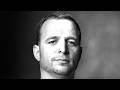
An interview with Jonathan Shaw, a high school health teacher in Maryland, conducted by Mark
Background
Jonathan Shaw has taught high school health for eight years. In his first year, he split his day between a high school and a middle school. In his second year, he taught health full time to sixth, seventh, and eighth graders. He then transferred to a full-time high school position. He also coaches the varsity tennis team. He graduated from high school in 2010 and estimates that he has taught about 3,000 students.
He teaches in a city within Maryland. He lives in a rural and suburban area about 40 to 45 minutes away. He said he has not been asked to raise his voice in his teaching career, and that his father, who was his coach and mentor, taught him to advocate for himself and others.
He said he has seen major changes in students over roughly the past decade and a half. He described the changes as the most significant he has witnessed in the way children are raised and in their experiences during childhood.
Smartphones and Social Media
Shaw identified smartphones and social media as the primary problem facing young people. He said the addictive design of these platforms and their algorithms have reduced nearly every dimension of youth wellness. He listed physical, intellectual, social, and emotional health. He said he believes the introduction of social media and smartphones is the main reason for the decline he observes.
He stated that technology companies invest tens of millions of dollars in designing their applications to attract and retain children. He said many parents do not understand this. He said the phones, video games, and screens compete directly with the activities that once filled young people's time.
Loss of Unstructured Time and Independence
Shaw and Mark described a shared experience of childhood: waiting alone for an appointment with nothing to do. Shaw said such periods required children to rely on their own thoughts. He said he used that time productively because of his imagination.
Shaw said that children now rarely spend five minutes alone in this way. He described modern youth activity as reward-based and distraction-based. He said the ability to be alone, comfortable, and free of distractions is essential for personal development, and that it has nearly disappeared.
Community Life and Screens
Mark said that when he traveled through Appalachia, including eastern Kentucky, residents were often outside doing yard work and talking with neighbors. He said this changed when cable television became widespread. He said cell phones have had a greater effect.
Shaw described the same pattern in Romney, West Virginia, where a friend owns property. He said he first noticed it about 15 years ago. He said children played outside, families did yard work, and neighbors spoke to each other. He said that residents of this economically poor region were among the happiest people he had met. He said that over about 10 years, he has noticed fewer people outside and more people indoors watching television.
Shaw described an evening run near his home in Maryland at about 5:30 p.m. on a day with temperatures of 71 to 72 degrees Fahrenheit. He said he passed between 200 and 300 homes. He saw one child outside, who was kicking a football alone in a front yard.
Shaw said the shift in community life has reduced the connection between people. He said that the connection to others, friendship, and maintaining relationships once shaped mental health and happiness.
Mental Health
Shaw said mental health problems among youth and in schools are significantly worse than most people believe. He said he estimates that nearly one in three of his students has been diagnosed with depression or a serious mental illness, either currently or at some point in their lives. He said he believes severe anxiety has become normalized among young people. He said the rates have increased by hundreds of percent, though he did not cite exact figures.
Shaw said he struggled with his own mental health early in his career. He attributed this to carrying his students' problems home and thinking about them during a commute of 30 to 40 minutes.
Shaw said he did not encounter severe depression or the level of anxiety he now sees during his own high school years. He said his school had about 1,800 students. Mark gave a similar account.
Shaw linked the rise in mental health problems to the change in technology. He said children now grow up with screens and smartphones. He said a combination of these changes and other factors has produced a rise in mental health problems over the past 15 years.
Social Skills and Communication
Shaw said that many students cannot hold a basic conversation. He described students who enter class, respond briefly to a greeting, and go straight to their phones. He said students rarely ask questions in return.
He said he believes the bottom 10 to 15 percent of his students are far behind in social and communication skills. He attributed this gap to smartphones, social media, and the COVID-19 pandemic. He said students returned from the pandemic one or two years behind in these skills, and that many never closed the gap. He said the bar has not been raised for these students, so they remain at the same level each year.
Shaw said that the ability to communicate is essential to forming close relationships with siblings, parents, friends, and coworkers. He said that people who struggle to communicate face serious difficulties in later life.
Dating and Social Risk
Shaw said that female students report that young men rarely ask them out in person. He said that when young men do initiate contact, it usually occurs through social media. He said that face-to-face requests have become uncommon.
Shaw said that the social cost of attempting to connect with peers has increased. He said that rejection was once the main risk. Students now face the additional risk of public humiliation. He said a single student can record a classmate performing poorly in a sport and post the video online. He said such posts can spread across social media within minutes. He said this discourages students from trying new activities or improving skills. He said the potential reward no longer outweighs the risk.
Mark and Shaw agreed that adults in positions of influence, including parents and lawmakers, do not recognize these effects as harmful.
Proposed Changes
Shaw proposed several changes to address these problems:
- Required speech and communication course: Shaw proposed a required high school course in speech, communication, or public speaking.
- Earlier speaking practice: He recommended presentations and debates in English, health, social studies, and other classes from a younger age.
- Required financial literacy course: He said students need instruction in handling money, including credit cards and debit cards.
- Student loan education: He said students should understand loan outcomes before enrolling. He said students who graduate with 100,000 in debt may remain in debt for most of their lives due to interest rates.
- Required cooking course: He recommended cooking instruction as a requirement.
- Real-world curriculum: Shaw said schools teach subjects such as trigonometry that most students will not use unless they pursue careers in mathematics, science, or engineering. He said class time would be better spent on skills such as making friends, handling money, managing relationships, and interacting socially.
Shaw said that adding requirements would require removing existing ones. He asked which subjects would be removed, including mathematics or science, and described this as a difficult decision.
Shaw attributed to Plato the statement that the best teachers teach students about life. He said schools should adopt this principle.
Social Media Restrictions and Government Action
Shaw said he believes the government should ban social media for children under 15 or 16. He said he does not expect this to happen, because he does not believe either major political party would support it.
Mark said Australia implemented such a ban first. Shaw said that a couple of countries in the United Kingdom followed. Mark also said a young woman he interviewed had told him that pornography is banned in Australia and in another country, which he did not name.
Shaw said that pornography is one of the most serious problems in society. He said it allows men to obtain sexual gratification without the effort of approaching women or improving their circumstances. He called it one of the worst developments in society.
Shaw said he believes government intervention is now necessary. He said he did not hold this view five years ago. He said the country may be close to a point of no return.
Shaw described a class discussion in which students were asked how they would manage phones and social media if they had children. He said students most often proposed no social media until high school or later. They also proposed closer monitoring of screen time on smartphones, Chromebooks, and video games.
Shaw described a developer who created an application to monitor children's phones and block pornography. He said a potential investor claimed his son never viewed pornography. The developer's analysis of the household showed the opposite.
Shaw said he believes that giving a child a smartphone, especially a male child, creates serious risk. He estimated that nearly all 14-year-old boys view pornography. He said data supports this view. A guest on Mark's program had responded to a question about when to give a child a phone by saying, "whenever you're ready for them to look at pornography for the first time." Shaw said he found this response both accurate and troubling.
Screen Use at Home
Shaw said that students frequently spend weekends indoors using streaming services and video games. He said many students report that they did not go outside at all over the weekend. He said he tells students every Friday that their most important weekend advice is to get off their phones and go outside.
Shaw said many parents use tablets as a substitute for childcare. He said some educational websites are useful, including those that teach counting and spelling, but he said the frequency of parents using tablets in this way is a problem.
Shaw described his own childhood. His father was a salesman who earned a middle or upper-middle-class income, depending on the year. Shaw said his mother was at home and checked his homework and made sure he went outside. He said this structure was important to him.
Mark and Shaw agreed that a household with one working parent and one parent at home is ideal for children, if the household income can support the family. Shaw said that nearly all of his students' households have two working parents. He said he considers this less than ideal for children.
Cost of Living
Shaw and Mark discussed the cost of living. Shaw said rents in parts of California discussed by a nurse guest on Mark's program ranged from 5,000. Shaw said that this range is average in some areas and unaffordable for most people. He said property values have risen since 2008, aside from temporary declines. He said he does not know how to address the problem. He said the cost of living makes parenting harder, particularly for single parents, and can leave parents too exhausted to engage with their children.
Family Structure and Student Attitudes
At the start of each year, Shaw assigns a "get to know you" task. Students name a hero and explain why. Shaw said the most common answer is their mother. He said that many students describe their mothers as the most important people in their lives. He said he hears far more accounts of absent fathers than of fathers named as heroes. He estimated that he hears four to five times as many accounts of absent fathers as of fathers named as heroes.
Shaw said he admires single mothers who work to give their children a chance. He said that many of his tennis players come from single-parent households. He said that some of them cannot afford their own rackets, and the school and community provide donated rackets.
Shaw said he has taught many students from low-income families and that financial circumstances have not been the strongest predictor of success in his experience. He said the students best prepared for college, trade school, or work usually come from stable homes with two parents who work together to provide for the family. He said he believes the increase in unstable homes produces a domino effect and multigenerational trauma.
Teachers and Working Conditions
Shaw said many teachers do not speak publicly about their concerns. He said teachers fear career consequences if they criticize curricula, school boards, or the education system. He said he accepted this risk to speak. He said he feels a moral obligation to share his views on behalf of children.
Shaw said teachers are underpaid but receive substantial benefits, including outstanding health care and a pension. He said teachers work 190 to 195 days per year, compared with about 250 days for most workers. He said the school calendar includes a Thanksgiving break, a winter break of 10 to 12 days, a spring break of 7 to 10 days, and two months off in summer. He said teachers can earn secondary income if they choose to.
Shaw said he believes teachers should be paid more. He said he does not think teachers are seeking to double their salaries. He said a 10 percent raise would address much of the dissatisfaction among teachers.
Shaw said teachers, especially those who struggle emotionally, need support. He encouraged former students to contact teachers who had a positive effect on them.
Shaw said school counselors also carry heavy responsibilities. He said that many students face eating disorders, particularly among young women. He said he believes these issues are increasing sharply.
Student Outcomes and Social Media
Shaw described a student on his varsity tennis team who stopped attending school and practice. After five absences in six days, he went to the front office and learned she was in school that day. He asked her to come out of her classroom. She began crying. She said she was dealing with serious issues at home that affected her mental health. Shaw said she had difficulty getting up in the morning and tennis was not a priority for her.
They spoke during lunch. Over the next week, they talked each day. She returned to tennis, performed well that year, and graduated. About a week after graduation, she sent Shaw an email, which he displays in his classroom. Shaw said she wrote that she had been looking for someone to reach out and help her. She later told him she had been looking for an angel, and that she felt her prayers had been answered when he came to her. Shaw said the message has helped him on difficult days. He said she is now in college and on track to graduate.
Shaw said that he reviewed a school counselor's account of students and noticed that severe social awkwardness and isolation have become more common. He said that school shooters are often socially awkward and lack friends or community.
School Shootings
Shaw cited FBI data for school shootings in the United States. He said the number was roughly 20 to 25 per year from about 2008 to 2011, with little change over this period. He said that the number began rising around 2014 and 2015, increased sharply, and peaked around 2022 or 2023. He said the number has plateaued in recent years. He said that in 2023 there were approximately 300 to 350 school shootings. He said these figures came from memory and that he did not want to be quoted on the exact numbers.
Shaw said that the increase over 15 years was roughly 12,300 percent, or more. Mark said the figures suggested a problem that needs explanation.
Religion and Spiritual Wellness
Shaw said that his school's health curriculum uses the eight dimensions of wellness. Students rate themselves on each dimension on a scale of 1 to 10. Scores from 1 to 5 indicate slightly below average, and scores from 6 to 10 indicate above average. The eight dimensions are:
- Physical
- Emotional
- Intellectual
- Occupational
- Financial
- Social
- Spiritual
- Environmental
Students also reflect on their lowest area and set a goal for improvement.
In the most recent year, Shaw compiled the self-ratings of every student into a spreadsheet and calculated the average for each dimension. He said that the results showed a clear bottom four and top four. Students rated spiritual wellness lowest. Emotional wellness ranked second lowest, and social wellness ranked third lowest. Shaw said he was surprised that students rated their spiritual wellness below their social and emotional wellness.
Shaw defined spiritual wellness as a belief in something greater than oneself, including one's values, morals, and beliefs about the world. He said religion can be one part of spiritual wellness. He said he does not discuss which religion is correct.
Shaw said that students who come from homes where religion plays a central role in their identity are often among his best students. He said his classes are religiously diverse. They include Christians, Catholics, Jews, Jehovah's Witnesses, Mormons, Muslims, and two Buddhist students. He said students from religious households are typically strong communicators, socially capable, and willing to help others. He attributed this to church attendance, community, and a belief in something beyond themselves.
Mark said that across recent decades, many social indicators have worsened, including drug use, emotional health problems, and dating, while church attendance has declined. Shaw said he has begun attending a Christian-based church occasionally in the past one to two years. He said he found the community welcoming and that it gave him a sense of purpose. He said he believes society needs more selflessness and less selfishness.
Closing Remarks
Shaw said he is optimistic that society can change its approach. He said that restrictions on social media and pornography are necessary. Mark agreed.
Shaw said he believes the effects of social media on children are more harmful than any benefit. He described social media as the worst development of the 21st century so far. He said it has made children more concerned with the opinions of others and less focused on acting rightly.
Shaw said he would welcome other teachers and school counselors to speak publicly about these issues.
Introduction and Teacher Background
Shaw introduces himself as a high school health teacher with almost a decade of experience, including one year at a middle school. He says he is an extrovert and wants to have difficult conversations about youth and society.
- Jonathan Shaw has been a high school health teacher for about eight years, after one year teaching middle school health (sixth to eighth grade).
- He taught a split schedule his first semester between a high school and a middle school.
- He graduated from high school in 2010 and lives in a rural-suburban area of Maryland about 40 to 45 minutes from the city where he teaches.
- He says his father, who was his coach and mentor, taught him that leadership involves speaking up and advocating for yourself and others.
- He says he has taught about 3,000 kids in his almost decade-long career.
Smartphones and Social Media as the Core Problem
Shaw identifies smartphones and social media, including their algorithms, as the number one problem for youth. He says phones have lowered physical, intellectual, social, and emotional health, and he calls the effect catastrophic.
- He says the number one problem facing youth today is the influx of iPhones and social media.
- He claims phones have decreased physical, intellectual, social, and emotional health.
- He believes social media's addictive nature and algorithms are the main reason for the decline he sees.
- He says the changes in how children are raised within the last 15 years are unprecedented.
Loss of Alone Time and Outdoor Play
Shaw and the host discuss how children no longer spend time alone with their thoughts. They contrast a rural Maryland run with Appalachian and West Virginia communities, where people were outside and talking, and they link the change to cable TV and then cell phones.
- Shaw says that as a kid he had to wait alone for appointments with nothing to do, which built imagination and self-reliance, but no one spends five minutes alone like that now.
- He says youth activities are reward-based and distraction-based, and that being comfortable alone is essential for personal development.
- On a run at about 5:30 p.m. on a 71 to 72 degree day, he passed between 200 and 300 homes and saw only one kid outside, punting a football in his yard by himself.
- He says social media companies put tens of millions of dollars into apps designed to addict children.
- The host recalls Appalachia in eastern Kentucky, where people were outside working in yards until cable TV kept families indoors. Shaw says cell phones have done this times 100.
- Shaw says a friend's property in Romney, West Virginia showed the same outdoor, neighborly life about 15 years ago, and that the shift over about 10 years has been clear.
- Shaw says people in poor areas are often among the happiest, with strong community and family ties.
Mental Health Crisis and School Shootings
Shaw says youth mental health problems are far worse than most people realize. He says about one in three of his students has been diagnosed with depression or severe mental illness, and he cites steep rises in school shootings from 2014 to 2015 onward.
- Shaw says almost one of every three of his students has been diagnosed, currently or in the past, with depression or severe mental illness.
- He says he never saw severe depression or anxiety among peers at his own school of about 1,800 students.
- He says mental health issues have spiked by hundreds of percent, though he does not know exact numbers.
- He says he struggled with mental health early in his career because he took his job's problems home and thought about them during a 30 to 40 minute drive.
- He says school shootings were around 20 to 25 per year from about 2008 to 2010 according to FBI data, rose from around 2014 and 2015, peaked around 2022 or 2023, and were around 300 to 350 in 2023 (he says not to quote him exactly).
- He claims school shootings increased about 12,300% in 15 years.
- He says school shooters often are socially awkward and lack community and friends.
Dating, Pornography, Fear, and Online Humiliation
Shaw and the host discuss the decline of dating, the effect of pornography, and fear of rejection. They argue that online contact replaces face-to-face courage and that shame from online humiliation discourages kids from trying new things.
- Shaw says the host's view is that pornography is one of the biggest problems in society because men can get sexual gratification easily without courage or effort.
- In health class, students discuss healthy dating relationships, and Shaw says everyone's opinion is welcome while challenging ideas is encouraged, not attacking people.
- Girls in his classes report that young men are not asking them out, and when boys do ask, it is almost always by social media rather than face to face.
- Shaw says avoiding fears leads to severe anxiety becoming normal in society.
- Students avoid sports in gym time because a single phone video can be posted online and lead to mockery, belittlement, and degradation within minutes.
- Shaw says the reward of trying something is no longer worth the risk, and that rejection now comes with public shame and humiliation.
- Shaw says some states or countries, including Australia and some UK countries, have already banned social media for children, according to information the host mentions.
Communication Skills and Curriculum Changes
Shaw says students are behind in social and communication skills, with the bottom 10 to 15% struggling most. He proposes required speech or public speaking classes, presentations and debates, financial literacy, cooking classes, and a more real-world curriculum.
- Shaw says kids cannot hold basic conversations, and that when he greets students by name, many reply only 'I'm okay' and go straight to their phones.
- He says the bottom 10 to 15% of his students are far behind, with social and communication skills a year or two behind, and that the gap is not being made up.
- He cites social media, iPhones, COVID, and the pandemic as a perfect storm.
- He proposes making speech and communication, or public speaking, a required high school class, and bringing back presentations and debates in English, health, and social studies.
- He says financial literacy should be required before graduation, including credit cards, debit cards, and the outcomes of student loans, since many people carry debt for life with high interest.
- He says schools should require cooking classes and teach relationships, money handling, and social skills.
- He quotes a line he attributes to Plato: the best teachers teach kids about life.
- He says the curriculum has too much trigonometry and similar subjects that students will not use unless they become mathematicians, scientists, or engineers.
Teacher Pay, Fear, and Student Stories
Shaw says teachers are often underpaid but also have good benefits, and that many fear career consequences for speaking publicly. He describes a student story about a tennis player who was struggling and later thanked him.
- Shaw says teachers' benefits are strong, including outstanding health care, a pension, about 190 to 195 work days versus about 250 for many jobs, and long breaks.
- He says a 10% raise would satisfy many teachers, rather than doubling pay.
- He says many teachers are afraid to speak openly about curriculums, the school board, or the education system because of career repercussions.
- He says he was afraid to appear on the show but feels morally obligated to speak out for vulnerable children.
- He says school counselors are unsung heroes, and that the mental health and eating disorders of young girls are out of control.
- Shaw says a tennis player who stopped coming to school was dealing with serious problems at home. After they talked daily for a week, she returned to tennis, graduated, and later sent him a letter he keeps taped to his classroom wall.
- He says the host can help by inviting school counselors to speak and that counselors can email info@softwideunderbelly.com (promotional request; not for further action).
Social Media, Adults, and Government Intervention
Shaw argues social media is the worst thing of the 21st century and that it harms adults as well as kids. He says society's relationships have deteriorated and that the government may need to intervene, pointing to students' own views on phone use for their future children.
- Shaw says social media has destroyed society, has made children worried about what others think, and has addicted children.
- He says adults are equally affected, describing a restaurant where 17 or 18 of about 20 to 25 people were on their phones and not interacting.
- He says happiness starts with relationships and that difficult conversations have become harder to have.
- He says he is a relative optimist but that the country may be near a point of no return and the government may need to intervene.
- He suggests asking teenagers what they would do with phones and social media if they had a child; most say no social media until high school or later, and closer parental monitoring of screen time.
- Students have said they play Fortnite and GTA on weekends, and they rarely go outside.
- He says a friend's app to monitor children's phones found that a parent's claim their son never looked at pornography was the opposite of the actual situation.
- Shaw says he believes 100% of 14-year-old males are probably on pornography, which the host associates with a claim that the data is overwhelming.
Parenting, Family Structure, and Cost of Living
Shaw and the host discuss parenting, cost of living, and single-parent homes. Shaw says children from stable two-parent homes do best and that students' heroes are overwhelmingly mothers, while many children from broken homes face heartbreak.
- Shaw says he asks students who their hero is, and the most common answer is their mother, by a wide margin.
- He says students from broken homes often talk about absent fathers, which he describes as heartbreaking.
- He says for every time a student names their father as their hero, he hears four to five times as many mentions of other people, and single mothers can still do great work.
- He says kids from stable homes with two parents are the most real-world ready and have good ethics, values, and social skills.
- He says socioeconomic status is not the main factor in student success, and that stable homes matter most in his experience.
- He says the cost of living, with rents around 5,000 a month in some areas, makes life hard for single parents and families.
- Shaw says tablets and iPads are used as a babysitter, which he thinks is problematic, although some educational websites can help.
- Shaw says he and his teacher colleagues believe a household with one parent working and one at home is ideal, but most of his students have two working parents.
Dimensions of Wellness and Spiritual Health
Shaw explains the dimensions of wellness assignment and shares survey data showing students rated spiritual, social, and emotional wellness lowest. He argues that religion and purpose help children develop strong character, and he personally has begun attending church.
- Shaw's health class assigns eight dimensions of wellness, including physical, emotional, intellectual, occupational, financial, spiritual, and environmental, plus one more he could not recall.
- Students rate each dimension from 1 to 10, where 1 to 5 is below average and 6 to 10 is above average.
- Shaw found that students' average lowest dimension was spiritual wellness, below social and emotional wellness, which were second and third lowest.
- He defines spiritual wellness as a belief in something greater than yourself, including values, morals, and beliefs about the world.
- He says students who are strongly religious are often the best kids, with good communication, helpfulness, social skills, and readiness for the real world.
- He says in the last 20 to 30 years drug use and emotional problems have risen, while church attendance has declined.
- Shaw says he has started attending a Christian-based church occasionally and feels better about himself and the world there.
- He says the community and purpose of religion can help build selflessness over selfishness.
Closing Remarks
The closing segment includes the host and Shaw thanking each other. Shaw calls the host's work a moral good for society, and they discuss the likely reaction to the interview and the importance of more teachers and counselors speaking up.
- Shaw says he has been a fan of the host's work for a long time and has learned a great deal from Soft White Underbelly.
- Shaw says the interview will likely provoke a reaction.
- The host says teachers or counselors are always welcome to come on the show.
- Shaw says a teacher's thank-you letter can make a teacher's entire year, and teachers need that support right now.