
Tesla Autopilot Crashes into Motorcycle Riders - Why?
Tesla Autopilot crashes into motorcycles. Is AI to blame? We investigate the vision system, radar removal, and safety claims. Is it profit over people?
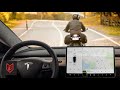
Two recent, nearly identical crashes involving Tesla vehicles and motorcyclists are currently under investigation, with artificial intelligence (AI) suspected as a contributing factor. Both incidents occurred on straight highway stretches, raising questions about the capabilities and limitations of Tesla's Autopilot system, particularly its forward-facing camera and its 250-meter range.
In a scenario where a motorcycle travels at 65 mph and a Tesla at 80 mph, the closing speed would allow for approximately 37 seconds of reaction time. Even with a faster closing speed, the available processing time for the vehicle's computer is considered to be significantly greater than necessary. This suggests that Autopilot may have failed to identify the motorcycles as immediate threats until it was too late.
Human drivers utilize a complex visual processing system to distinguish between various objects, such as motorcycles, cars, and stop signs. AI systems, like Tesla's Autopilot, are trained on vast datasets of human-annotated videos. Tesla reportedly utilizes billions of minutes of dashcam footage, sampling millions of critical moments that are then labeled by humans to train its AI. This system operates in "shadow mode" during drives, making decisions that are then refined through a seven-stage process.
However, the crashes occurred at night, potentially limiting the AI's ability to perceive the motorcycles' bodies. The empty highways also reduced linear perspective cues, which are crucial for depth perception. Both motorcycles were cruiser-style bikes with low taillights. A theory suggests that the AI may have interpreted the two close taillights as a single, distant car due to their proximity to the horizon, leading to a collision with the motorcycle.
While AI is statistically projected to be safer than human driving, this claim is often based on metrics that may not accurately reflect real-world conditions. Elon Musk has referred to crash rates per million miles driven, but Autopilot's heavy bias towards highway use, where collisions often occur after longer distances, can skew these statistics. Adjustments for this highway advantage suggest that, in some interpretations, Autopilot may present a greater risk than driving without the system.
Further complicating the issue, Tesla recently removed radar from its vehicles, relying solely on cameras to estimate distance through parallax and object recognition. This decision, driven by cost-saving measures, means the vehicle's computer can no longer directly measure distance without radar's radio wave feedback. Radar, while effective at determining distance, struggles to identify the nature of objects, potentially leading the AI to either ignore radar input or engage in unnecessary emergency braking.
Elon Musk has stated that when radar and vision systems disagree, Tesla prioritizes vision due to its perceived higher precision. This approach, described as "driving on vision alone," involves discarding conflicting radar data. Critics argue this is a reckless strategy, akin to ignoring one artist's depiction of a scene if it differs from another's, thereby removing any checks and balances. This logic, it is suggested, aligns more with financial considerations than with safety.
In contrast, many autonomous driving companies utilize LiDAR, which provides detailed 3D mapping of the environment. Tesla, however, has dismissed LiDAR as an expensive, impractical, and ultimately doomed technology. This stance is attributed to the cost and scalability challenges associated with LiDAR, which contrasts with Tesla's stated reliance on its eight cameras and AI.
While the future of autonomous driving may indeed rely on vision-based systems, Tesla is currently marketing these advanced features to consumers. The recent fatalities underscore the immediate risks associated with the current state of the technology.
To address these concerns, three parties are suggested to implement fixes:
- Tesla: The company is urged to reconsider the term "Autopilot," which has been banned in Germany for false advertising and is facing scrutiny in California for being misleading. Critics liken selling an "autopilot" that requires constant driver supervision to selling a flamethrower that is not a flamethrower, deeming it intentionally dangerous.
- Tesla Consumers: Skepticism towards influencer-style pronouncements, including those from Elon Musk, is advised. Consumers are cautioned that Autopilot is programmed to disengage one second before impact, raising questions about liability in the event of a crash.
- Motorcyclists: While acknowledging the inherent risks of motorcycling, a suggestion is made for motorcyclists to incorporate weaving or side-to-side movements when headlights loom behind them. This lateral motion, it is hypothesized, might provide the AI with more data to gauge distance, potentially increasing visibility.
The Autopilot Investigation
Two similar crashes involving Tesla Autopilot and motorcycles are under investigation, with AI suspected as the cause. The video questions the effectiveness of Tesla's vision system, especially at night and on empty highways, and highlights the potential for misidentification of motorcycles.
- Two nearly identical crashes involving Tesla Autopilot and motorcycles are under investigation.
- Artificial intelligence is suspected as the link in these crashes.
- Tesla's Autopilot uses eight cameras with a 250-meter forward-facing range.
- Even with sufficient reaction time, the computer may have failed to identify the threat.
- AI learns from human-labeled data sets, which may not cover all scenarios.
- Crashes occurred at night on empty highways with low taillights on the motorcycles.
- The AI might have misidentified motorcycles as distant cars due to visual cues.
Questioning Safety Metrics and Radar Removal
The video critiques Tesla's safety statistics, arguing that the 'per million miles' metric is misleading due to Autopilot's highway bias. It suggests that when adjusted for highway driving, Autopilot can be more dangerous than manual driving. The removal of radar is presented as a cost-saving measure that compromises the car's ability to accurately gauge distances.
- Autopilot crash statistics are biased towards highway use, where accidents tend to occur over longer distances.
- Adjusted data suggests Autopilot can be more dangerous than driving without it.
- Tesla recently removed radar from its vehicles.
- Without radar, the car relies solely on vision to guess distances, potentially leading to inaccurate assessments.
- Radar provides distance information but not object identification, while vision provides identification but less precise distance.
- Removing radar is a cost-saving measure for Tesla.
Vision-Only Driving and Lidar Debate
Elon Musk's decision to rely solely on vision, discarding radar input when they disagree, is labeled as reckless. The video contrasts this with the industry standard of using lidar for fail-safes in autonomous systems, which Tesla dismisses due to cost and aesthetics. The core issue is framed as Tesla prioritizing profit by selling future features today, leading to current dangers.
- Elon Musk believes vision is more precise than radar and advocates for doubling down on vision alone.
- This approach is described as reckless, akin to discarding one artist's input if it differs from another's.
- Lidar is used by other autonomous vehicle giants as a fail-safe for accurate distance measurement.
- Tesla dismisses lidar as expensive, ugly, and unscalable.
- The video argues Tesla is selling future features to consumers today, leading to current risks.
- Two motorcyclists have died in recent incidents.
Proposed Solutions and Consumer Advice
The video proposes three fixes: Tesla should stop using the term 'Autopilot' due to its misleading nature, consumers should be skeptical of influencer claims about autonomy, and motorcyclists should adopt defensive riding strategies to improve AI's ability to detect them. The Autopilot system is noted to shut down one second before impact, raising questions about liability.
- Germany has banned the term 'Autopilot' for false advertising; California is also scrutinizing it.
- Using 'Autopilot' for a system requiring constant driver attention is compared to selling a flamethrower that isn't one.
- Consumers are advised to be skeptical of influencer endorsements, including Elon Musk's.
- Autopilot is programmed to shut down one second before impact, raising questions about manslaughter charges.
- Motorcyclists are advised to weave side to side and use headlights to help AI gauge distance.
- These suggestions aim to improve AI detection and overall safety.