
 ~8m50:52
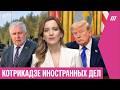
Новое предложение Трампа Кремлю. «Жить в России» — преступление?» Грозит ли Литве новая «СВО»
Sep 29, 2026
Read: ~8m · You save: 43 min
Trump's New Proposal to the Kremlin. Is 'Living in Russia' a Crime? Is Lithuania Facing a New 'SMO'?
Trump's new Russia strategy, threats to Lithuania, and the debate on Russian guilt. Analysis of US plans, European and Ukrainian reactions, and critical questions of re
Trump's Proposal for Normalizing Relations with Russia
The Atlantic magazine reports on a new strategy by Donald Trump's administration regarding Russia, proposed by U.S. Special Representative for Eastern Europe John Cole. The plan aims to break the deadlock in relations with Moscow and involves a "quid pro quo" exchange: the Kremlin releases some political prisoners, and in response, the U.S. eases sanctions against the Russian economy. Trump has approved this initiative, which seeks to facilitate Russia's return to the global economy. This would allow for an expanded agenda in negotiations with the Kremlin, moving beyond the conflict in Ukraine, and securing favorable deals for the U.S. on Russian oil, diesel fuel, rare earth metals, and other commodities. An additional bonus mentioned is the possibility of Donald Trump receiving the Nobel Peace Prize if political prisoners are released. However, as the publication notes, the plan will inevitably face resistance from Ukraine, European countries, and parts of the American political establishment.
John Cole has been negotiating with Alexander Lukashenko for over a year regarding the release of Belarusian political prisoners. He announced his intention to address Russian prisoners a week ago, noting that work is also underway concerning Ukrainian captives. Cole confirmed the existence of lists of political prisoners but declined to disclose them, expressing hope for success in this matter.
Simon Schuster, the author of the article in The Atlantic, explained on the TV channel "Dozhd" that the idea is that Russia's return to the global economy might prompt Vladimir Putin to end the war. This approach, according to Schuster, is being discussed by Jared Kushner and Steve Utkoff. They believe that economic ties contribute to normalizing relations and gradually achieving peace. Germany previously attempted a similar strategy by building "Nord Stream," believing that economic deals would integrate Russia into the global community.
The host expressed doubt about the logic of this approach, as it is unclear why Putin, who is unwilling to end the war, would suddenly decide to do so due to economic incentives. Schuster acknowledged that the logic is not entirely clear but noted that Trump's envoys are tired of the stalemate in Ukraine. They aim to strike financial deals with Russia, but the war hinders this. Cole's humanitarian initiative could create space for continued economic negotiations.
Schuster also commented on the recent visits of Steve Utkoff, Jared Kushner, and CIA Director William Burns to Moscow. According to his information, Burns' main message to Russia was to prevent the war from expanding into NATO territory, particularly the Baltics and Poland. Regarding Ukraine, there is no clear progress, but Ukrainian negotiators are hoping for a trilateral negotiation round in the UAE (presumably in Abu Dhabi) in October to discuss a limited ceasefire concerning energy, infrastructure, or the Black Sea.
Trump invited Vladimir Putin to the G20 summit in Miami in December, where an opportunity for negotiations involving Putin and Volodymyr Zelenskyy might arise. The Ukrainian side is open to such a format, but Putin has not yet accepted the invitation and shows no desire for good-faith negotiations.
Threats to Lithuania and NATO's Position
Amidst discussions of a new US strategy, the Frankfurter Allgemeine Zeitung reported that William Burns, during negotiations in Moscow, predicted Russia's economic collapse along the lines of the Soviet Union, attempting to convince the Kremlin of Russia's inability to win the war economically. Schuster noted that this confirms the US's desire to engage Russia through economic pressure, but in his opinion, these threats do not influence Putin.
Putin, according to Schuster, is counting on success on the battlefield in winter and enjoys the process of waging war. Participants in the negotiation process describe the situation as a "dance around Putin," where everyone offers him various options, and he remains immobile.
Regarding rumors of Trump supporting the idea of sending Zelensky to Moscow, Schuster noted that Zelensky is ready for negotiations in any format except Moscow and Belarus, as he considers them aggressor countries.
Concerning Russian political prisoners, John Cole, according to Schuster, has been successfully addressing this issue in Belarus for almost two years, achieving the release of hundreds of people. Similar actions are planned for Russia, where lists of journalists, dissidents, and opponents of the war are being compiled. Nobel laureate Dmitry Muratov is assisting Cole in this process, providing information about the prisoners and their conditions of detention.
Schuster is skeptical about the possibility of Trump receiving the Nobel Peace Prize due to his public demands, noting that this does not help candidates. Trump's main priority, according to Schuster, is to end the war in Ukraine and normalize relations with Russia to conclude financial deals.
Russia's Reaction to Lithuania's Actions
Amidst regional tensions, the Russian state news agency RIA Novosti published an article titled "Russia awaits another SMO. It will be very short," discussing a scenario of missile strikes on Lithuanian territory. The text was promptly removed from the website. This occurred after the Lithuanian parliament voted to remove the constitutional ban on the deployment of nuclear weapons on the country's territory. Dmitry Kiselyov, Director General of the "Rossiya Segodnya" media group, stated that the text was published due to a technical oversight, and neither Putin nor other officials had announced a new "SMO."
Arvydas Anušauskas, former Lithuanian Minister of National Defence and member of the Lithuanian Seimas, commented on the situation:
- Evacuation Plans: Plans for the evacuation of the populations of Lithuania and Poland were developed earlier and are linked not only to military threats but also to the radiological hazard from the Ostrovets Nuclear Power Plant (Belarus). Threats to civilians can be diverse.
- Threats from Russia: Russia is expending a significant portion of its resources on the war in Ukraine, which limits its ability to create major military threats to other states. However, these limitations are not permanent and depend on the outcome of the war. Hybrid attacks are considered the most likely escalation scenarios: cyberattacks, sabotage, and limited military provocations to test NATO's readiness.
- Russia's Resources: Russia is bogged down in Ukraine, and macroeconomic problems are mounting. After the conflict in Ukraine concludes, Russia will have to address its internal issues.
- Mobilization Plans: Various mobilization plans have existed for a long time and are not new. Lithuania's and NATO's military capabilities have significantly strengthened since 2022.
- Information Provocations: The publication on RIA Novosti is regarded as an information provocation, which is one of the Kremlin's tools. Statements about the possible deployment of nuclear weapons in Lithuania are also part of information attacks.
- Nuclear Weapons: Lithuania's constitutional amendment does not automatically mean the deployment of nuclear weapons but merely removes restrictions on one of NATO's collective deterrence options. Russia has deployed tactical nuclear weapons in Belarus and the Kaliningrad region.
- Medvedev's Threats: Dmitry Medvedev's threats of "Lithuania disappearing from the world map" are perceived as information threats that do not influence NATO policy.
International Reaction and Discussion of Guilt
Kazakhstan's President Kassym-Jomart Tokayev proposed freezing military actions in Ukraine to transition to negotiations, calling Vladimir Putin an "outstanding statesman" and the most acceptable political figure for Europe and the world.
Former White House Press Secretary Kirsten Levitt spoke about Donald Trump's conversation with the then-Prime Minister of Great Britain, during which Trump criticized his policies, urging border closures and the deportation of migrants.
A discussion about the guilt and responsibility of Russians for the war has unfolded in Russia. Writer Dmitry Glukhovsky published the novel "Registration," which sparked heated debate. The novel describes longing, poverty, and hopelessness in contemporary Russia. Literary critic Anna Narinskaya believes that Glukhovsky chose an easy path by depicting a world without good. Literary scholar Mikhail Edelshtein suggests that emigrants who left Russia before the war cannot adequately reflect its current reality. Glukhovsky himself asserts that it is impossible to completely leave Russia, as it always remains with a person.
Musician Mikhail Kozyrev considers the novel's characters "dehumanized" and unworthy of sympathy. Human rights activist Anna Koretnikova disagrees, recognizing herself and her emotions in the characters. She notes that Glukhovsky sympathizes with the characters but does not justify them, seeing in a person both a victim and an accomplice. Writer Dmitry Bykov praises Glukhovsky for capturing reality, noting the predictability and boredom of contemporary Russia.
On the Breakfast Show, sociologist Konstantin Gaz stated that everyone living in Russia and paying taxes is an accomplice to the crime. His words provoked a strong reaction and accusations of propaganda. Gaz refers to the Potsdam Declaration and the Nuremberg trials, arguing that the population of an aggressor country bears economic, and for many, criminal responsibility.
Garry Kasparov supports the idea of collective responsibility, asserting that most Russians have become part of the "war economy." Actor Nikita Kukushkin released a video calling for resistance, adapting a 1971 video from the USA. The video sparked debate about moralizing from a safe distance.
Trump's New Strategy for Russia
The Atlantic reports on John Cole's plan to normalize US-Russia relations through an exchange of political prisoners for sanctions relief. The plan is approved by Trump and aims to reintegrate Russia into the global economy, which could help end the conflict in Ukraine and lead to favorable deals for the US. However, the plan will face resistance from Ukraine and Europe.
- A new Trump administration strategy for Russia has been proposed by Special Envoy John Cole.
- The plan involves exchanging political prisoners in Russia for the easing of US sanctions.
- The goal is to break the deadlock in relations with Moscow and reintegrate Russia into the global economy.
- This could help end the conflict in Ukraine and lead to favorable deals for the US (oil, rare earth metals).
- Trump has approved this initiative.
- The plan could help Trump win a Nobel Peace Prize.
- Resistance is expected from Ukraine, Europe, and some American politicians.
Prisoner Exchange and Economic Incentives
John Cole confirms work on lists of Russian and Ukrainian prisoners, preparing proposals. Simon Schuster of The Atlantic comments on the plan, comparing it to Germany's approach to Nord Stream. He notes that the logic of Putin ending the war through economic incentives is unclear, but the Trump administration is looking for a way out of the stalemate.
- John Cole confirmed work on lists of Russian and Ukrainian prisoners.
- He is preparing proposals for their release.
- Simon Schuster of The Atlantic considers the plan naive, but discussed among Trump's supporters.
- The idea is that economic ties lead to normalization of relations and peace.
- This approach is compared to Germany's attempts through economic deals with Russia.
- The logic by which Putin would end the war due to economic incentives is unclear.
- The Trump administration is looking for a way out of the stalemate in the war, where neither side wants to concede.
Diplomatic Efforts and Negotiations
Discussion of Witkoff, Kushner, and Radcliffe's visits to Moscow. Little is known about Radcliffe's negotiations, but Russia's main message was not to attack NATO territory. Ukrainian negotiators hope for trilateral talks in Abu Dhabi to discuss a ceasefire. Trump invited Putin and Zelensky to a meeting in Miami.
- Recent visits by Witkoff, Kushner, and CIA Director Radcliffe to Moscow have yielded no obvious results.
- Radcliffe's main message to Russia: do not attack NATO territory (Baltics, Poland).
- Ukrainian negotiators hope for trilateral talks in the UAE (Abu Dhabi) in October.
- The goal of the talks is to discuss a limited ceasefire (energy, infrastructure, Black Sea).
- Trump invited Putin and Zelensky to a meeting in Miami in December.
- The Ukrainian side is ready for negotiations, Putin has not yet accepted the invitation and shows no desire to negotiate.
Putin's Reaction and Zelensky's Position
Redcliffe's negotiations in Moscow predicted Russia's economic collapse. Putin, according to Shuster, is not reacting to threats because he is counting on success on the battlefield and enjoys the process of war itself. Zelensky is ready for negotiations in any format except Moscow and Minsk.
- During negotiations in Moscow, Redcliffe predicted Russia's economic collapse following the USSR scenario.
- Threats do not impress Putin; he is counting on success in winter.
- Putin enjoys the process of war itself; he is "living for it."
- Everyone around Putin is trying to offer him something, but he is not budging.
- Zelensky is ready for negotiations in any format except Moscow and Belarus.
- He considers negotiations in these countries to be a capitulation.
John Cole's Experience in Belarus and Russia
John Cole achieved the release of hundreds of political prisoners in Belarus. Now he is working on lists of Russian political prisoners (journalists, dissidents, war opponents). Dmitry Muratov is helping Cole gather information about the prisoners.
- John Cole successfully worked on the release of political prisoners in Belarus (hundreds of people, including opposition leaders).
- In response, the US eased sanctions against Belarus.
- Cole is now working on lists of Russian political prisoners.
- The lists include journalists, dissidents, and war opponents.
- Dmitry Muratov is helping John Cole gather information about Russian prisoners.
- Muratov helps understand who is imprisoned and what the conditions of detention are.
Trump's Motives and the Nobel Prize
Trump will not receive the Nobel Peace Prize for freeing prisoners because he himself is demanding it. Trump's main priority is to end the war in Ukraine and normalize relations with Russia for financial deals. He sees himself as a business negotiator.
- Members of the Nobel Committee believe that Trump's direct demand for the prize will not help him receive it.
- Trump's main priority is to end the war in Ukraine and normalize relations with Russia.
- His goal is to conclude financial deals with Russia.
- Trump sees himself as a business negotiator and wants to show this to voters.
- He is not very concerned about the territories of Donbas; the main thing is to end the war.
Russia's Threats to Lithuania and the Reaction
RIA Novosti published an article about a short "special military operation" against Lithuania, but then deleted it. Dmitry Kiselyov called it a "technical oversight." Arvydas Anušauskas, former Lithuanian Minister of National Defence, considers it an information provocation and does not see a real threat of a full-scale invasion due to Russia's resources, but allows for hybrid scenarios.
- RIA Novosti published an article about a possible short "special military operation" against Lithuania, then deleted it.
- Dmitry Kiselyov called the publication "stupidity" and a "technical oversight."
- Arvydas Anušauskas considers it a Kremlin information provocation.
- Lithuania and Poland are developing evacuation plans for the population in case of threats.
- Threats can be varied, not only military (e.g., radiation hazard from the Ostrovets NPP).
- Russia is expending resources on the war in Ukraine, which limits its capabilities to attack other countries.
- Hybrid scenarios are most likely: cyberattacks, sabotage, limited military provocations.
Nuclear Weapons and Constitutional Changes in Lithuania
Lithuania amended its constitution, lifting the ban on the deployment of nuclear weapons. This does not mean their deployment, but only opens up such a possibility for NATO's collective deterrence. Russia threatens Lithuania with nuclear weapons, but Lithuania perceives this as an information attack.
- Lithuania voted to amend its constitution, lifting the ban on the deployment of nuclear weapons.
- This made Lithuania the only country on NATO's eastern flank with such restrictions.
- The constitutional amendment does not mean the automatic deployment of nuclear weapons.
- This opens up the possibility for NATO's collective deterrence.
- Russia threatens Lithuania, stating it will become a target for strategic weapons.
- Lithuania perceives these threats as part of the Kremlin's information attacks.
- Russia has deployed tactical nuclear weapons in Belarus and has them in the Kaliningrad region.
Freezing the Conflict in Ukraine and Trump's Criticism
Kazakhstan's President Kassym-Jomart Tokayev proposed freezing military actions in Ukraine to transition to negotiations, calling Putin an outstanding statesman. In the US, Kirsten Peoples criticizes Trump for his harsh remarks about the British Prime Minister's policies.
- Kazakhstan's President Kassym-Jomart Tokayev called for a freeze on military actions in Ukraine.
- He called Putin an "outstanding statesman" and the most acceptable figure for peace.
- Kirsten Peoples (former White House press secretary) spoke about Trump's criticism of the British Prime Minister's policies.
- Trump called the British Prime Minister's policies "stupidity" and called for closing borders and deporting migrants.
- Trump's criticism caused a mixed reaction, including among his supporters.
The novel "Registration" and the question of responsibility
Discussion of Dmitry Glukhovsky's novel "Registration" about life in modern Russia. Critics are divided: some consider the novel flat and superficial, others — an important reflection of universal pain and dehumanization. The question of the guilt and responsibility of Russians is raised.
- Dmitry Glukhovsky published the novel "Registration" about life in modern Russia.
- The novel sparked a heated discussion about the guilt and responsibility of Russians.
- Some critics consider the novel flat, superficial, and full of clichés.
- Others see in it an important reflection of dehumanization and universal pain.
- The question is raised about how war changes people and makes them accomplices.
- It is discussed to what extent the residents of Russia are responsible for what is happening.
Collective Guilt and Responsibility of Russians
Sociologist Konstantin Gaz stated on the Breakfast Show that everyone living in Russia and paying taxes is complicit in a crime. This sparked an emotional discussion about collective guilt. Garry Kasparov supports the idea of collective responsibility, believing that most Russians have become part of the war economy.
- Sociologist Konstantin Gaz stated that residents of Russia who pay taxes are complicit in a crime.
- This sparked an emotional discussion about collective guilt.
- Gaz refers to the Potsdam Declaration and the Nuremberg Trials.
- He believes that the population of the aggressor country should bear economic, and many, criminal responsibility.
- Garry Kasparov supports the idea of collective responsibility.
- Kasparov believes that most Russians have become part of the war economy.
- According to Kasparov, politicians defending Russian citizens are earning grants.
Call for Resistance and Debates About It
Actor Nikita Kukushkin released a video calling for resistance, adapted from an American protest against the Vietnam War. The video sparked debate about moralizing from a safe distance. It is discussed who exactly Kukushkin is addressing: everyone who cannot change the government, or those who profit from the war.
- Actor Nikita Kukushkin released a video calling for resistance, adapted from the USA.
- The video sparked debate about moralizing "from a safe distance".
- It is discussed who Kukushkin is addressing: everyone who cannot change the government, or those who profit from the war.
- Many thanked Kukushkin, finding nothing offensive in his words.
- The question is raised whether it is appropriate to address those whose hands are tied.
- Kukushkin and Glukhovsky made society argue and think about what is happening.