
 ~3m12:07
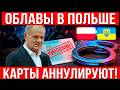
ОБЛАВЫ В ПОЛЬШЕ! Карты побыта аннулируют? Массовые проверки спецслужб! Новости
Nov 2, 2026
Read: ~3m · You save: 9 min
Raids in Poland: Fake Residences and Forged Work Invitations
Polish special services raided two schemes of fake residence cards and work invitations. We break down how 130 shell companies worked and what threatens clients.
In October 2026, Polish special services carried out a series of raids against two criminal groups that were selling Polish documents. According to the investigation, a total of 160 fictitious companies were involved. The groups issued forged residence permits and fake job invitations.
Key Indicators
| Indicator | Value |
|---|---|
| Fictitious companies (in total) | 160 |
| Companies linked to the Masovian group | more than 30 |
| Companies registered in the Łódź case | 130 |
| Cost of a residence permit in the Masovian group | on average 8,500 euros (more than 36,000 zlotys) |
| Total income of the organizers of the Masovian group | at least 20 million zlotys |
| Fictitious job invitations (Łódź) | about 11,500 |
| Minimum price of one invitation in wholesale sales | from 100 zlotys |
| Detained members of the Masovian group | 11 |
Mazovia Group: The "Premium" Segment
The Silesian division of the Border Guard, the Central Anticorruption Bureau, and the National Prosecutor's Office in Katowice carried out an operation against an organized criminal group in Mazovia Voivodeship. From 2020 to 2024, the group was engaged in the illegal legalization of foreign nationals in Poland and other Schengen Area countries. The information was reported by the KRS.pl portal, the TVN television channel, and other media outlets.
The core of the group comprised 11 detainees. Among them were citizens of Russia and other former Soviet states.
The group's headquarters were located in office premises of a higher education institution in Mazovia Voivodeship. Some participants had direct access to the higher education system. The prosecutor issued an official ban on their participation in examination committees.
Scheme mechanism:
- The organizers registered a network of more than 30 fictitious companies. On paper, they conducted commercial activity, but in practice they produced no goods.
- Fictitious employment contracts were issued through these companies.
- Applications for temporary and permanent residence permits were submitted to the voivode on behalf of foreign nationals who had no legal grounds to stay in Poland.
- The average cost of processing one residence permit was 8,500 euros.
- Proceeds from the scheme exceeded 20 million zloty. The money was routed through a chain of company bank accounts, withdrawn in cash, and invested in commercial and residential real estate throughout Poland.
Results of the raid:
- six leaders of the group were taken into custody;
- five were released on substantial bail with their passports seized;
- the prosecutor's office seized the luxury real estate of the suspects.
Łódź Scheme: The Mass Segment
The second major investigation conducted under the supervision of the District Prosecutor's Office in Łódź uncovered a wholesale market for fictitious documents. The group exploited loopholes in Poland's electronic business registration system.
Stages of the group's operations:
- "Drops" (straw persons) were brought into Poland for several days.
- They were issued a Polish PESEL number, a SIM card, a bank account, and a "Profil Zaufany" electronic signature.
- After this, the drops returned home, and the organizers obtained their logins and passwords.
- Using the state web portal, 130 limited liability companies ("spółka z o.o.") were registered in the drops' names.
- None of the 130 companies conducted any real business or paid any taxes.
- Using digital profiles that were either purchased or stolen, the companies submitted approximately 11,500 electronic declarations to district labor offices stating their intent to employ a foreign national ("oświadczenia"). Such declarations are processed quickly, unlike work permits, which take a long time to obtain.
The group sold fictitious invitations in bulk for prices starting at 100 złoty each. Intermediaries and "helpers" resold them on Telegram for hundreds of euros. Buyers used the invitations to obtain work visas and to cross the border.
Border guards detained a 23-year-old citizen of Ukraine at the border who was attempting to enter Poland. According to the prosecutor's office, she was a key link in an international network that included citizens of Poland and Belarus.
Consequences for Foreigners
Organizers face 5 to 15 years of imprisonment for participation in an organized criminal group and money laundering.
However, the consequences also affect foreigners who obtained documents through these companies. Under Polish administrative law, once the companies are recognized as fictitious, voivodeship offices will send a complete list of foreigners who received visas, "oświadczenia," or residence permits through these firms.
Even if a person honestly believed they were obtaining a legal permit and paid intermediaries in good faith, their document was issued on the basis of false data. From a legal standpoint, this means the document was obtained by fraudulent means.
Possible consequences:
- automatic review of the case and annulment of the residence permit;
- obligation to leave the country within 30 days;
- entry into the database of undesirable persons with a ban on entry into the Schengen Area, possibly for 5 years.
Consequences for Law-Abiding Entrepreneurs and the System
The Polish government has begun reviewing its migration policy in response to these schemes. The measures include:
- tightening the migration strategy;
- abolishing simplified procedures for companies;
- having border guards conduct cross-check interviews at the border;
- more thorough verification by officials of state institutions of all entrepreneurs and the reality of each job position. According to estimates, such a check may take six months.
The author of the video material also links the complication of the procedure for obtaining Polish citizenship to these events, which he discussed in his material from October 29.
Conclusions
The October raids confirmed that schemes of fictitious legalization through paper and front companies in Poland are losing their effectiveness. The digitalization of ZUS, tax authority, and border databases makes it possible to identify companies without turnover, even if dozens of directors are registered or thousands of invitations have been issued.
Buying a "quick solution" for 8,000 euros or a forged certificate for 100 zloty can lead to the cancellation of a residence permit and the loss of years of lawful employment in the country. Foreigners should verify employers and data in official registries before submitting documents.
Introduction
The Polish Border Guard, the Central Anticorruption Bureau (CBA), and the National Prosecutor's Office carried out a series of raids against two large schemes trafficking in forged documents.
- The operation was carried out in October 2026 by the Border Guard, the Central Anticorruption Bureau, and the National Prosecutor's Office
- 160 fictitious companies were seized
- An underground office operated at Mazovian University
- The price of a residence card was 8,500 euros, and there were 11,500 fake job offers
Masovian Scheme: VIP Legalization at a University
The Masovian group operating from 2020 to 2024 illegally legalized foreigners through a network of more than 30 fictitious companies, working out of a university office.
- The group operated in the Masovian Voivodeship from 2020 to 2024, and 11 people were detained, some of them citizens of the former USSR
- The headquarters was located in a higher education institution's office in Masovia; some members had access to the education system and were removed from examination committees
- The companies produced nothing but issued fictitious employment contracts and applied for temporary and permanent residence permits
- The average cost of arranging a residence card was 8,500 euros (more than 36,000 zloty)
- The organizers' income was at least 20 million zloty; the money was laundered through the companies' bank accounts and invested in real estate
- Six ringleaders were sent to pretrial detention, five were released on high bail with their passports seized, and real estate was frozen
Łódź: массовый конвейер поддельных документов
Łódź: группа использовала подставных лиц и цифровые профили для регистрации 130 компаний и массового оформления около 11 500 поддельных «oświadczenia».
- Расследование проводила окружная прокуратура в Лодзи; задержана 23-летняя гражданка Украины на границе
- В международную сеть входили граждане Польши и Беларуси
- Подставные лица приезжали в Польшу на несколько дней ради PESEL, SIM-карты, банковского счёта и профиля «Profil Zaufany»
- Через портал government регистрировались 130 компаний «spółka z o.o.», не ведших реальной деятельности и не плативших налоги
- Поддельные «oświadczenia» продавались от 100 злотых за штуку и перепродавались в Telegram за сотни евро
Consequences for foreigners
Foreigners who obtained documents through fictitious companies risk cancellation of their residence cards, a mandatory departure, and an entry ban.
- Voivodeship offices may send a full list of foreigners who received visas and "oświadczenia" through these companies
- An automatic review of cases and revocation of residence permits may be initiated
- Documents obtained on the basis of false data are considered obtained fraudulently, even if the person was acting in good faith
- The departure deadline is 30 days, and an entry ban to the Schengen Area of about 5 years is possible
Consequences for law-abiding citizens
The schemes will also hit honest entrepreneurs, since the state will tighten migration policy and inspections.
- A tougher migration strategy and the cancellation of simplified procedures for firms are expected
- Border guards will conduct cross-checking interviews at the border
- Officials will begin checking every entrepreneur and spend six months inspecting workplaces
Conclusions and Recommendations
Gray schemes of legalization through fictitious companies in Poland are becoming a thing of the past, and verifying employers and registries is becoming mandatory.
- Digitalization of ZUS, tax authority, and border databases will expose fictitious companies with no turnover
- It is recommended to verify employers and official registries
- Buying a "quick solution" for 8,000 euros or a forged certificate for 100 zloty can ruin years of your life