
 ~3m15:37
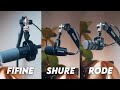
Is This the BEST Mic for Beginners? FiFine vs Shure vs Rode
Oct 25, 2024
Read: ~3m · You save: 13 min
Best Microphone for Beginners: FiFine K688 vs Rode PodMic vs Shure MV7
Looking for the perfect beginner microphone? FiFine K688, Rode PodMic, and Shure MV7 comparison: sound, features, price. Which one to choose?
For content creators and streamers seeking the perfect beginner microphone, the choice can be daunting. With varying price points, sound quality expectations, and ease of use considerations, three popular options—the FiFine K688, Rode PodMic, and Shure MV7—stand out for detailed examination. This review will compare these microphones across their design, build quality, features, sound performance, and value for money to help determine which best suits your needs.
Design and Build Quality
The microphones exhibit significant differences in design and build quality.
The FiFine K688 is a combination of metal and plastic. While it feels like the most budget-friendly of the three, its price point makes it an attractive option. The metal feels thin, but the overall construction is solid. The microphone is lightweight, which isn't a drawback. The design with green and black accents is aesthetically pleasing, and the shock mount construction is convenient. The main drawback in build quality is the mic stand mount, which is made of plastic. However, considering its price category, the build quality is as expected.
The Rode PodMic stands out with its exceptional build quality. It feels very robust, being almost entirely metal except for the adjustment screws. This microphone is built for longevity, capable of lasting 5-10 years. The design, which wasn't initially a standout, has grown on me due to its classic, timeless look. The lack of a removable pop filter, unlike the FiFine, isn't a drawback but rather a simplification of the design.
The Shure MV7, being the most expensive of the three, sits in the middle ground for build quality between the FiFine and the Rode. It's primarily metal, with a few plastic components. Its weight also falls between the FiFine and the Rode. The design is sleek and understated. Despite its higher price, the smaller form factor might give it a less premium feel compared to the Rode.
The winner for "Design and Build Quality" is the Rode PodMic, especially considering its price.
Functionality
The functionality of the microphones also varies.
FiFine K688 offers connection versatility: USB-C for modern devices and XLR for more professional setups. It features a headphone output on the body with separate controls for monitoring volume and input gain, providing convenient control. A prominent mute switch with color indication is located on the top panel.
Rode PodMic is more minimalist in terms of features. It only has an XLR output, with no built-in monitoring or gain adjustment. This makes it less convenient for beginners without additional equipment.
Shure MV7 is equipped with a touch panel for controlling monitoring level and gain, and also has a headphone output. It supports both XLR and micro-USB connections. Although micro-USB is an outdated standard and the cable can be unreliable, FiFine's USB-C would be preferable. An important advantage of the MV7 is its accompanying Shure MOTIV software, which allows for EQ customization and direct audio recording to a computer.
The winner in the "Functionality" category is the FiFine K688 due to its convenient controls and modern USB-C connection, despite some finickiness with the MV7's touch panel.
Sound Quality
Sound quality is a critical aspect when choosing a microphone.
Background Noise
- Shure MV7: At normal gain levels (both USB and XLR), there is virtually no background noise. Increasing the gain introduces noise, but it remains manageable.
- Rode PodMic: Has more noticeable background noise at standard gain levels, but it is quite acceptable and can be easily addressed in post-processing. Increasing the gain also increases the noise.
- FiFine K688: When using XLR, background noise at normal gain levels is manageable, comparable to the PodMic, but becomes more noticeable with increased gain. When using USB, the background noise is significantly higher, making it less suitable for use at a distance from the microphone or at high gain.
Background Noise Rejection
- Shure MV7: The best in this category, effectively rejects background noise, including construction work.
- Rode PodMic: Second best in effectiveness, shows decent noise rejection but allows some construction noise and echo to come through.
- FiFine K688: The least effective at rejecting background noise, most sensitive to extraneous sounds.
Sound Signature
- Rode PodMic: "Out of the box," the sound can be a bit "mid-rangey," sometimes sounding muffled. After EQ, it becomes warm, balanced, with improved clarity in the highs.
- FiFine K688: When recording via USB, the sound can seem muffled due to background noise. When recording via XLR, the sound is more bass-heavy with less pronounced highs, but generally good. After EQ, the sound becomes warm, reminiscent of the Shure SM7B.
- Shure MV7: When recording via USB with the "Natural" preset, the sound is balanced, warm, with a slight emphasis on the mids. When recording via XLR, the sound is the most balanced, warm, and well-rounded. After EQ, the sound is similar to the FiFine but less warm.
Sound Quality Conclusion:
- Best "out of the box" sound quality: Shure MV7.
- Good sound quality with minimal processing: FiFine K688 (provided close proximity and XLR use).
- Requires the most post-processing: Rode PodMic.
Price and Value
- FiFine K688: ~$70
- Rode PodMic: ~$90
- Shure MV7: ~$179
Rode PodMic offers the best value for money, considering its excellent build quality and good sound after processing. However, it requires an external USB interface and additional time for EQ.
Shure MV7 justifies its higher price with its versatility, low background noise, and user-friendly software. It is more reliable in various recording conditions compared to the FiFine.
FiFine K688 is the most affordable option. Its sound can be very good when used correctly (close proximity, XLR connection), but it is less versatile due to background noise issues when using USB.
Usage Recommendations
- Podcasting: The Shure MV7 is recommended for its versatility and reliability in various recording environments and with different speakers.
- Streaming: The FiFine K688 might be a better choice if you stream while seated at a desk with the microphone at a fixed distance. This will allow for the best sound quality on a limited budget.
- YouTube: The Rode PodMic may be preferred by YouTube creators, as there is time in post-production for detailed sound customization and the creation of a unique preset.
Personal Choice
Despite the advantages of other microphones, my personal favorite remains the Rode PodMic. Although it requires more post-processing effort and additional equipment for connection, its durability, sound quality after equalization, and overall value for money make it an attractive choice for those willing to invest time in setup.
Ultimately, the choice of the best microphone depends on your specific needs, budget, and experience level. The FiFine K688, Rode PodMic, and Shure MV7 are all worthy options for aspiring content creators, each with its own strengths and weaknesses.
Design and Build Quality
Comparison of the design and build quality of three microphones: FiFine K688 (budget, plastic mounting parts), Rode PodMic (durable, metal, "like a tank"), and Shure MV7 (mid-price segment, metal, elegant design).
- FiFine K688: Combination of metal and plastic, feels the most budget-friendly, but well-constructed. The mount to the stand appears to be plastic.
- Rode PodMic: Very durable, metal body, heavy. Looks classic and reliable.
- Shure MV7: Mostly metal, but less massive than the PodMic. The design is elegant, but may seem less premium due to its size.
Microphone Functionality
Overview of FiFine K688 features (USB-C, XLR, headphone monitoring, level adjustment, Mute button), Rode PodMic (XLR only, minimal features), and Shure MV7 (touch panel, monitoring, gain control, Mute, XLR, Micro-USB, Shure MOTIV software).
- FiFine K688: USB-C and XLR connection, headphone output with volume and monitoring level adjustment, Mute button with indicator.
- Rode PodMic: XLR only, no built-in monitoring or gain control features.
- Shure MV7: Touch panel for control, headphone output, gain adjustment, Mute button, XLR and Micro-USB, Shure MOTIV software for settings.
Sound Quality: Background Noise
Sound Quality Analysis: Shure MV7 has the least background noise, Rode PodMic has moderate noise, and FiFine K688 shows significant noise when using USB.
- Shure MV7: Virtually no background noise at standard gain levels (USB/XLR).
- Rode PodMic: Noticeable background noise at standard gain levels, but acceptable and correctable.
- FiFine K688: When using XLR, the noise is moderate, comparable to PodMic. When using USB, the noise is significant and may be unacceptable at higher gains.
Background Noise Suppression
Background noise suppression evaluation: Shure MV7 is the best, Rode PodMic is average, FiFine K688 is the worst, most sensitive to external sounds.
- Shure MV7: Excellent background noise suppression (e.g., construction noise).
- Rode PodMic: Average performance, some construction noise and echo are audible.
- FiFine K688: Least effective at suppressing background noise, most sensitive to external sounds.
Sound Signature and EQ
Comparison of microphone sound after EQ: Rode PodMic (warm, balanced after EQ), FiFine K688 (good, warm, resembles SM7B after EQ, especially when close-miced), Shure MV7 (balanced, warm, good via both USB and XLR).
- Rode PodMic: A bit "muffled" out of the box, but sounds great after EQ, warm and balanced.
- FiFine K688: Sounds decent via USB, but with noise. Sounds better via XLR, with low-end. After EQ, it sounds very good, resembling the SM7B.
- Shure MV7: Sounds good via both USB (with preset) and XLR. Balanced and warm sound.
Price and Value
Analysis of price-to-quality ratio: FiFine K688 (~$70), Rode PodMic (~$90), Shure MV7 (~$179). Rode PodMic offers the best value for money for semi-professionals due to its build and sound, but requires additional equipment and setup.
- FiFine K688: Cheapest, good value for beginners.
- Rode PodMic: Best overall value, but requires an audio interface and EQ.
- Shure MV7: Most expensive, but more versatile due to less noise and better background sound suppression.
Application Recommendations
Recommendations for use: Shure MV7 is best for podcasts due to its versatility, FiFine K688 is best for streamers (especially on a budget) for stationary use, Rode PodMic is best for YouTube due to its detailed post-processing capabilities.
- Podcasting: Shure MV7 (versatility, reliability).
- Streaming: FiFine K688 (budget-friendly, good quality at close proximity).
- YouTube: Rode PodMic (requires post-processing, but yields excellent results).