
 ~8m37:27
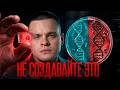
Мир на грани катастрофы, но об этом никто не знает
Oct 16, 2026
Read: ~9m · You save: 28 min
The world is on the brink of catastrophe, but no one knows about it
Mirror bacteria could become a threat. Why do scientists disagree, and how are twin molecules linked to Pasteur, thalidomide, and the Terminator?
Introduction
Mirror life refers to hypothetical living systems built from molecules with reversed chirality. These are cells in which proteins, DNA, sugars, and lipids are synthesized in configurations that are mirror images of their natural forms. The topic has become the subject of serious debate in the scientific community. Scientists are discussing the possible threat such life could pose to ecosystems and organisms, as well as the question of who should regulate research in this field and how.
Chirality: Definition and History of Discovery
Chirality is the property of a molecule being incompatible with its mirror image, like a left and a right hand. The term comes from the Greek word cheir, meaning "hand."
In 1848, the French chemist Louis Pasteur was studying crystals of tartaric acid salts under a microscope. He established that these crystals exist in two forms that are mirror images of each other. Both forms have the same chemical composition, mass, and formula, but they rotate the plane of polarized light in different directions. Glucose molecules dissolved in water also rotate light, since all of them are oriented in the same way.
In the mid-19th century, there was a belief that asymmetry was associated with the living and the divine. Pasteur, observing the asymmetry of molecules, drew the conclusion that life, as it is revealed to us, is a function of the asymmetry of the universe. Darwin published his theory of evolution about ten years after these observations.
The Role of Chirality in Living Organisms
The key molecules of living organisms are chiral. The amino acids from which proteins are built predominantly rotate light in one direction. The sugars in DNA rotate it in the other. This organization is characteristic of all known forms of life, including mammals, plants, and fungi.
Chirality determines how molecules interact with biological structures. Enzymes and receptors work like locks that open only to the right keys. One form of a molecule can interact with a receptor, while its mirror-image form does not interact with it at all.
An everyday example of chirality is the limonene molecule. Its two mirror-image forms have different smells: one smells like orange, the other like pine. Some receptors in the nose are also chiral and can distinguish between these forms.
Thalidomide: The Price of Incompatibility
Thalidomide entered the market in the late 1950s as an anti-nausea drug that was prescribed to pregnant women. One mirror-image form of the molecule relieved nausea, while the other caused severe disruptions of embryonic development. Before the link was established, about 10,000 children were born with serious birth defects, including missing limbs.
Subsequent studies showed that in the body, one form of thalidomide can convert into the other directly in the blood. Therefore, simply using only one form does not solve the problem.
The 2019 Conference and the Birth of the Idea of a Mirror Bacterium
In February 2019, 30 experts in synthetic biology and bioethics gathered at a conference center in Northern Virginia. Over four days, the participants held discussions and selected the most promising projects for funding by the U.S. National Science Foundation. The main topic was the mirror bacterium, a fully functional cell with all key molecules in mirror configuration.
Participants named several potential applications:
- drugs that are not broken down in the blood, since the body's enzymes do not recognize them;
- mirror DNA, which theoretically could activate mechanisms for destroying cancer cells;
- mirror glucose, which produces a sweet taste but is barely absorbed by digestive enzymes and contains few calories.
The idea received funding. Grants were allocated by the United States, followed by China, Germany, and Japan. One of the recipients of a $4 million grant for research on mirror bacteria was Kate Adamala, a researcher at the University of Minnesota. She planned to devote several years to the work.
First Warnings
Back in 2014, Kevin Esvelt of MIT's Sculpting Evolution group and his team developed a method for using CRISPR to create gene drives. Such constructs spread a genetic change through a population over several generations. One example was the modification of mosquitoes so that they no longer transmit the malaria pathogen. Esvelt himself was the first to propose suspending such experiments, and he asked whether we have the right to conduct an experiment if its failure would affect the entire world.
Six years later, the charitable foundation Open Philanthropy began funding Esvelt's biosecurity research, including questions of mirror life. Esvelt studied the growth rate of bacteria, predator-prey interactions, and the workings of the immune system. In his assessment, the threat of mirror life had not been studied sufficiently.
In 2022, Esvelt discussed his findings with David Relman, a professor at Stanford University and an infectious disease specialist. The meeting took place in February 2022 at a restaurant near Washington. Relman had himself studied the problem and approached his colleagues. By his account, no one was able to refute the findings.
By the end of 2022, dozens of leading biologists were trying to model the worst-case scenario in which a mirror cell escapes from the laboratory. There was no precise answer, because no single specialist covered the task as a whole. Immunologists, ecologists, and biochemists were studying individual parts of the problem. At that time, there was not a single specialist in mirror life in the world.
The chain of conversations reached John Glass, a pioneer of synthetic biology and a participant in the 2019 conference. Glass said: "The work I have been doing for the last 20 years could result in an incredible catastrophe for the whole world."
In 2023, Kate Adamala suspended her work. By the end of that same year, the number of scientists concerned about the problem of mirror life had reached nearly 40, including two Nobel laureates.
Publication in Science
The discussions resulted in an article in the journal Science, an open letter of warning, and a 299-page appendix describing potential risks. The document was signed by 38 scientists. It puts forward the hypothesis that a mirror bacterium can be created and that it poses an existential threat. External experts who were given the document were unable to refute it.
Three Lines of Biological Defense
The authors of the paper consider three levels of defense that conventional biology uses against bacteria. A mirror bacterium could overcome each of them.
| Line of Defense | Mechanism | Limitation for a Mirror Bacterium |
|---|---|---|
| Environment | Natural enemies: bacteriophages, protists, other bacteria. The food chain has existed for about 4 billion years | Predators may fail to recognize a mirror bacterium. The enzymes of many organisms do not depend on chirality, so some bacteria may be able to use mirror-image glucose |
| Immunity | Antibodies, macrophages, innate immunity | Macrophages use chiral receptors for detection, so a mirror bacterium may be recognized more slowly or not at all |
| Medicines | Antibiotics | A significant share of antibiotics are chiral, but not all. Some modern antibiotics act in both mirror forms, although their effectiveness differs |
Immunologist Timothy Hand of the University of Pittsburgh took part in a 2019 conference. He believed that the mammalian immune system is capable of producing antibodies against any form of a molecule, and he did not see the mirror bacterium as a particular problem. Hand later revised his position. He stated: "The failure of innate immunity to detect a pathogen is an extremely dangerous condition for the host organism." In 2024, Hand joined a group of 38 scientists.
Nutrition of a Mirror Bacterium
A mirror bacterium must obtain nutrients. Amino acids in proteins are predominantly chiral, but one of the twenty amino acids, glycine, is symmetrical and has no mirror form. Symmetrical molecules are common in nature, and bacteria are able to feed on them, including mirror bacteria.
The main constraint for a mirror bacterium remains competition. Ecosystems have evolved over millions of years, and all food niches in them are occupied. If a bacterium escapes from the laboratory, it will most likely die, unless it is specifically adapted to environmental conditions. Evolution creates adaptation over generations. For bacteria, one generation takes about 20 minutes. It remains unknown how much time the environment would need to adapt to mirror life.
Mirror Chemistry: Stages of Development
Mirror chemistry includes several stages of varying complexity and risk:
- Mirror molecules. Simple, small molecules are incapable of reproduction. Medicines have already been created based on them.
- Mirror proteins. Proteins do not divide, do not consume food, and do not evolve.
- Mirror ribosome. A molecular factory that synthesizes mirror proteins. By itself it is a tool, but it brings the creation of a mirror cell closer.
- Mirror cells. Living systems capable of division. It is their escape from the laboratory that causes concern.
Mirror bacteria are also of interest to industry. Bacteriophages have no effect on them, and contamination by foreign microorganisms does not threaten them. Such bacteria could become the basis for drug production. To make production cost-effective, the bacteria must be taught to grow faster, tolerate production stresses, and divide reliably. Each of these improvements solves an applied problem, but at the same time removes one of the constraints that keep the bacterium in the laboratory.
Timeline and Cost
Synthesizing a mirror protein about 470 amino acids long took four years. It is the longest mirror polypeptide created to date. For comparison, thousands of proteins operate simultaneously in a single bacterial cell. Professor Ting Zhu's group at Westlake University in China has been working on a simplified version of the mirror ribosome since 2016. The work has continued for almost ten years, but no result has been achieved yet. No ordinary, non-mirror self-replicating cell has been created from scratch either.
Estimates of when mirror life might appear vary. A Science article cites a period of 10 to 30 years. The World Health Organization assesses the timeline as at least several decades. The Bulletin of the Atomic Scientists, which maintains the Doomsday Clock, placed mirror bacteria in a separate section of its latest report.
The cost of creating a mirror cell is estimated at about 100 million within 10 years and to roughly $10 million within 20 years.
Mirror biology does not require large infrastructure, unlike a nuclear program. Research is distributed across dozens of laboratories, and its results are published openly. Each participant contributes a small share, yet the sum of such steps could theoretically lead to catastrophe.
Regulation
After the publication in Science, discussions began at the level of states and international organizations. There were briefings at the White House, negotiations at the UN, and consultations with the governments of the United Kingdom, Singapore, Brazil, and, through intermediaries, China. A number of major foundations refused to fund projects leading to the creation of a mirror cell. UNESCO recommended a moratorium on such research.
In February 2025, the Asilomar summit took place. Ninety-six experts took part and signed an appeal. It states that creating synthetic mirror life is unacceptable unless future research convincingly demonstrates the absence of serious risks.
The document is not legally binding. UNESCO can recommend a moratorium but cannot impose one. The refusal of one foundation does not halt funding elsewhere. The moratorium, in its current form, is not a law and provides for no sanctions.
The venue for the signing was not chosen by chance. In 1975, at the same location, scientists voluntarily restricted research on recombinant DNA. That year, about 140 people spent four days on the coast of California without phones or external communication. An agreement was reached only after lawyers joined the discussion and the conversation turned to legal liability for laboratory leaks. As a result, specific rules were developed that remain in effect to this day. The 2025 Asilomar does not yet provide for such rules. It became a statement of intent.
The problem lies in the mechanism of a "race to the bottom." The cost of violating the rules for a single participant is lower than the benefit of violating them. It only takes one participant for the agreement to stop working. Such participants could be a private investor seeking a monopoly in the drug market, a state seeing a strategic advantage, a university in a country that has not signed the moratorium, or a researcher who disagrees with the position of the majority.
Conclusions
Scientists' concerns are linked to several factors:
- mirror life can be created from existing technologies and does not require large-scale infrastructure;
- useful intermediate results reduce the constraints that keep the bacterium confined to the laboratory;
- the protective mechanisms of organisms and ecosystems are likely to work only partially against mirror structures;
- regulation is based on voluntary commitments and has no enforcement mechanism.
Kate Adamala described her position this way: "I would like it if one sunny day, over a cup of coffee, we suddenly realized the world was about to end. But that's not what happened." Adamala noted that she had expected one noticeable event, but in practice, change is happening gradually.
In the view of most participants in the discussion, safety in this field depends on continued dialogue among scientists from different disciplines, including safety specialists, ethicists, lawyers, and practitioners. As long as these groups work together, the system retains control. If they diverge, the constraints become merely formal. At the time of publication, about a hundred scientists are taking part in the discussion. That number may grow.
Introduction: The Judgment Day Date and the Real Threat
Introduction: a comparison of the Judgment Day date from *The Terminator* (August 29, 1997, 2:14 a.m.) with a real threat that is not visible.
- In the film, Skynet became "self-aware" on August 29, 1997, at 2:14 a.m. Eastern time
- In the real world, there is no precise date for the start of the threat
- A scientist creates "living but man-made" matter in a Petri dish without understanding the consequences
- Mirror technology is already being studied in dozens of laboratories around the world
Pasteur and the Discovery of Chirality
Louis Pasteur's discovery of chirality: molecules come in left-handed and right-handed forms, and life uses only one of them.
- In 1848, 25-year-old Louis Pasteur studied crystals of tartaric acid salts under a microscope
- Glucose molecules rotate polarized light, working like tiny corkscrews
- Crystals exist in mirror-image forms, like left and right gloves
- Twenty years later, Pasteur formulated: life is a function of the asymmetry of the universe
- The concept was named chirality from the Greek 'kheir' (hand)
- Protein amino acids are predominantly left-handed, and DNA sugars are right-handed, in humans, dogs, trees, and mold alike
Why Mirror Symmetry Matters for the Body
Chirality matters for the body: receptors and enzymes distinguish mirror-image forms, which can be either beneficial or dangerous.
- The molecule limonene in one form smells like orange, while in the other it resembles the smell of a Christmas tree
- Some nose receptors can distinguish chirality
- In the late 1950s, the drug thalidomide relieved nausea, but one of its forms caused severe birth defects
- About 10,000 children were born with severe birth defects
- In the body, one form of thalidomide can convert into the other directly in the blood
- The origin of life remains a mystery: why one orientation was chosen is unknown
Thread analogy and incompatibility
Analogy with factories and bolts: mirror life may be incompatible with our biology, and this could become the basis of a biological Skynet.
- A factory with right-hand threads and a factory with left-hand threads cannot use each other's products
- A biological Skynet may grow out of fundamental incompatibility
2019 Conference and the Race for Grants
February 2019: a conference in Northern Virginia where a mirror bacterium project was selected for funding.
- February 2019, conference center in Northern Virginia, 30 synthetic biologists and bioethicists over 4 days
- Topic selected: mirror bacterium, a fully functional cell with reversed chirality of all key molecules
- Expected benefits: drugs that do not break down in the blood, mirror DNA against cancer cells, mirror glucose with no calories
- Grants: first from the US, then China, Germany and Japan
- Kate Adamala of the University of Minnesota received a grant of 4 million dollars
Kevin Esvelt and Gene Drives
Kevin Esvelt, the author of the gene drive technology, was the first to slow down research and raise questions about safety.
- Kevin Esvelt leads the Sculpting Evolution group at the MIT Media Lab
- In 2014, his team came up with the idea of using CRISPR for gene drives
- Example: modifying mosquitoes so that they stop transmitting malaria
- Esvelt asked: do we have the right to run an experiment if its failure would affect the whole world?
- Six years later, the Open Philanthropy foundation began funding his research on biosecurity, including mirror life
Alarm Among Scientists: Esvelt and Relman
Esvelt discusses the threat with colleagues, and alarm quickly spreads among scientists.
- In February 2022, Esvelt met with David Relman, a Stanford professor, at a restaurant near Washington
- Relman returned to California, began studying the topic, and started calling colleagues
- By the end of 2022, dozens of leading biologists were trying to model the darkest scenario
- At the start, there was not a single specialist in mirror life
John Glass and Kate Adamala
John Glass, a participant of the 2019 conference, and Kate Adamala realize the danger of their work.
- John Glass, a pioneer of synthetic biology and conference participant, called the idea of mirror cells very cool
- Glass said that the work he had been doing for the last 20 years could end in catastrophe
- In 2023, Kate Adamala wound down her work
- By the end of 2023, there were almost 40 concerned scientists, two of whom were Nobel laureates
Schrödinger's Woe and Publication in Science
Schrödinger's cat as a metaphor for an unknown result, expert confirmation of a hypothesis, and publication in Science.
- Expert hypothesis: "A mirror bacterium can be created, and it poses an existential threat"
- No one has refuted the hypothesis
- Result: an article in Science, an open letter, and an appendix describing risks running to 299 pages
- 38 scientists signed the document
Three Lines of Defense and Their Gaps
Три линии обороны от зеркальных бактерий: среда, организм и лекарства. Каждая имеет брешь.
- First line: the environment, bacteriophages, protists and other bacteria, a food chain 4 billion years old
- Predators may fail to recognize a mirror bacterium, but many enzymes do not depend on chirality
- Bacteria divide roughly every 20 minutes
- Second line: immunity, where macrophages use chiral receptors
- Immunologist Timothy Hand from Pittsburgh initially thought immunity would cope
- Hand changed his position: the inability of innate immunity to recognize the pathogen is extremely dangerous
- Third line: antibiotics, some of which work in both forms
- Conclusion: the arsenal against mirror life may narrow to non-specific methods
Nutrition and Competition
A mirror bacterium must feed, but nature contains symmetric molecules, so survival is possible.
- Glycine is symmetric, has no mirror form, and bacteria can feed on it
- Competition in an environment shaped over millions of years limits the mirror bacterium
- Without special adaptation, a mirror bacterium that escapes from the laboratory will most likely die
The Ladder of Mirror Chemistry
Mirror chemistry as a ladder: from safe mirror molecules to living mirror cells that industry needs.
- Bottom rung: mirror molecules, drugs already work
- Next: mirror proteins, safe, do not divide and do not eat
- Higher: mirror ribosome, molecular factory
- Top: mirror cells, alive and dividing
- Industry wants a clean factory, resistant to phages and contamination, a billion-dollar market
- Nobody will deliberately make a bacterium dangerous; it will simply be made commercially successful
Time Machine and the Point of No Return
A thought experiment about a cyborg and time: there is no point at which the technology can be stopped without harm.
- 2024 variant: the recipe is known, so destroying one laboratory means destroying a copy
- 2019 variant: too early, and useful pharmacology would also be halted
- Ribosome could speed up drug development several times over
- A comparison with alternating current in the 1880s, which was feared but without which there would have been no 20th century
- There is no red line, only many dangerous turns
Timelines and Costs
The mirror cell is still far off, but timelines are unclear while costs are falling.
- Synthesis of a mirror protein about 470 amino acids long took 4 years; it is the longest mirror polypeptide
- Professor Ting Ju's group at the Southern University of Science and Technology (SUSTech) in China has been trying to assemble a simplified ribosome since 2016
- No one has yet built even an ordinary cell from scratch
- A Science article estimates 10-30 years, while the WHO speaks of decades
- The Bulletin of the Atomic Scientists placed mirror bacteria in a separate section of its report
- A mirror cell costs about 100 million, and in 20 years $10 million will be enough
Distributed Technology and Control
Mirror biology is spread across dozens of laboratories, which makes it hard to control the way a nuclear program would be controlled.
- This is not a nuclear program and not the Manhattan Project
- The work is distributed across many laboratories, publications, and open funding
- White House briefings, UN negotiations, UNESCO recommends moratoriums
- Major foundations refuse to fund projects leading to a mirror cell
Alomar 2025 and the Moratorium
The 2025 Alomar summit and its limits: a moratorium without legal force.
- In February 2025, a summit was held in Asilomar
- 96 experts signed an appeal: creating synthetic mirror life is unacceptable without proof that there are no risks
- UNESCO can recommend but cannot ban
- A moratorium is a gentlemen's agreement without law
Asilomar 1975 and the Race to the Bottom
The Asilomar conference of 1975 showed that agreements work when accountability appears, but in 2025 it is not yet there.
- In 1975, 140 scientists shut themselves in on the California coast for 4 days
- Back then agreements emerged when lawyers joined the discussion and the conversation turned to real accountability
- Race to the bottom: a participant who breaks the rules gets a patent, a grant, or a monopoly
- A mirror cell is easier to build unnoticed than a nuclear bomb
Conclusion: Who Protects the World
Conclusion: the safety of mirror technology rests on open debate among scientists, not on bans.
- Kate Adamala wanted the world to understand the danger, but the catastrophe did not happen as in the movies
- On August 29, 1997, at 2:14, nothing happened
- About a hundred scientists now act as a collective "kyrillis"
- The strength of protection lies in the diversity of people: skeptics, alarmists, practitioners, ethicists, lawyers
- The question is being resolved now, through open dialogue