
Your Monthly Dose of Good News | September
Discover how China fights desertification, Europe embraces green energy, and medical breakthroughs are made. The best news of the month!
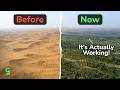
Imagine trying to stop a desert from expanding with a giant wall. But not made of concrete, but of over 60 billion trees. That's what China has been doing for the last 50 years. It's China's Great Green Wall – a man-made forest that will soon cover an area the size of Germany. And new research has confirmed that the project is working. Recent data shows that the project is finally slowing the spread of the Gobi Desert, helping to protect populated areas from powerful sandstorms. But that's not the only good news this month. We'll also look at how renewable energy has protected Spanish households from rising energy costs, why mangrove forests are experiencing an incredible global revival, and how a vaccine has almost completely eliminated one type of cancer.
The Great Green Wall of China
Look at these strange grid patterns in the deserts of northern China. They might seem insignificant, but they are actually one of the most effective anti-desertification tools in the world. They are called "straw checkerboards." The idea is simple: workers stick poles and straw into the sand, arranging them in a grid. These grids slow down the wind, trap moisture, and anchor the sand, giving young trees and shrubs a chance to grow. For the past five decades, millions of people have replicated this process across northern China. Collectively, these man-made forests are known as China's Great Green Wall. Its goal is to slow the expansion of the Gobi Desert.
For decades, climate change, deforestation, and unsustainable agriculture have caused vegetation to disappear, leaving loose soil exposed to the wind. In the 1980s, the Gobi Desert was expanding at a rate of over 10,000 square kilometers per year. That's an area roughly twice the size of Greater Tokyo being swallowed by the desert each year. As the desert expanded, powerful sandstorms buried farmland and damaged infrastructure, and regularly sent dust clouds across northern China and even into neighboring countries.
Now, researchers have presented a clearer picture of whether all this work has paid off. Since 2000, northern China has been reclaiming over 1,000 square kilometers of desertified land each year. Overall, the country's desertified land area has shrunk by about 10%. Forest cover in the project region has also nearly tripled. Of course, the project hasn't been perfect. In the early decades, large areas were planted with only one type of tree, and many struggled to survive. When you plant only one species, the entire forest becomes more vulnerable to disease. Eventually, China began mixing in a variety of native plants. However, researchers emphasize that the work is far from over. The restored landscapes still require decades of maintenance, monitoring, and community involvement to remain healthy. Despite this, the progress is highly encouraging and shows that even environmental challenges once thought insurmountable can be tackled with enough time and persistence.
Global Progress on Sustainable Development Goals
When it comes to progress, a new United Nations report suggests people around the world are living better lives than they were 15 years ago. In 2015, every UN member state agreed to one of the most ambitious plans in history – a set of 17 Sustainable Development Goals (SDGs) aimed at tackling some of humanity's biggest challenges by 2030. These include goals such as eradicating extreme poverty and hunger, as well as improving health and education.
Now, the United Nations has released its latest progress report. Since 2015, the world has achieved the following milestones:
- More than 90% of the world's population has access to electricity, up 5 percentage points from 2015.
- Internet access has grown from 40% to nearly 75%.
- More children globally are completing their education from primary to secondary school.
The report also highlights some environmental achievements. Landmark international treaties have come into force as more countries pledge to protect life both on land and in the oceans. Remarkable strides have also been made in public health and well-being. The global under-five mortality rate has fallen by 13% since 2015. Over the past decade, new HIV infections have dropped by more than 30%. And 47 countries worldwide have been declared malaria-free by the World Health Organization.
Of course, significant challenges remain. The report warns that conflict, climate change, and rising debt continue to slow progress. Many of the original goals are unlikely to be met by 2030. For example, malaria remains a major public health concern, particularly in less developed countries. But there is hope. A video from June mentioned a new malaria pill designed for children. While completely eradicating the disease by 2030 seems unlikely, the goal is still achievable. And perhaps that is the most important takeaway: progress is being made. In many ways, billions of people today are, on average, living better lives than they were a decade ago.
Renewable Energy in Europe
And one area where this progress is accelerating faster than many realize is renewable energy. For the first time ever, solar power generated a quarter of the European Union's electricity in a single month. According to a report by Ember, solar power produced a record 52 terawatt-hours of electricity in June. This is enough to power approximately 180 million homes for an average month. This made solar the largest source of electricity generation, surpassing nuclear, gas, wind, and hydropower.
But perhaps the most impressive part isn't the record itself, but how quickly Europe has reached this point. Just ten years ago, in June 2016, solar accounted for only about 6% of the EU's electricity. It took the next five years for that figure to grow to 10%. Then, in just another five years, it jumped to 25%! Solar isn't just steadily increasing every year, it's actually accelerating. In just a few years, solar has gone from a relatively small contributor to a major source of electricity, at least for the month of June.
This rapid growth has been driven by millions of new solar panels installed across Europe in recent years. And one country is already demonstrating what this looks like in practice. Spain has some of the best conditions for solar power in Europe. Earlier this year, global gas prices surged following the conflict between Iran and the US. Because of this, many expected electricity prices to rise. However, Spain proved to be a different story. According to another Ember report, Spain's increasing use of renewable energy has allowed electricity prices to remain stable. Thanks to a growing network of solar and wind farms, Spain is no longer as dependent on gas as it once was.
And these charts perfectly illustrate what this relationship looks like. It's a bit complex, so let's break it down. We've also included links to our sources in the description if you want to dive deeper into the details. Let's start with this chart from 2021 to 2022. This is the period before Spain's latest renewable energy expansions. The blue line here represents the price of electricity, and the orange line represents the price of gas. We can clearly see how both values are closely linked to each other. When gas prices are low, electricity prices are also low. On the other hand, when gas prices surge, electricity prices do the same. The spikes you see here are largely due to the pandemic, as well as Russia's invasion of Ukraine in 2022.
But notice how different the chart from 2025 to 2026 looks. The light blue areas on this chart indicate times when electricity was cheaper compared to the price of gas. The larger the area, the greater the difference. And since we see much more light blue here compared to the first chart, it's a clear sign that electricity prices in Spain are much less dependent on gas. Because of this, the average household is saving around €10 per month on their electricity bills. €10 might not seem like much at first glance. But for Spain's approximately 19 million households, this amounts to nearly €190 million in savings for the population every month. It's a reminder that renewable energy isn't just about reducing emissions, but also about increasing countries' resilience to global events.
Conservation Success Stories
And while renewable energy is helping to protect communities, conservation efforts are also bringing hope to wildlife. Take the numbat, for example. This small, termite-eating marsupial is one of Australia’s most iconic animals. But due to threats like habitat loss and predators like foxes and feral cats, the species was reduced to around 300 individuals in the 1970s. Fortunately, decades of conservation work are starting to pay off. As of 2026, there are around 2,500 numbats in the wild.
And that’s not the only conservation success story in this video. On the other side of the world, modern technology is helping to save our forests. Next to Lake Victoria, Africa’s largest lake, is a community called Old Bondoge. For years, more and more bare rock appeared on the hillsides. Not because it was growing, but because the soil around it was washing away. The trees that held the soil in place were gone. So every time it rained, more and more was lost. Until nothing but the rock beneath was left. Without trees to slow the flow, rain rushed straight down the slopes, causing flash floods. And this water carried more than just soil. It washed chemicals from nearby farms into the lake.
The solution seems obvious: plant trees. But here’s what most people don’t know: many tree-planting projects are quietly failing. They count the trees planted, but not how many survive years later. In some parts of the world, nearly half of the trees die within five years. That’s why the community of Planet Wild is partnering with Veritree to do it right. They’ve used drones, scanning the land with lasers, to find the best places to plant. After planting, sensors are attached to the trees, monitoring their growth and health. Even microphones are added to the forest to listen for returning animals. They’ve planted 80,000 trees and monitored them for three years. And that’s just one of their initiatives. Planet Wild takes on a new mission every month and documents the entire process here on YouTube. It’s funded entirely by everyday people who donate small amounts of money each month to protect nature.
The Resurgence of Mangrove Forests
According to a recent study published in the journal Science, mangrove forests are experiencing an incredible resurgence. If you've ever seen trees growing directly out of the sea with their tangled roots sticking out above the water, those are likely mangroves. They grow along tropical coastlines all over the world. Their complex root systems protect coastal communities from storm surges and tsunamis. They also serve as a natural habitat for countless fish, crabs, and other marine life. But perhaps their most important feature is their ability to absorb carbon dioxide from the air. Mangrove forests can store up to four times more carbon than terrestrial forests, thanks to living in water.
For decades, these forests were thought to be disappearing at an alarming rate. Mangroves worldwide are constantly threatened by rising sea levels, erosion, agriculture, and coastal development. But a new study, using nearly 40 years of satellite observations, paints a much more hopeful picture. Researchers found that mangrove forests were declining from the 1980s through the late 2000s. But around 2010, something remarkable happened: global gains began to outpace losses. Existing forests are also becoming denser and healthier, meaning they are storing even more carbon than before.
What exactly is driving this recovery? According to researchers, it's a combination of stronger conservation laws, reduced deforestation, and one very hopeful fact: mangrove forests are remarkably good at recovering on their own and naturally spreading to new coastlines. The recovery of mangrove forests highlights something important: when we protect an ecosystem, nature has an incredible capacity to bounce back. And nowhere is this more evident than in the ocean.
Protecting Marine Ecosystems
One of the biggest threats to marine ecosystems is a fishing practice known as bottom trawling. In this method, large fishing nets are dragged across the seabed. This is very effective at catching large quantities of fish. However, it comes with a host of problems. As the nets are dragged forward, they destroy corals, dislodge sediment, and disturb the lives of countless other organisms. For this reason, many countries strictly regulate this fishing method, and in some cases, ban it altogether.
One recent study has shown just how effective these efforts can be. This is the South Arran Marine Protected Area in Scotland. Bottom trawling was banned here in 2016. Since then, scientists have recorded a remarkable recovery of marine life. The difference is stark. The protected areas of the seabed support twice as many species compared to nearby areas where bottom trawling is still permitted. In other words, once we stopped destroying these ecosystems, nature took care of the rest.
New UNESCO Global Geoparks
For our next good news story, we'll have to travel around the world. Earlier this year, UNESCO unveiled 12 new Global Geoparks. Imagine a collection of the world's most outstanding landscapes – places recognised for their breathtaking geological beauty, as well as the biodiversity and cultural significance that go with them. Just take a look at some of these remarkable places. Inclusion in this network gives these unique landscapes international recognition and greater support for their protection.
One of these new additions takes us to the deserts of Tunisia. This is actually their first ever inclusion. This geopark is home to dramatic desert landscapes, ancient cave dwellings, and traditional oil presses that tell the story of people who once thrived in one of Africa's harshest environments. Next, these mountains in China are one of the most spectacular additions to the list. They are a living testament to how Tibet has been shaped over millions of years. Today, the site is home to an annual pilgrimage festival, showcasing the beautiful scenery as well as Tibetan culture.
In Russia, this geopark tells a story that happened hundreds of millions of years ago. At first glance, these three isolated hills look like ordinary mountains. But they are actually the remains of a massive coral reef that existed around 300 million years ago. The geopark is abundant with rocks up to a billion years old, as well as caves and waterfalls that reveal its geological history. And finally, there's this tiny island in Greece. This place is home to one of the best-preserved volcanic craters, formed around 150,000 years ago. It can even be seen in satellite images. But perhaps the most impressive part of this site is the Stefanos crater, a feature that has now become a natural laboratory for scientists studying volcanoes.
Breakthrough in Oral Cancer Diagnosis
Now let's turn our attention to another area where scientists are making exciting breakthroughs. One of these may soon significantly simplify the diagnosis of one of the most common cancers in the world. Oral cancer affects hundreds of thousands of people every year. Its two most common risk factors include smoking and HPV infection. Like many forms of cancer, early diagnosis significantly increases the chances of successful treatment. However, the problem is that diagnosis currently requires a biopsy. This is a procedure that involves removing a small sample of the affected area with a scalpel. The sample is then sent to a laboratory for analysis. This process can be painful in a sensitive area like the mouth. Results often have to wait for weeks, and that's assuming you only need one test.
Fortunately, researchers have developed a much simpler alternative. Instead of cutting out a piece of tissue, doctors simply swab the inside of the mouth with a soft swab to collect a sample of cells. These cells are then analyzed using an algorithm that detects genes associated with oral cancer. And clinical trials have shown promising results. The new method correctly identified oral cancer with over 95% accuracy, and results were obtained in about an hour. The technology is still undergoing larger clinical trials before it becomes widely available. But researchers hope it will start arriving in hospitals and clinics within the next 2 years. If these trials are successful, what is currently a painful procedure may soon be as simple as a quick swab. This will make early cancer diagnosis more accessible and help more people detect the disease before it's too late.
Decline in Smoking Rates in the U.S.
Of course, early cancer detection is incredibly important. But even better is preventing it from developing in the first place. And that's where we have our next piece of good news. According to a recent survey, cigarette smoking among adult Americans has fallen to its lowest level on record. Today, only about 1 in 11 adults in the United States smokes cigarettes. For comparison, in the 1960s, that figure was nearly five times higher. That's a massive decline over the past six decades. And while e-cigarette use has become more common, it hasn't simply replaced traditional smoking. Of course, this didn't happen overnight. There are many reasons for this. But the decline in smoking rates is primarily driven by price increases, public health campaigns, and warning labels. Together, these have raised public awareness of the health risks associated with smoking. They have also helped to change societal attitudes towards smoking itself. Smoking was once considered cool. Now, it's recognized as a leading cause of preventable disease and death.
And smoking isn't the only unhealthy habit that's becoming less common. Alcohol consumption has also been on the decline in recent years. We've already covered this trend in one of our previous videos if you'd like to learn more. The long-term trend is clear: one of the deadliest habits in the world is steadily declining. And that's good news for many future generations.
HPV Vaccination and Cancer
I just mentioned that the two main risk factors for oral cancer are smoking and HPV. We've already covered smoking. Now let's talk about the second factor – HPV. HPV is actually a group of over a hundred related viruses that are most commonly transmitted sexually. Most of these are harmless. However, certain types of HPV can lead to cervical cancer, oral cancer, throat cancer, and other parts of the body. In fact, HPV is estimated to cause 60-70% of oral and throat cancers in the United States. Fortunately, there is already a way to prevent many of these infections from developing – the HPV vaccine.
The first HPV vaccine was introduced 20 years ago. It is recommended to get vaccinated before exposure to the virus. Therefore, health authorities recommend doing so as early as age 11 or 12. And the results of these vaccines have been nothing short of outstanding. A recent study showed that HPV vaccination has already had a significant impact on cervical cancer, with mortality rates plummeting in highly vaccinated countries. One of the most remarkable findings came out of England. We reported last month that zero women under the age of 20 died from cervical cancer between 2020 and 2024. Around 90% of this age group had already been vaccinated against HPV, highlighting just how effective the vaccine has become.
What's even more encouraging is that scientists believe these same vaccines may help prevent oral cancers, giving us another potential way to combat this disease. Longer-term studies are still underway, but the early data is promising. From improved screening to reducing the number of smokers and increasing HPV vaccination rates, we are making remarkable progress on many fronts in the fight against oral cancer.
And that concludes another month of good news from around the world. Of all the stories we covered today, which one inspires you the most? As always, let me know in the comments below. A huge thank you to all of our channel members and of course, Planet Wild for supporting this video. If you want to support their work, you can scan the QR code or use the link below. And if you want to see them reforesting an area by Lake Victoria, their mission is featured here.
China's Great Green Wall
China's Great Green Wall, a tree-planting project to combat desertification, is showing early success. Research confirms it is slowing the spread of the Gobi Desert and protecting against sandstorms, restoring over 1000 sq km of land annually.
- China's Great Green Wall is a project to plant over 60 billion trees.
- The goal is to slow the spread of the Gobi Desert.
- "Straw checkerboards" are used to retain moisture and sand.
- Over 1000 sq km of desertified land has been restored annually since 2000.
- Forest cover in the region has nearly tripled.
- The project has faced challenges, but mixing plant species has improved survival rates.
Progress in Achieving UN Sustainable Development Goals
A UN report shows progress in achieving the Sustainable Development Goals (SDGs) by 2030. It notes increased access to electricity and the internet, improved education, and reduced child mortality. Despite persistent challenges such as conflicts and climate change, the overall progress is encouraging.
- 90% of the world's population has access to electricity.
- Internet access has grown from 40% to 75%.
- Global under-5 child mortality rate decreased by 13%.
- Reduction in new HIV infections by over 30%.
- 47 countries declared malaria-free.
- Difficulties in achieving all goals by 2030 due to conflicts and climate are noted.
Growth of Renewable Energy in Europe
Renewable energy, particularly solar, is experiencing rapid growth in Europe. In June, solar power accounted for a quarter of the EU's total electricity generation for the first time. Spain is successfully using renewables to stabilize electricity prices, saving households millions of euros.
- Solar power accounted for 25% of electricity generation in the EU in June.
- This made solar the largest source, surpassing nuclear and gas.
- In 10 years, solar's share in the EU has grown from 6% to 25%.
- Spain has stabilized electricity prices thanks to renewables.
- The average Spanish household saves around 10 euros per month on electricity bills.
Successes in Nature Conservation and Ecosystem Restoration
Conservation efforts are paying off: the population of the Australian marsupial numbat has increased from 300 to 2500 individuals. Mangrove forests are experiencing global recovery, with their area and density growing, which contributes to carbon absorption. The ban on bottom trawling in Scotland has led to a doubling of marine life biodiversity.
- The numbat population has grown from 300 to 2500 individuals thanks to conservation efforts.
- Mangrove forests are recovering: global gains have exceeded losses since 2010.
- Mangrove forests absorb 4 times more CO2 than terrestrial forests.
- The ban on bottom trawling in Scotland has doubled the number of marine life species in protected areas.
New UNESCO Global Geoparks
UNESCO has recognized 12 new global geoparks worldwide, highlighting their geological beauty, biodiversity, and cultural significance. Among them are the desert landscapes of Tunisia, the mountains of China, the ancient coral reefs of Russia, and the volcanic craters of Greece. These areas receive international recognition and support for protection.
- UNESCO added 12 new global geoparks.
- The geoparks are recognized for their geological beauty, biodiversity, and cultural significance.
- Among the new geoparks are: deserts of Tunisia, mountains of China, geological formations of Russia, volcanic craters of Greece.
- Geopark status promotes international recognition and protection of unique landscapes.
Medical Breakthroughs: Early Cancer Diagnosis and Prevention
A new, simpler method for early diagnosis of oral cancer using a cell swab has been developed, showing over 95% accuracy and results within an hour. Simultaneously, smoking rates among the US adult population have fallen to a record low. HPV vaccination is demonstrating impressive results in preventing cervical cancer and may potentially aid in combating oral cancer.
- A new method for oral cancer diagnosis using a cell swab has been developed.
- The new method boasts over 95% accuracy with results available within an hour.
- Smoking rates among US adults have dropped to a record low (1 in 11).
- HPV vaccination has significantly reduced cervical cancer mortality.
- The HPV vaccine may help in the prevention of oral cancer.