
iPhone Duo Teardown: Why Green Lines Appear and What Hides in the Hinge
We take apart the new iPhone Duo: why green lines appear, what hides in the hinge, and how well the phone is really protected against dust.
Introduction
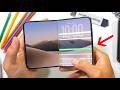
The new foldable smartphone, Apple iPhone Duo, has a defect that appears as green lines on the screen. Lines have previously been reported on new devices that had not been subjected to impacts or other stress. Similar lines appear in the same places. Users have dubbed the problem "Green Line Gate."
The goal of the teardown was to determine whether there is a component beneath the foldable screen at this point that disrupts the display's operation. The author notes that Apple's market capitalization is $5 trillion.
Device Construction
- The housing is assembled according to a scheme familiar from previous iPhone models: the bottom connectors are secured with two Pentalobe screws.
- The device consists of two halves, so there are more screws. The length of the screws differs on each side.
- The display contains 10 layers. The author checked whether the design actually uses two layers of ultra-thin glass.
- The foldable display is made by Samsung. According to the author, the company has been producing such screens for eight years.
- The hinge was developed by Apple. The company states that it contains more than 100 small precision components.
- The upper plastic bumper, located above the display, provides IP68 protection.
Display Removal
To remove the display, the following steps were required:
- Remove the upper plastic bumper.
- Carefully lift the flexible screen with a thin tool, avoiding bending it in more than one plane.
- Dissolve the adhesive between the titanium rear plate and the aluminum inner frame using isopropyl alcohol.
- Cut off the remaining adhesive along the edges.
When disconnecting the ribbon cable that runs through the frame and connects to the motherboard, the screen shut off. It turned out that the display consists of several layers:
- The screen contains metal mesh plates that serve as reinforcement. The construction is the same as in other Samsung foldable screens.
- The inner display has a crack beneath the layer of matte nano-textured coating. The author confirmed the presence of at least one layer of glass.
- Beneath the two upper plastic layers lies a second layer of ultra-thin glass.
The author suspects that Samsung provided Apple with technical assistance in installing the screen into the frame, but there is no confirmation of this.
Observations on the Hinge
According to the author's observations, all broken devices were damaged at the same point of the hinge. The author named this component the Pixel Pincher 9000.
The author's assumptions:
- The screw in this area may loosen, or the guide plate may break off.
- A broken-off fragment may pierce the screen from the inside.
The author did not disassemble other owners' broken devices and cannot confirm this hypothesis. He notes that the hinge must be fully disassembled to verify it.
The rear titanium part of the hinge has a wall thickness comparable to an aluminum can. In the author's opinion, this part serves mainly a decorative function and does not protect the internal components.
The cost of replacing the central screen is $1,000.
Chassis and Internal Components
- The rear panel with the Ceramic Shield coating is removed after heating. Inside are the metal battery housing, cameras, and ribbon cables. A cable connects the wireless charging coil and the flash.
- The rear panel contains the MagSafe magnets and a copper coil.
- The Ceramic Shield 2 front cover is removed in the same way.
- Complete disassembly required removing about 95 screws of various sizes. According to the author, Apple published a repair manual of roughly 300 pages.
Cameras
| Camera | Resolution | Notes |
|---|---|---|
| Under-display front | about 4 MP (author's estimate) | Apple does not publish exact data |
| Main | 48 MP | Located in the center of the camera block |
| Ultra-wide | 48 MP | Located on the left |
| Punch-hole front | 12 MP | Located in the upper right corner |
There is no telephoto lens. Optical stabilization is not visible from the outside of the body. The author opened the main camera and confirmed that stabilization is implemented by sensor shift rather than lens shift. In his estimate, sensor shift is lighter and reacts faster than lens shift, which is used by Samsung and other manufacturers. Magnets and coils near the sensor drive its movement.
Opening the main camera resulted in its damage.
Batteries
- The battery is made with 95% recycled lithium and 100% recycled cobalt.
- The adhesive holding it is released electrically: when a 9-volt battery is connected to the adhesive layer for 90 seconds, the adhesive lets go. No mechanical separation is required.
- The author applied this method incorrectly. Under each battery there are two strips of adhesive, and they must be separated individually. The method nevertheless worked partially.
- According to the author, electrical release retains its effectiveness for 5–10 years. Adhesive with pull tabs stops working after a few years.
| Battery | Capacity |
|---|---|
| First (L-shaped, smaller) | 1921 mAh |
| Second (larger) | 2962 mAh |
| Total capacity | 4883 mAh |
The author notes that some devices have a battery life of 5–10 hours. He plans to find out the reason.
Motherboard
- The motherboard is single-tier, about the size of a thumb.
- The processor is the A20 Pro. It sits above a graphite pad that connects it to the vapor chamber through an air gap.
- The vapor chamber works on the phase-change principle: vapor evaporates at one end and condenses at the other, transferring heat. The chamber contains deionized water.
- The author notes that Samsung used vapor chambers in the Galaxy S7 about ten years ago.
The modular USB-C port detaches separately from the bottom board. The top speaker is removed separately. Removing the hinge required taking out another 20 screws.
Dust and Water Protection
The IP68 standard is tested in a lab on a stationary device. Fine particles are sprayed into a closed chamber. The test is considered passed if nothing gets inside.
The author conducted their own sand test. Results:
- Metal screens protected the board from dust even when the device was in motion.
- A large amount of debris was found inside the hinge, under the plastic protective covers.
- By the author's estimate, after 10 seconds in sand, about a million grains got inside.
The author believes the IP68 marking misleads users, because the device is not protected from dust in everyday use. He suspects that a grain of sand that gets behind the screen causes point damage. He links the black dots on the screen specifically to such particles.
The author identifies two separate problems:
- Dust ingress through the hinge. Dust damages the flexible screen from the back.
- Screen damage caused by a hinge component at the same spot. The lines appear precisely there.
In the author's view, Apple should replace the internal displays of the first-generation Duo free of charge, regardless of the warranty period, since dust ingress remains likely.
Cases and Protection
The author compares the existing protection options:
- The official folio case, priced at $130, leaves the side edges exposed.
- The regular Duo case, priced at $80, does not cover the hinge.
In the author's opinion, there is still no full-fledged protection for devices with moving parts.
Conclusions
The author notes the following:
- The cause of the lines, in his assumption, is related to the hinge component, which damages the screen from the inside. The hypothesis requires confirmation by disassembling the damaged devices.
- Dust ingress through the hinge has been confirmed experimentally and is related to the design of the device.
- In the author's opinion, both factors are independent but may reinforce each other.
- The author will continue to use the device for 30 days and will publish the results of his observations.
Introduction and the Green Line Problem
The author explains why there is buzz around the iPhone Duo: new devices show green lines in the same places. He intends to disassemble the phone to find the cause.
- Brand-new iPhone Duo units without physical damage have started spontaneously showing green lines in identical spots.
- The problem has been dubbed "Green Line Gate," and other proposed names include "Crackgate," "Green Line of Death," and "Pixelgate."
- Apple's market capitalization is estimated at 5 trillion dollars.
- The author plans to check whether something under the foldable screen at a specific point is causing the image distortion.
- The iPhone Duo's design includes two Pentalobe pentalobe screws at the bottom, one pair for each half of the device, and they are of different lengths.
Screen Removal and Dust Discovery
The teardown begins with removing the screen. The author describes the disassembly sequence and finds a buildup of sand and dust inside the device, which he links to the appearance of point defects.
- The screen is made by Samsung, and the author has been disassembling such devices on his channel for just as long, eight years.
- First, the raised plastic bumper is removed, which helps protect against dust and water per the IP68 rating.
- A thin spudger under the rear titanium panel separates the flexible screen, and isopropyl alcohol dissolves the adhesive between the titanium plate and the aluminum inner frame.
- A large amount of dust and sand is found inside. The author says the internal flexible screen costs 1000 dollars.
- A single grain of sand under the screen can damage it. The author believes such grains cause black dots and dead pixel lines.
Display Layers and Glass
The author peels apart the display layers to check whether the screen really contains two layers of glass. He examines the metal mesh reinforcement and finds cracks in the layer beneath the nanotexture.
- The screen consists of 10 layers; the author wanted to check whether Apple actually used two layers of ultra-thin glass.
- When the layers are separated, the author sees metal mesh reinforcements similar to those used in other Samsung foldable displays.
- A crack was found in the inner display beneath the matte nanotexture layer, which confirms the presence of at least one layer of glass.
- A second layer of ultra-thin glass was found beneath the top two plastic layers.
- The author believes Samsung refined this design over eight generations and millions of devices per year, so the screen's flaws are not related to it.
The Hinge and the Pixel Pincher 9000 Component
The author notes that all broken devices failed at the same point of the hinge. He believes the hinge component he named the Pixel Pincher 9000 can puncture the screen from the inside.
- All spontaneously broken iPhone Duo units have damage in the same spot on the hinge.
- The author named this hinge component the Pixel Pincher 9000.
- Possible causes: a loosened screw or a broken guide plate that punctures the screen from behind.
- Replacing the central screen costs $1000.
- The rear titanium part of the hinge has a wall thickness roughly like a soda can, so its strength is limited and the hinge components experience high loads.
Housing, Cameras and Stabilization
The author removes the glass back panel and disassembles the phone further. He describes the internal layout, the cameras, and the image stabilization systems.
- The back panel is removed with heat. Inside are a metal battery housing, silver camera modules and ribbon cables, as well as the wireless charging module and the flash.
- There are 95 screws of different sizes inside. Apple's official repair manual is about 300 pages long.
- The under-display camera under the central screen is estimated at 4 megapixels; Apple does not publish exact data.
- The main camera has 48 megapixels, and the ultra-wide camera also has 48 megapixels. There is no telephoto lens.
- Image stabilization is performed by shifting the sensor rather than the lenses, unlike Samsung. The author verified this by opening the camera module.
- The front camera has 12 megapixels and is located in the notch at the upper right corner.
Battery and Battery Life
The author demonstrates electrically detaching the battery and reports the capacity of each battery. He also discusses battery life concerns and recycled materials.
- Electrical technique is used to detach the battery: a 9-volt battery is connected for 90 seconds, after which the adhesive releases without prying.
- The battery contains 95% recycled lithium and 100% recycled cobalt.
- There are two strips of adhesive under each battery, and they need to be removed separately. The author did this incorrectly.
- The capacity of the first battery (L-shaped and smaller) is 1921 mAh, the second is 2962 mAh. Total 4883 mAh.
- According to the author, this adhesive can last 5–10 years, and the old pull tabs lost their stickiness over time.
- Some users complain that the iPhone Duo runs for only 5–10 hours. The author plans to find out the reason.
Motherboard and Cooling
The author removes the motherboard, describes the A20 Pro chip and the vapor chamber cooling system. He then explains how it works and comments on possible copying by Samsung.
- The motherboard detaches after removing three ribbon cables. It is about the size of a large thumb, and the assembly is single-level.
- Beneath the motherboard are the A20 Pro chip, a graphite pad, and a vapor chamber cooler.
- The vapor chamber is, according to the author, a new Apple invention: vapor evaporates at one end and condenses at the other, carrying heat away from the processor.
- The author notes that Samsung used vapor chambers as early as the Galaxy S7, but points to Apple's own problems.
- The haptic motor is close in size to those in ordinary smartphones. The bottom module with the charging port detaches, and the USB-C port is modular.
- The top stereo speaker is removed, and the remaining 20 screws hold the hinge.
Dust Protection and Criticism of IP68
The author runs a dust test and compares IP68 requirements with real-world protection. He criticizes Apple for a misleading description of its protection and proposes extending the warranty.
- IP68 tests are conducted in a laboratory on a stationary device, where dust is suspended in a chamber.
- Metal screens inside protect the board compartment, but the plastic hinge covers let dust through.
- After 10 seconds of testing, about a million grains of sand ended up inside the device.
- The author believes the IP68 rating misleads users, and the phone is not protected from dust in everyday life.
- The author suggests Apple should warranty-replace internal displays forever due to open dust access.
Summary and Personal Experience
The author summarizes: the screen problems are linked to dust and the hinge, and Apple must admit design flaws. He then compares the Samsung Fold 8 hinge and talks about his own device.
- The author believes the dust problem and the Pixel Pincher 9000 problem are two different but complementary defects.
- No component similar to the Pixel Pincher 9000 was found in the Samsung Fold 8 hinge.
- The author received an iPhone Duo in Night Sky color, removed the protective nanotexture film from it, and says his device may break in the same place.
- The Apple folio case costs 80. They do not fully protect the hinge.
- The author plans to use the device for 30 days and report on its condition.