
 ~5m23:10
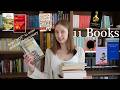
The most UNDERRATED Fall Classic + 10 Book Recommendations
Oct 10, 2026
Read: ~5m · You save: 18 min
The Most Underrated Autumn Classics + 10 Book Recommendations
Discover the world of books! A review of the most interesting and underrated autumn works. From classics to mysteries – find your next favorite story.
September saw a significant amount of diverse literature read, including detective novels, classics, existential philosophy, and contemporary prose. Special attention is given to a book that, in the author's opinion, is undeservedly overlooked.
Book Reviews
"A Month in the Country" by J. L. Carr
The novel tells the story of a young man returning from war and suffering from its consequences. He arrives in the quiet town of Oxbridge to restore a medieval fresco in the local church. It is a meditative and melancholic story, focusing on the small details of life. The work delicately balances sadness, trauma, and a unique sense of humor. The main motifs are nature and art, presented as powerful forces capable of uniting and healing people, even across centuries. The narrative is rich with descriptions of nature and everyday life. The writing style is poetic yet restrained, which is also reflected in the presentation of the material. It is a psychological portrait of the main character and those around him, but without excessive frankness. Many events happen off-stage, which enhances the subtlety and quietness of the narrative. The book is recommended for those seeking peace and tranquility.
"Heart of a Dog" by Mikhail Bulgakov
The story of a stray dog that a group of men turns into the subject of a medical experiment. The animal is implanted with human pituitary glands and reproductive organs, leading to unpredictable consequences. The book echoes "Frankenstein" in its theme of the burden and responsibility of creation, as well as its unpredictability. However, unlike the philosophical exploration of "Frankenstein," "Heart of a Dog" is satirical and comedic, serving as social satire on the state of Russia at the time. While social satire can be brilliantly executed, as in "The Master and Margarita," this work lacks its own identity and a clear central idea. The mistreatment of the animal evokes negative emotions. Despite this, the book is popular and loved by many, so it is recommended for reading to form your own opinion.
"The Mysterious Affair at Styles" by Agatha Christie
Agatha Christie's debut detective novel, narrated by a young man named Hastings, who has recently returned from the war due to an injury. He visits the estate of an acquaintance where a murder occurs. Hercule Poirot, who has recently settled in the town, participates in the investigation. The story features a complex plot and unexpected twists. The book is recommended as an ideal introduction to Agatha Christie's work, offering a captivating, well-plotted mystery with well-developed characters and humor.
"The Murder of Roger Ackroyd" by Agatha Christie
Another detective novel featuring Hercule Poirot, told from the perspective of a village doctor. In the small town where the doctor works, there are two estates: one belongs to a recently deceased woman, the other to Roger Ackroyd, known for his stinginess but occasional charitable acts. As the title suggests, Roger Ackroyd becomes the victim of a murder. The doctor finds himself involved in the investigation, and Poirot, by coincidence, settles in the neighborhood. This work remains a favorite among Agatha Christie's detective novels due to its brilliant plot and stunning conclusion.
"The Posthumous Memoirs of Brás Cubas" by Bolesław Prus (translated into English by Mad Deasis)
The fictional memoirs of a recently deceased aristocrat who recounts his life story from his grave, dedicating them to the larvae consuming his corpse. The narrative covers episodes from his life, not always connected and sometimes deliberately devoid of significant events. The book makes it clear from the outset that it does not claim to be serious. The author intentionally created a work that might not appeal to lovers of traditional novels or connoisseurs of intellectual literature. It contains elements of both genres but does not delve deeply into either. The superficial presentation of plots and characters prevents the reader from becoming invested in them. There are hints of philosophical reflections on human existence and the absurdity of social institutions, but they are not developed. The author intentionally uses this form, which is more of an artistic device than a flaw in craftsmanship. The work is unique and experimental, therefore recommended for ознакомление (familiarization).
"And Then There Were None" by Agatha Christie
Ten strangers, with no apparent connection to each other, are invited to a secluded island by an acquaintance. Each of them has a secret that is revealed at the end of the first day through a recorded message. Soon, a murder occurs. Due to a storm, no one can leave the island, and the killer is among the guests. The mystery seems unsolvable, but ultimately receives a plausible explanation. All the characters are unpleasant, but the reader is driven to discover the outcome. It is important to note that the original title of the book was extremely offensive.
"Farewell to Summer" by Ray Bradbury
A sequel to "Dandelion Wine," which the author considers one of his most underrated works. If "Dandelion Wine" is a book about summer and the awakening of consciousness, then "Farewell to Summer" is an autumn story. The main character confronts the realization that nature is falling asleep and that summer cannot last forever. His youth, which he has only just begun to grasp, will also not last forever. The state of nature is symbolically linked to the character's experiences. The plot revolves around a declaration of war on aging and the elderly residents of the town, who, according to the protagonist, are trying to force him to grow up. The narrative is abstract, like a child's thinking, and the line between reality and fantasy is blurred. The book explores the passage of time and the contrast between the desire of the young to preserve their youth and the disappointment of the old. It is the quintessence of autumn, an exploration of time and human experience.
"Christine" by Stephen King
The story of Arty, a school outcast who is bullied. His childhood friend, who narrates most of the book, observes his life. Arty finds a wrecked car that is supposed to be scrapped, but he falls in love with it, spends all his money to buy it, and decides to restore it. Gradually, Arty's character changes under the influence of his obsession with the car, which is a metaphor for addiction. The book is very strange but captivating. It is perfectly suited for the autumn season, as much of the action takes place in autumn and winter, with descriptions of blizzards and a oppressive atmosphere.
"Something Wicked This Way Comes" by Ray Bradbury
Set in a small American town in late October. Two thirteen-year-old friends, on the cusp of turning fourteen, encounter a mysterious carnival that arrives on the eve of Halloween. The carnival, assembled in the dead of night, begins to threaten the town: people are changed beyond recognition or disappear. It is a psychological horror that uses a carnival that feeds on regrets and desires. The attractions embody human fears: loss of control, the passage of time, aging, death. The narrative contrasts the experiences of the maturing boys with their father, full of disappointment and regrets. Bradbury masterfully combines existential horror with deep philosophy. The book is a poetic exploration of the meaning of life, emphasizing the importance of human connection and the choice of good over evil. It is one of the greatest works of philosophical horror.
"Morning and Evening" by Jon Fosse
A very short work, the first part of which describes the birth of the character Johannes, and the second part describes his last day of life. Reading the book is like a visual representation of how life flashes by in an instant. Jon Fosse's writing style is unique: he uses only commas and question marks, creating an immersive effect into the character's thoughts. The book explores themes of life and death in a restrained and quiet manner, possessing a meditative and melancholic mood.
"What We Talk About When We Talk About Love" by Elizabeth Strout
The story of aging teacher Archie Brown, who tries to positively influence his students' lives and be a good husband and father. Despite his outward well-being, Archie suffers from sadness and isolation. The discovery of a secret turns his life upside down and forces him to re-evaluate his existence. The book emphasizes the importance of communication and open expression of feelings. However, the author includes references to current world events in the narrative, creating the impression of an attempt to meet the requirements for literary awards like the Booker Prize. This can be perceived as a superficial use of "trendy" themes without proper context. The author's opinion may differ from the majority, given the book's nomination for the Booker Prize.
Recommendations
- "A Month in the Country" by J.L. Carr: Recommended for those seeking peace and tranquility.
- "And Then There Were None" by Agatha Christie: A classic detective story with a convoluted plot.
- "Dandelion Wine" by Ray Bradbury: The perfect autumn book, exploring themes of time and youth.
- "Christine" by Stephen King: A captivating and atmospheric thriller, suitable for the season.
- "Something Wicked This Way Comes" by Ray Bradbury: A work that combines horror, philosophy, and poetry.
- "The Murder of Roger Ackroyd" by Agatha Christie: One of the best detective novels with an unexpected ending.
- "The Mysterious Affair at Styles" by Agatha Christie: An excellent starting point for getting acquainted with the author's work.
- "The Memoirs of a Warsaw Gentleman" by Bolesław Prus: An experimental work for lovers of unconventional literature.
- "Morning and Evening" by Jon Fosse: A short, meditative story about life and death.
- "What We Talk About When We Talk About Love" by Elizabeth Strout: A reflection on human relationships and the importance of communication.
The author encourages readers to share their recommendations, especially on autumn and mystical themes.
"A Month in the Country" by J. L. Carr
A review of J. L. Carr's "A Month in the Country." The story of a young man restoring a medieval fresco after the war, focusing on the meditative, natural, and artistic forces of healing.
- Author: J. L. Carr
- Title: "A Month in the Country"
- The protagonist is an art restorer, restoring a fresco in a small town.
- The book describes the traumatic consequences of war and the healing power of nature and art.
- The style is poetic, restrained, with an emphasis on details and the protagonist's inner world.
"Heart of a Dog" by Mikhail Bulgakov
Review of Mikhail Bulgakov's "Heart of a Dog." Comparison with "Frankenstein" in the context of responsibility for creation, but with an emphasis on satire and social criticism of Russia at that time.
- Author: Mikhail Bulgakov
- Title: "Heart of a Dog"
- A story about a stray dog that became the subject of a medical experiment.
- Compared to "Frankenstein" on the theme of responsibility for creation.
- The book is considered a social satire on Russia of that period.
"The Mysterious Affair at Styles" by Agatha Christie
An overview of Agatha Christie's detective novel "The Mysterious Affair at Styles". Poirot's first case, where narrator Hastings investigates a murder at a country estate, featuring unexpected twists and humor.
- Author: Agatha Christie
- Title: "The Mysterious Affair at Styles"
- First work featuring Hercule Poirot.
- Narrator is Captain Hastings, recovering from an injury.
- The plot involves a murder at a country estate and Poirot's investigation.
"The Murder of Roger Ackroyd" by Agatha Christie
Review of Agatha Christie's "The Murder of Roger Ackroyd". The author's favorite novel, where a village doctor and Poirot investigate the murder of the wealthy but stingy Roger Ackroyd, with a brilliant and shocking ending.
- Author: Agatha Christie
- Title: "The Murder of Roger Ackroyd"
- Another Poirot case narrated by a village doctor.
- The plot revolves around the murder of Roger Ackroyd, known for his stinginess.
- The book is named one of the greatest detective novels with a shocking ending.
"The Posthumous Memoirs of Brás Cubas" by Machado de Assis
An overview of "The Posthumous Memoirs of Brás Cubas" by Machado de Assis. A philosophical novel about life, narrated by a deceased nobleman, with elements of satire on human behavior and social institutions, but with a superficial approach.
- Author: Machado de Assis
- Title: "The Posthumous Memoirs of Brás Cubas"
- The narrative is told from the perspective of a deceased nobleman addressing worms.
- The book explores themes of life, death, human behavior, and social institutions.
- The author's experimental and unconventional approach is noted.
"And Then There Were None" by Agatha Christie
Review of Agatha Christie's "And Then There Were None". Ten strangers on an island, each with a secret, become suspects in a murder. A suspenseful detective story with an unexpected ending.
- Author: Agatha Christie
- Title: "And Then There Were None"
- Ten strangers are invited to a secluded island, where they begin to die one by one.
- Each of them harbors a secret connected to their past.
- The book is known for its intricate plot and shocking finale.
Ray Bradbury's "Farewell to Summer"
Ray Bradbury's "Farewell to Summer" overview. A sequel to "Dandelion Wine," exploring themes of nature's decay, the fear of aging, and the transience of youth. A symbolic depiction of autumn and human experience.
- Author: Ray Bradbury
- Title: "Farewell to Summer"
- Sequel to "Dandelion Wine".
- Explores themes of aging, the transience of youth, and the symbolism of autumn.
- The main character declares war on aging and the town's elders.
"Christine" by Stephen King
Review of Stephen King's "Christine". The story of Arty, an outcast obsessed with an old car named "Christine". The novel explores themes of addiction, obsession, and the supernatural.
- Author: Stephen King
- Title: "Christine"
- Protagonist Arty buys and restores an old car, "Christine".
- The obsession with the car is a metaphor for addiction.
- The book combines elements of horror, drama, and the supernatural.
"Nightfall" by Ray Bradbury
Ray Bradbury's "Nightfall" review. A mystical carnival arrives in town on the eve of Halloween, threatening the lives of two boys and their father. A psychological horror about existential fear and the choice between good and evil.
- Author: Ray Bradbury
- Title: "Nightfall"
- Takes place in a small town before Halloween.
- A mysterious carnival brings fear and disappearances.
- The book explores themes of fear, aging, death, and human relationships.
"Morning and Evening" by Jon Fosse
Review of "Morning and Evening" by Jon Fosse. A short novel covering the first and last day of the character Johannes' life. A meditative reflection on life, death, and the transience of time, written in a unique style without punctuation.
- Author: Jon Fosse
- Title: "Morning and Evening"
- The novel covers the first and last day of the character Johannes' life.
- Explores themes of life, death, and the transience of time.
- Characterized by a unique writing style without traditional punctuation.
"What We Were Never Told" by Elizabeth Strout
Overview of Elizabeth Strout's "What We Were Never Told." The story of teacher Archie Brown, who tries to change his students' lives and be a good family man, but faces loneliness and a secret. Emphasizes the importance of communication.
- Author: Elizabeth Strout
- Title: "What We Were Never Told"
- The main character is aging teacher Archie Brown.
- The book explores themes of loneliness, self-discovery, and the importance of communication.
- The inclusion of contemporary cultural themes is noted, which evoked mixed feelings from the reviewer.