
 ~5m30:26
Czołg przejechał 15 km pod ostrzałem. Rosjanie krzyczą o przełomie
Sep 26, 2026
Read: ~5m · You save: 25 min
T-90 Tank Travels 15 km Under Fire: Russian Media Claims Breakthrough
A Russian T-90 tank drove 15 km under drone fire. Was it a breakthrough or a decoy? Analysis of tactics, technology, and the future of maneuver warfare.
A recent incident, where a Russian T-90 tank reportedly traveled approximately 15 kilometers under fire, withstanding around 40 hits from various types of drones, has sparked a lively discussion about the role of armored vehicles on the modern battlefield. The event, which was also covered by Polish media, raises questions about the potential return of maneuver warfare to the Russian-Ukrainian conflict and the effectiveness of drones.
"Hedgehog" on the Front Lines: Specifics of the Russian T-90
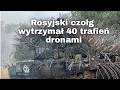
The Russian tank, nicknamed "Hedgehog" due to its specific design, was equipped with an additional layer of protection against drones. This protection consisted of wound steel cables, creating an effect of dense thicket. The tank was reportedly at the forefront of the offensive, drawing enemy fire, while approximately 50 additional servicemen followed behind it.
However, as admitted in an official report by the "Zvezda" channel, this modification significantly limited the tank's functionality. The additional weight and cumbersome design reduced its speed and maneuverability, and also impaired the crew's visibility. Moreover, during combat, the gun barrel was damaged as a result of drone attacks, rendering the tank unable to fire. Thus, its role was reduced to attracting enemy attention, similar to a "tank" in computer games – a character that takes the main damage, protecting others.
The incident concluded with the tank being immobilized. The crew abandoned the vehicle after waiting for a suitable moment. The report mentions that the Ukrainian side allegedly used prohibited gas charges, but no evidence of this was presented.
Propaganda Narrative and Reality
Russian media actively used this incident to shape a specific narrative. Headlines such as "A Cunning Operation Caused Panic in the Armed Forces of Ukraine" or "A Russian Tank Entered the Enemy's Rear" create the impression of significant success.
However, an analysis of the situation shows that the 15 kilometers the tank traveled were most likely within the so-called "Kill Zone," rather than deep in the enemy's rear. The depth of this zone is estimated to significantly exceed 15 kilometers. It is possible that Ukrainian positions remained between the tank and the main Russian forces, which explains its advance but does not indicate a breakthrough of the defense.
The Tank's Place on the Modern Battlefield
The question of tanks' relevance on the battlefield has been raised since their inception. Despite the development of anti-tank means, including rocket-propelled grenades, helicopters, and, currently, drones, tanks continue to be used. Their effectiveness has certainly decreased, but it has not disappeared entirely.
The emergence of drones does not signify the end of the era of tanks or other types of weaponry. It rather complicates their tactical application, adding a new layer of threats and opportunities. Drones are being integrated into the overall picture of combat, complementing the actions of infantry, artillery, and other branches of the armed forces.
Adaptation and New Technologies
The modern battlefield demands constant adaptation. Tanks, like other armored vehicles, will likely be equipped with new drone defense systems. These could include both improved forms of armor and active protection systems (APS) capable of intercepting approaching munitions.
APS systems, upon detecting a threat, release a cloud of striking elements that detonate the missile or projectile at a distance from the armor. In the case of drones, such systems may prove even more effective by targeting electronic components, batteries, or propellers.
However, even the most advanced systems have their limitations. Active protection systems expend ammunition and can be overwhelmed by massed attacks. Furthermore, other methods of countering drones exist, such as electronic warfare (EW) to jam communications or even physically destroying control cables.
The Future of Maneuver Warfare
The return of maneuver warfare to the battlefield depends on the ability of parties to find effective solutions for overcoming defensive lines and neutralizing new threats. This may include not only technological innovations in the field of armored vehicle protection but also more effective methods for detecting and destroying drone operators.
War is a cycle of adaptation, where defense often precedes offense. However, history shows that this cycle can be disrupted, and the side capable of developing and scaling new tactical solutions gains a significant advantage.
The Role of Drones and the Economic Aspect
Despite the tank's resilience to 40 drone attacks, this does not signify the end of their use. Economic calculations show that the cost of 40 drones expended on a single tank can be justified if it allows for the advancement of infantry or the achievement of tactical objectives.
The emergence of new technologies, such as microwave weapons for disabling drones, only adds new layers of complexity to combat operations. Warfare is becoming increasingly expensive, as each new means of attack necessitates the development of a corresponding means of defense.
Conclusion
Drones are likely to remain on the battlefield due to their versatility in reconnaissance and strike capabilities. Tanks will also retain their importance, but their deployment will require more careful planning, integration with new defense systems, and consideration of multiple threats. Maneuver warfare, though complicated, has the potential to change the course of a conflict, delivering decisive victory through deep penetrations and envelopments of the enemy. Ultimately, war is a constant process of adaptation, and future conflicts are likely to be characterized by even more complex and costly combat operations.
Incident with T-90 Tank
The Russian T-90 tank, nicknamed "Hedgehog" due to additional drone protection, traveled about 15 km under fire, withstanding approximately 40 hits. The tank was at the forefront of the attack, covering about 50 soldiers. Ultimately, it was immobilized, and the crew evacuated.
- The Russian T-90 tank traveled 15 km under drone fire.
- The tank withstood about 40 hits from various types of drones.
- The vehicle was equipped with additional drone protection (wire, mesh).
- The tank moved at the vanguard of the attack, covering about 50 soldiers.
- As a result of the incident, the tank was immobilized, and the crew evacuated.
Limitations and Role of the Tank
Due to additional protection, the tank lost maneuverability and firepower. Its barrel was damaged, preventing it from performing its classic role. Russian media presented this as a breakthrough, but the author believes it's more akin to the role of a 'tank' in computer games – a decoy for enemy fire.
- Additional protection reduced the tank's speed and maneuverability.
- Observation and turret rotation capabilities were limited.
- The tank's barrel was damaged, depriving it of firepower.
- The tank could not perform its classic role as a combat vehicle.
- The author compares its role to a 'tank' in computer games – a decoy for fire.
Propaganda and the Reality of a Breakthrough
The Russian side claims that the Ukrainians used prohibited gas charges, but there is no evidence. The author suggests that this may be part of Russian propaganda. Russian media exaggerate the significance of the incident, calling it a breakthrough of the Ukrainian Armed Forces' defense, although 15 km is only part of the "kill zone" and not an advance into the rear.
- Russians claimed the Ukrainian side used prohibited gas charges (without evidence).
- The author considers this possible Russian propaganda.
- Russian media call the incident a breakthrough of the Ukrainian Armed Forces' defense.
- 15 km of advance is part of the "kill zone", not an advance into the rear.
- The tank did not break through the defense and did not reach the enemy's rear.
The Role of Tanks on the Modern Battlefield
The eternal debate about the role of tanks on the battlefield is discussed. Despite the development of anti-tank weapons and drones, tanks continue to be used, although their effectiveness is limited. The author believes this is a transitional phase, and the existence of countermeasures does not make a weapon useless.
- The discussion about the role of tanks on the battlefield has been ongoing for a long time.
- The development of anti-tank weapons and drones limits the use of tanks.
- Tanks continue to be used, but their effectiveness is reduced.
- The author considers the situation transitional.
- The existence of countermeasures does not make a weapon useless.
Interaction of Drones and Other Weapons
An example of interaction between a Russian FPV drone and a Ukrainian "Baba Yaga" drone, which could have attacked a disabled tank, is provided. This illustrates that drones do not eliminate other types of weapons but complement them. Drones have become a new layer on the battlefield, integrating with infantry and artillery.
- A Russian FPV drone shot down a Ukrainian "Baba Yaga" drone, preventing an attack on a tank.
- Drones do not eliminate other types of weapons but complement them.
- Drones have become a new layer on the battlefield, integrating with infantry and artillery.
- Drones provide observation and precision strikes.
- Drone operators can be located far from the front lines.
Adaptation of Armored Vehicles to Drone Threats
Tanks and other armored vehicles can remain effective but require adaptation to new threats. They are expected to be equipped with active protection systems (APS) and other countermeasures against drones. APS detect and destroy incoming targets, including drones.
- Tanks can be effective when adapted to new threats.
- Armored vehicles are expected to be equipped with active protection systems (APS).
- APS detect and destroy incoming targets (missiles, drones).
- APS can be effective against drones by damaging their electronics or hull.
- Russia and Poland are experimenting with APS.
Drone Countermeasure Technologies
Various methods of combating drones are discussed: active protection systems, EW (electronic warfare), and physical destruction of communication cables. The author suggests the emergence of fighter drones and drone-carrying tanks. The possibility of creating mobile platforms with automatic weapons for combating drones is also considered.
- Active protection systems (APS) can be effective against drones.
- Electronic warfare (EW) for suppressing drone communications.
- Possibility of physically destroying drone communication cables (e.g., with lasers).
- Emergence of fighter drones and drone-carrying tanks.
- Mobile platforms with automatic weapons for combating drones.
The Return of Maneuver Warfare
The return of maneuver warfare is possible on the condition of effective counteraction to drones and neutralization of their operators. War is a cycle of adaptation, and defense often surpasses attack. Success in World War I was due not only to the invention of tanks but also to their mass production.
- The return of maneuver warfare depends on counteracting drones.
- Neutralizing drone operators is a key factor.
- War is a cycle of adaptation, where defense often surpasses attack.
- Success in World War I was linked to the mass production of tanks.
- The ability to implement technological solutions on a large scale is important for victory.
The Economics and Future of Drones
Despite the tank's resilience to 40 drone strikes, the attack was unsuccessful. The economic feasibility of using drones remains questionable. The emergence of new technologies, such as microwave weapons, will only complicate the confrontation but will not eliminate drones from the battlefield due to their importance for situational awareness.
- An attack using 40 drones on a single tank was unsuccessful.
- The economic feasibility of using drones remains questionable.
- New technologies (microwave weapons) will complicate the confrontation but will not eliminate drones.
- Drones remain important for situational awareness.
- War is becoming increasingly expensive due to the constant development of weapons and defense systems.
Conclusion: The Future of War
War is becoming increasingly expensive due to the constant development of armaments and defenses. Drones and tanks are likely to remain on the battlefield, and maneuver warfare will return but will be more complex and require better training and protection against more threats. Breaking through the front, encirclement, and cutting supply lines can lead to a decisive victory.
- War is becoming increasingly expensive due to new technologies and defenses.
- Drones and tanks are likely to remain on the battlefield.
- Maneuver warfare will return but will be more complex.
- Breaking through the front and encircling the enemy can lead to a decisive victory.
- War may end with the exhaustion of one of the sides.