
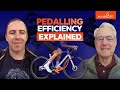
Prof. Jim Martin: The Science Behind Pedalling Techniques
Uncover the science of cycling! Prof. Jim Martin reveals how hip extension and minimizing handlebar weight boost performance. Learn why your 'perfect pedal stroke' migh
Research into cycling pedaling techniques suggests that common assumptions about optimal form may be counterproductive. Studies indicate that cyclists who rely more on hip extension rather than knee extension, and who reduce pressure on the handlebars, exhibit higher lactate thresholds and greater metabolic efficiency. This approach appears to engage a larger muscle mass, distributing the workload and reducing stress on individual muscle fibers, leading to improved performance and endurance.
Introduction to Cycling Groups and Pedaling Techniques
Two groups of cyclists with equivalent lactate thresholds during uphill treadmill running exhibited differing lactate thresholds when cycling. The group with a higher cycling lactate threshold utilized their hips more extensively, while the other group relied more on knee extension. Professor Jim Martin, from the University of Utah's neuromuscular function lab, uses cycling as a model for investigations, focusing on the underlying physiological mechanisms rather than the sport of cycling itself.
Biomechanics and Muscle Physiology in Cycling
Research in cycling biomechanics and muscle physiology offers the freedom to explore unconventional study designs. These investigations often yield significant insights relevant to cycling performance. The speaker, a former competitive cyclist, achieved national and state sprint championships, though now views his past performance as passionate rather than elite.
Pedaling technique is a central area of study within cycling. Numerous articles address this topic, suggesting a broad interest in optimizing how cyclists apply force to the pedals.
Research on Pedaling Technique and Biomechanics
Studies indicate that cyclists can alter their pedaling technique when given specific instructions. Research by Tom Corf at Brunell University in London and by Morno in France, both published concurrently, investigated this phenomenon. In both studies, cyclists were able to modify their pedaling actions according to instructions. However, this change resulted in decreased metabolic efficiency, characterized by higher heart rates, increased breathing, and greater oxygen consumption. This outcome contradicts the common assumption that these modified techniques are more effective. The likely reason for this reduced efficiency is the complex interplay of the neuromuscular system, with the spinal cord playing a significant role in regulating pedaling.
The Role of the Spinal Cord in Pedaling
The spinal cord normally controls pedaling. Attempts to improve pedaling technique beyond this natural control may not yield further improvements. Two studies, building upon the work of Corf and Morno, explore this area.
Study by Herszog in Canada
Herszog conducted a study in Canada involving participants performing maximum isometric contractions while seated on a stationary bicycle. Participants held the crank stationary and exerted maximal force at various crank angles. The study measured the force applied, noting that some of this force was perpendicular to the crank, thus causing rotation.
Maximum Effort Pedaling
When cyclists push as hard as possible, directing their force perpendicular to the crank is the assumed optimal technique. However, research indicates that cyclists produce more force when they simply push, rather than when they attempt to direct that force. This finding is counterintuitive, as one would expect directing force to result in greater torque. Instead, cyclists generated more perpendicular force when they focused solely on pushing. This suggests the complexity of the leg's biomechanics during pedaling.
Hip Extension Action in Pedaling
The hip extension action in pedaling involves multiple joints and muscles. Muscles such as the hamstrings span both the hip and knee joints, while the gastrocnemius spans the ankle and knee. This complexity contributes to the inefficiency of certain pedaling techniques.
Reactions to Research Findings
Some individuals expressed that while they could perform the instructed pedaling techniques, they lacked the practice to do so efficiently. They suggested that with extended training periods, such as one to six months or even five years, their performance and efficiency would significantly improve. This feedback highlights the limitation of acute laboratory studies where participants perform novel techniques for a short duration.
Case Study: Femoral Amputee with Bone Cancer
A subject with a femoral amputation due to bone cancer, lacking a residual limb, was studied. This individual demonstrated high fitness levels and significant speed. The subject was invited to a laboratory setting to analyze their metabolic cost during cycling.
Efficiency in Cycling
A seven-year post-amputation subject, who had presumably mastered his pedaling technique, demonstrated low efficiency. When tested, his efficiency was nearly identical to cyclists instructed to pull up during their pedal stroke. This finding suggests that the pedaling technique itself, rather than adaptation to amputation, may be a significant factor in efficiency.
Practical Application of Cycling Techniques
Research in a laboratory setting using single-leg cycling with a counterweight on the opposite crank demonstrated that cyclists' hip flexors fatigue quickly without assistance. When this counterweight was applied, one subject's cycling efficiency increased by approximately 11%. This increase mirrored the decrease in efficiency observed in cyclists instructed to actively pull up on the pedals. When pedaling normally, this subject achieved efficiency comparable to other cyclists. However, when mimicking the instructed pulling motion, their efficiency became comparable to those who were less efficient. This suggests that providing instructions on how to pedal can negatively impact efficiency.
Local Cycling Insights
A local cycling course was observed to teach efficient pedaling techniques. Participants in this course frequently experienced issues such as Achilles tendon pain and calf cramps.
Inherent Qualities of Cycling
The concept of a "perfect pedal stroke" may be inherently flawed. Analysis of cyclists, such as during a helicopter shot at a competition like the World Championships or the Tour of Lombardy, can reveal insights into pedaling mechanics on inclines.
Demi Volerin and Cycling Myths
Demi Volerin reportedly exhibited an exceptionally fluid pedal stroke. This observation raises the question of whether certain pedal stroke characteristics inherently signify greater efficiency. Research conducted approximately 20 years prior to the current discussion had already challenged the notion of a single, universally more efficient pedal stroke. Despite these earlier findings, articles continue to be published that seek to identify a "perfect" pedal stroke.
The Persistence of Cultural Myths
Cultural myths are resistant to change. This observation sets the stage for discussing seemingly unrelated topics. Brian Liry completed his PhD under Ed Coyle at the University of Texas and is now affiliated with the medical school there.
Research from the University of West Virginia
A study conducted at the University of West Virginia identified two groups of cyclists. Both groups demonstrated the same lactate threshold when running uphill on a treadmill.
Similarities to General Cycling Actions
Biomechanical analysis revealed that cyclists with a higher lactate threshold exhibited differences in their pedaling technique compared to those with a lower threshold, despite having similar overall fitness levels. This suggests that variations in pedaling mechanics contribute to differences in metabolic cost and lactate threshold.
The Role of Hip Extension in Cycling
One group of cyclists utilized hip extension more effectively during pedaling, while another group relied more on knee extension. This difference suggests a shift from quad-dominant effort to hip-dominant recruitment. This approach likely contributes to a lower metabolic stress and an increased lactate threshold. The underlying mechanism is the recruitment of a larger muscle mass, distributing the workload more broadly. Consequently, individual muscle fibers experience less stress.
Hypothetical Scenarios in Cycling Mechanics
Cyclists who engaged their hips in the pedaling motion experienced a higher lactate threshold. This suggests that incorporating more muscle mass into the action, similar to a whole-body activity like rowing, leads to greater efficiency. This observation aligns with the principle that a broader muscular engagement can support a higher lactate threshold.
Efficiency vs. Work Distribution
Distributing work across multiple muscles can lead to a less stressful experience for any single muscle group. This distribution may allow for more muscles to buffer lactate.
Spreading the Workload in Cycling
Distributing pedaling effort across more muscle mass reduces the stress on any single muscle fiber. This distribution also leads to lower lactate production. Cyclists should not be instructed on how to pedal, but rather encouraged to adopt techniques that improve their performance.
Data from Ernie
Ernie's dissertation data was presented. A demonstration involved holding a phone with two forces, resting on thumbs, to represent a torso.
Supporting the Pedaling Action
When a torque is applied to lift the torso, this same torque extends the hip and thigh. This occurs because muscles span the joint, creating torque on both sides. Ernie's study involved bringing cyclists in to measure their biomechanics during normal pedaling.
Measuring Power Output (Watts)
Researchers measured the power output of cyclists in watts. During these measurements, discussions of pedaling technique were explicitly forbidden. This approach allowed for the assessment of self-selected pedaling techniques without external influence.
Comparing Normal Pedaling to Experimental Conditions
Researchers instructed participants to reduce the weight they applied to the handlebars during pedaling. This modification was implemented to compare this experimental condition against normal pedaling mechanics.
Pelvic Rotation in Pedaling
Research indicates that cyclists can improve their hip extension power by unweighting the handlebars. This action allows for a slight rotation of the pelvis. When cyclists successfully unweighted the bars, they dramatically improved the percentage of power generated by hip extension.
Power Generated by Hip Extension
The hip extension action produces power. By unweighting the hands, cyclists are encouraged to pedal more with their hips. This approach was applied to subjects with a high lactate threshold, as studied by Brian Liry.
Decision Making in Research
Researchers chose not to measure lactate threshold during testing. This decision was based on the confidence that participants unfamiliar with specific training techniques would not be able to sustain the required effort for the 15-minute duration of the test. Instead, the study proceeded with alternative measurements. The results presented show riders' self-selected pedaling techniques, indicated by black squares. The x-axis of the data represents the proportion of rider weight.
Support During the Pedaling Stroke
Researchers measured the amount of work contributed by hip extension during the pedaling stroke. This analysis focused on how cyclists supported themselves on the handlebars. The data indicated the proportion of total work derived from hip extension.
Understanding R-squared Values
The R-squared value indicates the proportion of variance in the dependent variable that is predictable from the independent variable(s). In this context, it quantifies how much of the "noise" or variability in the data is explained by the other measured variable. Specifically, it was stated that 61% of the hip work performed is accounted for by the independent variable.
Influence of Body Lean on Pedaling
The degree to which a cyclist leans on the handlebars influences their self-selected pedaling technique. This observation is based on data where black dots represent an unweighted condition.
Correlation and Self-Selection
The amount of hip work performed during pedaling is correlated with the force applied to the handlebars. This correlation holds true whether cyclists are pedaling normally or when asked to unweight their bodies. In self-selected pedaling, this relationship is particularly strong.
Data indicates that the weight applied to the handlebars accounts for approximately 72% of the variance in pedaling mechanics. This suggests that the distribution of effort between the legs and upper body, influenced by handlebar pressure, is a significant factor in pedaling technique. Researchers hypothesize that this self-selection of effort distribution may explain findings in other studies, such as those differentiating between high and low lactate threshold groups.
Relative Work and Technique
The amount of relative work performed by the hip joint is a key factor in pedaling technique. While detailed biomechanics data may seem esoteric, it informs understanding of cycling actions. It is hypothesized that when cyclists unweight their hands, they are utilizing spinal cord level motor programs, which can be understood as natural coordination.
Muscular Engagement
Using the hip joint during pedaling increases muscular engagement. This technique can be elicited without explicit instruction on pedaling mechanics. The plural of anecdote is not data, but anecdotal evidence can still be informative.
Riding Stories
Recent personal records on Strava were achieved this year by adopting a riding technique characterized by "floppy elbows." This approach involves placing minimal weight on the handlebars, allowing the elbows to remain relaxed. This observation was made early in the spring riding season.
Riding Habits and Intuition
The speaker recounts an experience of riding without extensive prior practice. This approach resulted in faster ascents and a notable absence of thigh burning, which is typically experienced. An exception occurred on a steep incline where, upon intuitively standing, immediate thigh discomfort was felt. This anecdote illustrates a personal observation regarding pedaling technique and physical sensation.
Group Rides and Performance
A cyclist who previously risked being dropped on climbs now maintains position at the front of the group. This improvement is associated with adopting a pedaling technique that includes "floppy elbows." When this technique is employed, the cyclist is no longer dropped on climbs.
Age and Racing
A 60-year-old cyclist is still competing in Open Cat 3 races and winning. This individual, who is part of a high lactate threshold (LT) group, claims his hands have never gone numb while cycling. While this is an anecdote and not scientific data, it suggests a potential correlation between specific pedaling techniques and comfort during prolonged cycling.
Group Dynamics
Research findings suggest that techniques identified by Liry can effectively support pedaling. In personal experience, these techniques represent a significant improvement.
Favorite Climbs
The technique of riding with "floppy elbows" can make it easier to unweight the handlebars. This technique may also engage more muscle mass, potentially improving performance. Heavy squats performed during winter training can strengthen the hip extension action, which may help cyclists maintain this technique for longer durations.
This approach could be particularly beneficial for time trialists using time trial bars. In one study, participants using time trial bars produced most of their power through knee extension when leaning heavily. When they unweighted their arms, they utilized hip extension more. Anecdotal evidence suggests that maintaining 250 watts was difficult with heavily weighted elbows, and also challenging with unweighted elbows, indicating a potential difficulty in adjusting power output in these positions.
Cyclists can test this technique by intentionally riding with relaxed elbows on their favorite climbs. This approach may reduce stress and potentially improve performance. A less aggressive front-end bike fit, which prioritizes comfort and sustained riding position over marginal aerodynamic gains, may facilitate the use of floppy elbows and a more relaxed riding posture.
In Ernie's study, all testing was conducted in the drops with shoulders remaining in the same position, only reducing weight support on the arms. A method to normalize arm position involves using moldable plastic to create a consistent elbow position. This would require cyclists to actively engage their core and shift weight to unweight their arms while maintaining the same arm position. This technique emphasizes core engagement rather than a change in pedaling mechanics.
Anecdotal reports suggest that the floppy elbow technique can be maintained for at least 12 minutes without issue, especially for individuals who have incorporated squatting into their training. Further research is planned, potentially with a graduate student who is an avid cyclist and mountain biker. This student has reported positive results with floppy elbows on climbs.
Introduction to Cycling Groups and Pedaling Techniques
This chapter introduces Professor Jim Martin from the University of Utah's neuromuscular function lab, who uses cycling as a model to study underlying biomechanics. Research comparing two cyclist groups with similar running lactate thresholds revealed differences in cycling performance. The group with a higher cycling lactate threshold utilized hip extension more, while the other group relied more on knee extension.
- Professor Jim Martin is a professor at the University of Utah.
- His lab is called the neuromuscular function lab.
- The lab uses cycling as a model for investigations.
- The lab's focus is on the underlying biomechanics rather than the sport of cycling itself.
- A study compared two groups of cyclists with the same lactate threshold when running uphill on a treadmill.
- When cycling, one group exhibited a significantly higher lactate threshold than the other.
- The cyclists with the higher lactate threshold used their hip more.
- The cyclists with the lower lactate threshold used their knee extension more.
Biomechanics and Muscle Physiology in Cycling
This chapter explores the intersection of biomechanics and muscle physiology in cycling, emphasizing how research in these areas, even when conducted outside traditional boundaries, holds significant importance for the sport. The speaker shares personal experience as a former competitive cyclist, including national and state sprint championships, while acknowledging the difference between passion and elite performance. The discussion will begin with an overview of pedaling technique.
- The speaker has a background in biomechanics and muscle physiology research.
- Research in biomechanics and muscle physiology, even when conducted outside conventional studies, has importance in cycling.
- The speaker was a competitive cyclist, achieving titles such as Masters National Sprint Champion and Texas State Sprint Champion.
- The speaker distinguishes between passion for cycling and being an elite performer.
- The discussion will commence with an examination of pedaling technique.
Research on Pedaling Technique and Biomechanics
Studies by Tom Corf and Morno found that while cyclists can alter their pedaling technique, doing so often leads to decreased metabolic efficiency, indicated by higher heart rate and oxygen consumption. This suggests the spinal cord's ingrained motor patterns are highly efficient, and attempts to consciously change them may not improve performance.
- Studies have investigated the impact of instructions on pedaling technique.
- Two significant studies on pedaling technique were conducted by Tom Corf (Brunel University, London) and Morno (France).
- Both studies were published around the same time.
- In both studies, cyclists were able to change their pedaling technique when given instructions.
- However, altering the pedaling technique resulted in decreased metabolic efficiency for the cyclists.
- This decreased efficiency was evidenced by higher heart rate, increased breathing, and greater oxygen consumption.
- The techniques that were thought to be more effective or efficient actually led to reduced metabolic efficiency.
- A proposed reason for this is that the spinal cord has established efficient pedaling patterns.
- The studies imply that conscious changes to pedaling technique may not necessarily improve efficiency.
The Role of the Spinal Cord in Pedaling
The spinal cord plays a fundamental role in the normal process of pedaling, with studies suggesting that once pedaling technique is optimized, further improvements may be limited. Two studies are mentioned as building upon previous research in this area.
- Pedaling is normally controlled by the spinal cord.
- There are two studies that extend the findings of the Corf and Morno papers regarding pedaling.
- Once pedaling technique is adjusted, it is suggested that improvements may not be possible.
Study by Herszog in Canada
A study by Herszog in Canada involved participants performing maximum isometric contractions while seated on a bike, holding the crank stationary at various angles and pushing as hard as possible. The force exerted was measured, with some components contributing to rotation and others not.
- Study conducted by Herszog in Canada.
- Participants performed maximum isometric contractions while seated on a bike.
- Participants held the crank stationary at different crank angles.
- Participants were instructed to push as hard as they could at each angle.
- The force exerted had components perpendicular and not perpendicular to the crank.
Maximum Effort Pedaling
Cyclists produced more force when simply pushing compared to when they attempted to direct their force perpendicular to the crank. This suggests that the biomechanics of pedaling are more complex than simply aiming for perpendicular force application.
- Cyclists produced more force when they simply pushed compared to when they tried to direct their force.
- Cyclists had more perpendicular force when they only pushed, not when they tried to direct the force.
- The findings suggest the complexity of leg biomechanics in pedaling.
Hip Extension Action in Pedaling
The chapter discusses the complexity of hip extension in pedaling, highlighting how multiple joints and muscles, such as hamstrings and gastrocnemius, which span two joints, contribute to this action. This complexity explains why certain pedaling techniques might not be as efficient as recommended.
- Hip extension in pedaling involves three joints.
- Multiple muscles are involved in hip extension.
- Some muscles, like hamstrings, span two joints (hip and knee).
- Muscles like gastrocnemius span two joints (ankle and knee).
- The complexity of hip extension contributes to reduced pedaling efficiency.
- The discussion references a paper by Tom Cor.
Reactions to Research Findings
The chapter discusses the reception of research findings, particularly regarding a new pedaling technique. While participants could perform the technique, they lacked the practice to achieve optimal efficiency and performance. An unexpected encounter with a Paralympic champion in the local area is introduced as a potential avenue for further investigation.
- Research findings, specifically regarding a new pedaling technique, were met with criticism.
- The criticism stated that while participants could perform the technique, they lacked the necessary practice time (ranging from a month to five years) to become more efficient and higher performing.
- The study was acknowledged as an acute study where participants performed the requested actions immediately upon entering the lab.
- An encounter with a Paralympic champion, who is a participant in local bike rides, is mentioned as a significant turn of events.
- The identity of the Paralympic champion is withheld for privacy.
Case Study: Femoral Amputee with Bone Cancer
A one-legged individual, a femoral amputee due to bone cancer with no residual stump, was studied in a lab to assess their metabolic cost. This individual is noted for being very fast and fit.
- The subject is a femoral amputee due to bone cancer.
- The subject has no residual stump.
- The subject is described as a one-legged person.
- The subject is noted to be very fast.
- The subject is noted to be very fit.
- The subject was brought into a lab for study.
- The study focused on the subject's metabolic cost.
Efficiency in Cycling
The cyclist, tested seven years post-amputation, exhibited poor pedaling efficiency, similar to cyclists instructed to pull up, suggesting technique mastery might not be the sole factor in efficiency.
- The cyclist was tested seven years after his amputation.
- His pedaling efficiency was not very good.
- His efficiency was almost exactly the same as cyclists who were instructed to pull up.
Practical Application of Cycling Techniques
Experiments involving single-leg cycling with a counterweight demonstrated that a participant's pedaling efficiency increased by approximately 11% when not instructed to pull up, returning to the efficiency level of typical cyclists. This suggests that providing instructions on how to pedal can negatively impact efficiency.
- In laboratory experiments, single-leg cycling was performed with a counterweight on the other crank to reduce the need for pulling up.
- Without instructions to pull up, a participant's pedaling efficiency increased by about 11%.
- This 11% increase in efficiency is comparable to the decrease observed in cyclists who were instructed to pull up.
- When pedaling normally, the participant achieved the same efficiency as typical cyclists.
- When pedaling with instructions to pull up, the participant exhibited the same inefficiency as others who received such instructions.
- The findings suggest that providing instructions on pedaling technique can reduce efficiency.
Local Cycling Insights
A local course on efficient pedaling was attended. Participants in such courses often experience issues like Achilles problems or calf cramps.
- A course on efficient pedaling was offered locally.
- Participants in pedaling courses often experience Achilles issues or calf cramps.
Inherent Qualities of Cycling
The chapter questions the concept of a 'perfect pedal stroke' in cycling, referencing a notable helicopter shot from a race (possibly Worlds or Lombardia) that focused on a cyclist on a hill.
- The concept of a 'perfect pedal stroke' is questioned.
- A classic helicopter shot from a cycling race (possibly Worlds or Lombardia) is referenced, focusing on a cyclist on a hill.
Demi Volerin and Cycling Myths
The chapter discusses the enduring myth of a 'perfect' or inherently efficient pedal stroke, often associated with cyclist Demi Volerin. Despite studies from around 2007 debunking this idea, articles and discussions continue to explore the concept, suggesting a persistent fascination with optimizing pedaling technique.
- Demi Volerin was noted for an "incredible looking" pedal stroke.
- A question exists about whether a pedal stroke can be inherently more efficient.
- The original studies debunking the idea of a more efficient pedal stroke were from approximately 2007.
- Despite being debunked almost 20 years ago, the idea of a perfect, more efficient pedal stroke is still discussed in articles.
The Persistence of Cultural Myths
This chapter introduces the idea that cultural myths are persistent and then transitions to discussing the academic background of Brian Liry, who completed his PhD with Ed Coyle at the University of Texas and is now affiliated with the medical school.
- Cultural myths are persistent.
- Brian Liry completed his PhD with Ed Coyle at the University of Texas.
- Brian Liry is now affiliated with the medical school.
Research from the University of West Virginia
A study from the University of West Virginia identified two groups of cyclists with identical lactate thresholds during uphill treadmill running, following extensive preliminary work.
- A study was conducted at the University of West Virginia.
- The study involved two groups of cyclists.
- Both groups exhibited the same lactate threshold when running uphill on a treadmill.
Similarities to General Cycling Actions
The chapter discusses the biomechanical similarities between cycling and another action, focusing on how differences in efficiency, metabolic cost, and lactate threshold can be explained by variations in pedaling technique. The study found that riders with a higher lactate threshold exhibited different biomechanical patterns, suggesting that optimizing hip extension and spinal cord engagement could be key to improving performance.
- The action is biomechanically similar to cycling.
- One group had a significantly higher lactate threshold than another group.
- The study collected efficiency data, metabolic cost data, and lactate threshold measurements.
- Biomechanics were also analyzed.
- Riders with a higher lactate threshold demonstrated different biomechanical characteristics.
The Role of Hip Extension in Cycling
This chapter discusses the biomechanical advantage of utilizing hip extension over knee extension in cycling. By recruiting more muscle mass through hip extension, cyclists can distribute the workload more effectively, reducing stress on individual muscle fibers and potentially improving lactate threshold and metabolic efficiency.
- One group of cyclists utilized hip extension more, while another group relied more on knee extension.
- Recruiting the hip muscles during cycling is associated with improved lactate threshold and reduced metabolic stress.
- Using hip extension recruits more muscle mass compared to knee extension.
- Distributing the workload across more muscle mass reduces stress on individual muscle fibers.
Hypothetical Scenarios in Cycling Mechanics
Engaging more muscle mass, similar to how rowing engages the whole body, can lead to a higher lactate threshold in cyclists. This is because a more comprehensive muscle engagement makes the action closer to a whole-body action, resulting in greater efficiency and the ability to sustain higher power outputs before fatigue sets in.
- Engaging more muscle mass in cycling can lead to a higher lactate threshold.
- Using the hip more in cycling makes it closer to a whole-body action.
- Cyclists who used their hip more had higher lactate thresholds.
- A whole-body action, like in rowing, engages more muscle mass compared to a more isolated leg action in cycling.
- For the same heart rate, the muscular effort and fatigue experienced can be very different between activities like cycling and rowing.
Efficiency vs. Work Distribution
The discussion explores whether a particular approach is more efficient or simply less stressful on individual muscles. A potential explanation for this reduced stress is that more muscles are involved in buffering lactate, although other possibilities may exist.
- A cycling technique is described as less stressful on any given muscle, rather than strictly efficient.
- One hypothesis for reduced muscle stress is increased buffering of lactate by more muscles.
- Other potential explanations for reduced muscle stress are acknowledged but not detailed.
Spreading the Workload in Cycling
Spreading the workload across more muscle mass and fibers reduces stress on individual fibers, leading to less lactate production. While not dictating pedaling style, a certain technique is presented as more advantageous.
- Spreading the workload to more mass and fibers means any one fiber is less stressed.
- Less stress on individual fibers results in reduced lactate production.
Data from Ernie
This chapter presents data from Ernie's dissertation, using a phone held by thumbs as an analogy for a torso.
- The data presented is from Ernie's dissertation.
- A phone held by thumbs is used as an analogy for a torso.
Supporting the Pedaling Action
This chapter discusses how forces and torques applied to the body, such as through a seat or handlebars, can influence hip and thigh extension during the pedaling action. It references a study by Ernie involving cyclists to analyze their biomechanics during normal pedaling.
- Support for the pedaling action can be provided by the seat and handlebars.
- Holding an object can involve applying force and torque.
- Torque applied to lift the torso also extends the hip and thigh.
- Muscles spanning a joint create torque on both sides of the joint.
- A study was conducted by Ernie involving cyclists to analyze their biomechanics during normal pedaling.
Measuring Power Output (Watts)
This chapter focuses on measuring power output in watts, specifically noting that in a particular lab setting, discussions of pedaling technique were forbidden during the measurement process.
- Power output is measured in watts.
- In a specific lab setting, discussions of pedaling technique were forbidden during power output measurements.
- The self-selected technique was used after the power output measurements.
Comparing Normal Pedaling to Experimental Conditions
This chapter describes an experimental condition where participants were instructed to reduce the weight they placed on the handlebars during pedaling.
- The experimental condition involved reducing the weight placed on the handlebars.
- Participants were instructed to reduce the weight they put on their handlebars.
Pelvic Rotation in Pedaling
The chapter discusses pelvic rotation in pedaling, emphasizing the importance of unweighting the handlebars to improve hip extension and power output. This technique was observed to dramatically enhance the percentage of power generated.
- Pelvic rotation is a factor in pedaling.
- Unweighting the handlebars is a key technique.
- Unweighting the handlebars dramatically improves hip extension.
- Unweighting the handlebars improves the percentage of power generated.
Power Generated by Hip Extension
This chapter focuses on the power generated through hip extension during cycling, referencing techniques used by cyclists like Brian Liry's high lactate threshold subjects.
- Power is generated by the hip extension action in cycling.
- Unweighting the hands encourages cyclists to pedal more with their hips.
- This technique is associated with cyclists like Brian Liry's high lactate threshold subjects.
Decision Making in Research
The decision was made not to perform lactate threshold tests because they take approximately 15 minutes, and there was uncertainty about participants' ability to sustain them without prior training in torso engagement. The results presented show the riders' self-selected technique, indicated by black squares, plotted against the x-axis representing the proportion of their weight.
- Lactate threshold tests were not performed because they take about 15 minutes.
- There was a concern that participants who had not been training torso engagement would not be able to hold the test for 15 minutes.
- The decision was made not to conduct the lactate threshold tests.
- The results display riders' self-selected technique using black squares.
- The x-axis of the results represents the proportion of the rider's weight.
Support During the Pedaling Stroke
This chapter focuses on the support provided by the handlebars during the pedaling stroke and quantifies the contribution of hip extension to the overall work performed, measured in watts.
- Support was provided by the handlebars during the pedaling stroke.
- The work performed was measured, rather than power.
- The contribution of hip extension to the total work was analyzed.
Understanding R-squared Values
The R-squared value indicates the proportion of variance in the dependent variable that is predictable from the independent variable(s). In this context, 61% of the 'noise' or variability in the data is explained by the amount of hip work performed.
- R-squared indicates how much of the noise in the data is accounted for by the other variable.
- 61% of the data's variability is accounted for by the amount of hip work.
Influence of Body Lean on Pedaling
This chapter explores the influence of body lean on pedaling technique, specifically comparing a self-selected technique with an unweighted condition.
- Body lean on the handlebars is a factor in pedaling technique.
- The black dots represent the unweighted condition.
Correlation and Self-Selection
The chapter explores the correlation between the amount of weight cyclists place on their handlebars and the amount of hip work they perform. It highlights that this relationship holds true whether cyclists pedal normally or when asked to unweight. The data suggests that approximately 65% of the variation in hip work can be explained by handlebar pressure in normal pedaling, and this correlation is even stronger (around 72%) when considering a larger dataset. The findings are linked to Brian Liry's research on lactate threshold groups, suggesting that cyclists with higher lactate thresholds tend to lean more on the handlebars.
- The amount of hip work is correlated with how hard a cyclist leans on the handlebars.
- This correlation is observed in both normal pedaling and when cyclists are asked to unweight.
- In normal pedaling, the amount of hip work is related to handlebar pressure, accounting for 65% of the variation.
- When considering twice as many data points, the amount of weight on the handlebars accounts for 72% of the variation.
- These findings are suggested to align with Brian Liry's research, where high lactate threshold groups exhibited these characteristics.
Relative Work and Technique
This chapter discusses the biomechanics of hip extension during cycling, relating it to natural coordination and spinal cord level motor programs. It touches upon the concept of relative work done by the hip joint and the idea that unweighting hands might engage simpler, innate motor programs.
- The discussion involves the relative work done by the hip joint.
- The concept of biomechanics is mentioned.
- The text refers to spinal cord level motor programs.
- Spinal cord level motor programs are described as natural coordination.
- Unweighting hands is suggested to utilize these natural coordination mechanisms.
Muscular Engagement
The chapter discusses muscular engagement and pedaling technique, highlighting the importance of hip joint utilization for improved lactate threshold. It acknowledges the distinction between data and anecdotes, with a nod to Andy Kogan's perspective.
- Altering muscular technique can lead to different muscular patterns.
- Using the hip joint can result in a higher lactate threshold.
- It is possible to encourage hip joint usage without explicit pedaling instructions.
- The plural of anecdote is not data, according to Andy Kogan.
Riding Stories
The author achieved new Strava Personal Records (PRs) in recent years by adopting a riding style characterized by 'floppy elbows,' which involves placing minimal weight on the handlebars.
- All of the author's Strava PRs set in recent years were achieved this year.
- The author achieved these PRs by riding with 'floppy elbows'.
- 'Floppy elbows' is described as putting very little weight on the handlebars.
Riding Habits and Intuition
The author recounts an experience where riding without prior preparation led to faster ascents and no thigh burning, except on one steep pitch where standing up intuitively caused immediate thigh discomfort. This is contrasted with a friend who is a sprinter and rides hilly roads.
- The author had not ridden much prior to an experience.
- When riding without much prior experience, the author ascended faster.
- The author did not experience burning in their thighs when riding without much prior experience.
- On a particularly steep pitch, the author intuitively stood up.
- Immediately after standing up on the steep pitch, the author's thighs started burning.
- The author has a friend who is a sprinter and rides hilly roads.
Group Rides and Performance
The chapter discusses how a cyclist improved their performance on climbs, no longer being dropped by their group. This improvement is linked to adopting a technique involving 'floppy elbows', which allows them to stay at the front of the group during ascents.
- A cyclist who was previously in danger of being dropped on climbs is no longer being dropped.
- The cyclist can now be at the front of the group on climbs.
- The improvement in performance is associated with adopting 'floppy elbows'.
Age and Racing
A 60-year-old cyclist is actively competing and winning in Open Cat 3 races. He attributes his success, in part, to a practice that prevents his hands from falling asleep, a common issue for cyclists.
- A 60-year-old individual is still racing in Open Cat 3.
- This 60-year-old cyclist is winning races.
- The cyclist states that his hands have never gone to sleep.
- Anecdotes, while not data, can be noteworthy.
Group Dynamics
This chapter discusses findings that support a particular pedaling technique, suggesting it can be a significant improvement.
- Research provides convincing support for a pedaling technique.
- This technique was found to aid in pedaling.
- The pedaling technique is described as a game-changer.
Favorite Climbs
This chapter explores the benefits of a 'floppy elbow' technique in cycling, particularly on climbs. It suggests that reducing weight on the handlebars by relaxing the elbows can improve efficiency and reduce stress. The discussion touches on the integration of weight training, specifically hip extension exercises, into cycling training, and its potential positive impact on this technique. The chapter also considers the application of the floppy elbow technique to time trial bars and bike fit, advocating for less aggressive front-end setups for improved comfort and sustained performance. Anecdotal evidence and potential methods for testing this technique at home are shared, with a look towards future research.
- The 'floppy elbow' technique in cycling involves reducing stress in the thighs and unweighting the handlebars.
- Weight training, particularly hip extension movements, is increasingly being incorporated into cycling training.
- This weight training may help cyclists maintain the floppy elbow technique for longer periods and execute it more easily.
- Heavy squats can strengthen the muscles involved in hip extension, potentially aiding the floppy elbow technique.
- The floppy elbow technique may be particularly beneficial for time trial bars, allowing cyclists to lean their weight more effectively.
- In a study using tri bars, cyclists produced power primarily through knee extension when leaning heavily and utilized hip extension more when unweighting.
- Anecdotal evidence suggests that maintaining 250 watts was harder with heavy weighted elbows (around 230 watts achieved) and also hard to reduce from 250 watts with unweighted elbows.
- Cyclists can test the floppy elbow technique at home by trying to ride with relaxed elbows on their favorite climbs.
- A less aggressive front-end bike setup can make it easier to adopt and maintain the floppy elbow position.
- A study by Ernie was conducted on the drops with raised shoulders, focusing on less weight support on the arms.
- A method to test the floppy elbow technique involves using moldable plastic to create a fixed elbow position, requiring core engagement to unweight the arms.
- This technique is described as a core engagement technique rather than a pedaling technique change.
- Anecdotal evidence from a mountain biker suggests climbs are going well with floppy elbows.
- A potential future study is planned with a graduate student focusing on this technique.