
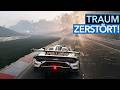
Project Motor Racing: Three wheels out of the box – this won't work for Project Cars 4!
Project Motor Racing: Strong driving physics, but serious AI problems and bugs. Is it worth the full price?
The newly released racing game "Project Motor Racing" promises a realistic driving experience by utilizing the engine from a farming simulator. Despite this technical foundation and a full price of €60 for PC and €70 for consoles (PlayStation 5, Xbox Series X/S), the game suffers from significant problems that make it appear unfinished.
Scope and Game Modes
"Project Motor Racing" primarily focuses on GT championships, including GT3 and GT4 classes, as well as newer series like Hypercars. Unfortunately, the Le Mans circuit is missing, which is considered a significant drawback for a racing game of this kind. Overall, the game offers 14 to 16 tracks, including variations, featuring well-known classics such as the Nordschleife and the Nürburgring.
A central component is the career mode, which takes an innovative approach: Instead of progressing through predefined events, players are confronted with the economic realities of running a racing team. An initial budget must be carefully managed to cover entry fees and other costs. Sponsors offer diverse opportunities for fundraising, adding an interesting management component to the game without appearing overloaded.
Alternatively, players can start their own races, both in single-player and multiplayer modes. A free play mode allows for the configuration of practice, qualifying, and races. However, players without qualifying will always be placed in the last starting position, which is perceived as a disadvantage.
Driving Physics and Realism
The driving physics are highlighted as an outstanding strength of "Project Motor Racing." The vehicles convey a tangible weight and a realistic driving feel. Differences between individual vehicles, even within the same class (e.g., Aston Martin GT3 vs. Audi R8), are well represented.
The weather system realistically simulates the effects of rain on track characteristics, including the formation of puddles on uneven asphalt like the Nordschleife, which influences the racing line.
Another positive aspect is the ability to set driving aids such as traction control and ABS to "authentic." This allows for a true-to-life simulation where, for example, hypercars do not have ABS, while GT3 vehicles are equipped with it. This option significantly contributes to immersion.
The cockpit perspective is depicted as particularly realistic. Unlike many other racing games, the driver's arms and legs are not shown excessively prominently, and the camera work simulates finely tuned movements, such as the head tilting forward during braking or the helmet wobbling over curbs. These details enhance the feeling of actually being in the vehicle.
Serious Problems and Criticisms
Despite its strengths in driving physics, the list of problems in "Project Motor Racing" is considerable. The presentation is described as dull. The biggest problem is the artificial intelligence (AI), which is called "broken." Races often cannot be finished normally, as the AI stops on the track, performs unpredictable maneuvers, or teleports. This forces players to disable the damage model in order to drive at all.
The general game mechanics often feel unpolished, reinforcing the impression of an unfinished product. This is especially true for a full-price title. The menus are plain, replays are cumbersome to control, and graphical glitches occur.
The penalty system is criticized as arbitrary and simplistic. Players are already penalized for minor excursions onto the grass or for driving over curbs, while deliberately leaving the track to save time is not detected. There is a lack of intelligent assessment of whether an advantage was gained by leaving the track. This system, combined with the faulty AI that pushes players off the track, makes the game a "no-go."
Comparison with Alternatives
Compared to established racing games, "Project Motor Racing" offers a smaller scope at a higher price point upon release. Titles like "Automobilista 2," which is also based on the engine of the "Project Cars" series and was co-developed by creators with experience from that series, provide a more mature experience with better AI and more content. These alternatives are considered significantly better and more polished.
Conclusion and Outlook
"Project Motor Racing" possesses a promising foundation, particularly concerning its driving physics and some realism features. However, significant shortcomings, primarily the flawed AI and inadequate penalty system, make the game a disappointment at this time, especially considering its full price. The game would have been better suited for Early Access. It remains to be hoped that the developers will address the fundamental issues before new content is planned for 2026. Currently, "Project Motor Racing" is not a clear purchase recommendation and cannot compete with established rivals.
First Impressions and Game Scope
The game offers a solid selection of racing classes and tracks, with a focus on a management-heavy career mode. The absence of Le Mans is seen as a weakness.
- Project Motor Racing uses the engine of the Farming Simulator.
- The game is released as a full-price title for PC (€60) and consoles (€70).
- It offers GT3, GT4, and Hypercar racing classes.
- Important tracks like the Nordschleife and Nürburgring are included, but Le Mans is missing.
- The career mode emphasizes managing a racing team with budget management and sponsors.
- A free play mode with multiplayer options is also available.
The Strength: Driving Physics and Realism
The driving physics are Project Motor Racing's greatest strength. They convey a realistic driving feel, further enhanced by detailed simulations of weight, weather, and driving aids.
- The driving physics are praised as outstanding and the highlight of the game.
- Cars feel believable and convey realistic weight.
- Differences between individual vehicles within a class are well represented.
- The weather system simulates puddle formation and its effect on handling.
- The option to set driving aids (traction control, ABS) to 'authentic' increases realism.
- The cockpit perspective and camera movements are perceived as very realistic.
The Problems: AI, Bugs, and Unfinishedness
Serious problems with the AI, numerous bugs, and an unfinished presentation significantly mar the gaming experience, preventing the game from feeling like a finished, full-price title despite good driving physics.
- The AI is flawed and often makes races impossible.
- Cars get stuck on the track, teleport, or act unpredictably.
- The damage model had to be deactivated due to the AI.
- There are numerous bugs and graphical glitches.
- The presentation and menus appear uninspired and cumbersome.
- The game as a whole doesn't feel like a finished, full-price title.
Penalty System and Alternatives
The unfair and unintelligent penalty system, along with flawed AI, makes the game a frustrating experience. Established alternatives offer more for less money and are more mature.
- The penalty system is arbitrary and punishes even minor track departures.
- It does not differentiate whether an advantage was gained by leaving the track.
- The system does not act intelligently, but only bluntly.
- Alternatives like Automobilista 2 offer more content and are technically more mature.
- Established racing games often offer more for a lower price.